Trevi Fountain
Rome's most theatrical fountain, where Baroque grandeur meets centuries of wishful thinking.
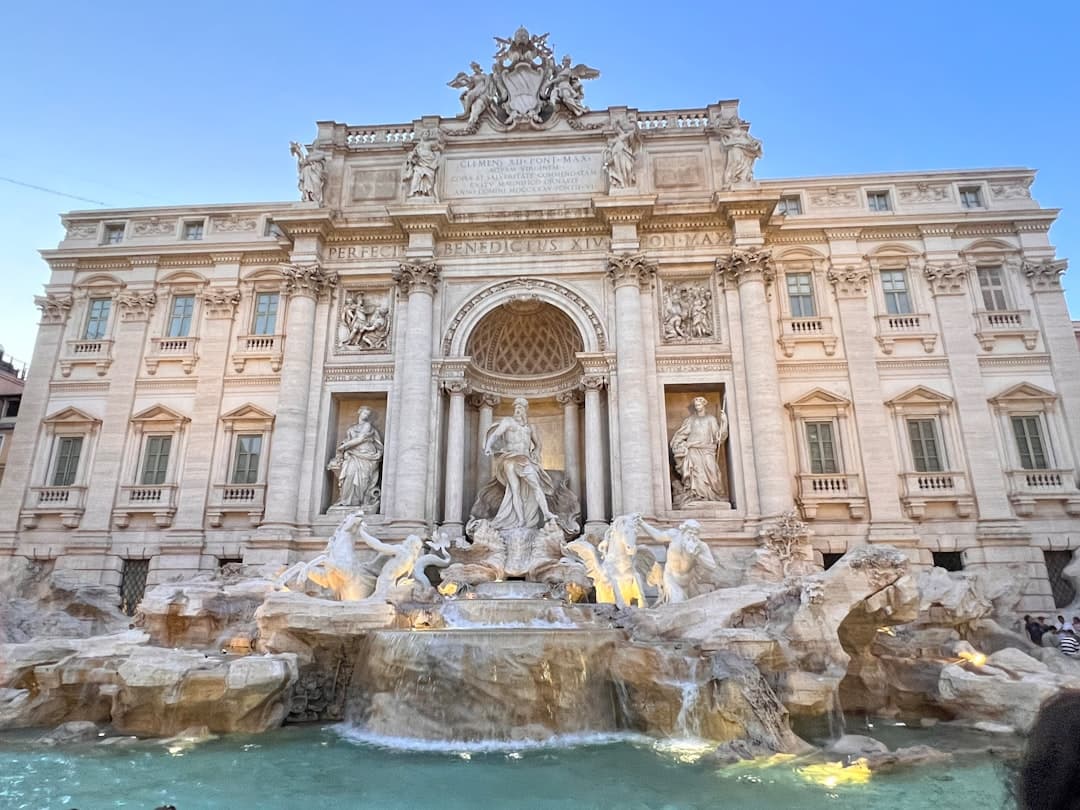
The Trevi Fountain is Rome's largest and most famous fountain, completed in 1762 after nearly three decades of construction. Designed by architect Nicola Salvi and built into the rear façade of Palazzo Poli, it marks the terminus of the Aqua Virgo, one of ancient Rome's great aqueducts that has been delivering water to the city for over two millennia. The central figure is Neptune, god of the sea, riding a shell-shaped chariot pulled by two sea horses — one wild, one calm — representing the ocean's moods. It's a masterwork of the Roman Baroque, and standing before it for the first time is genuinely arresting in a way that photographs never quite prepare you for.
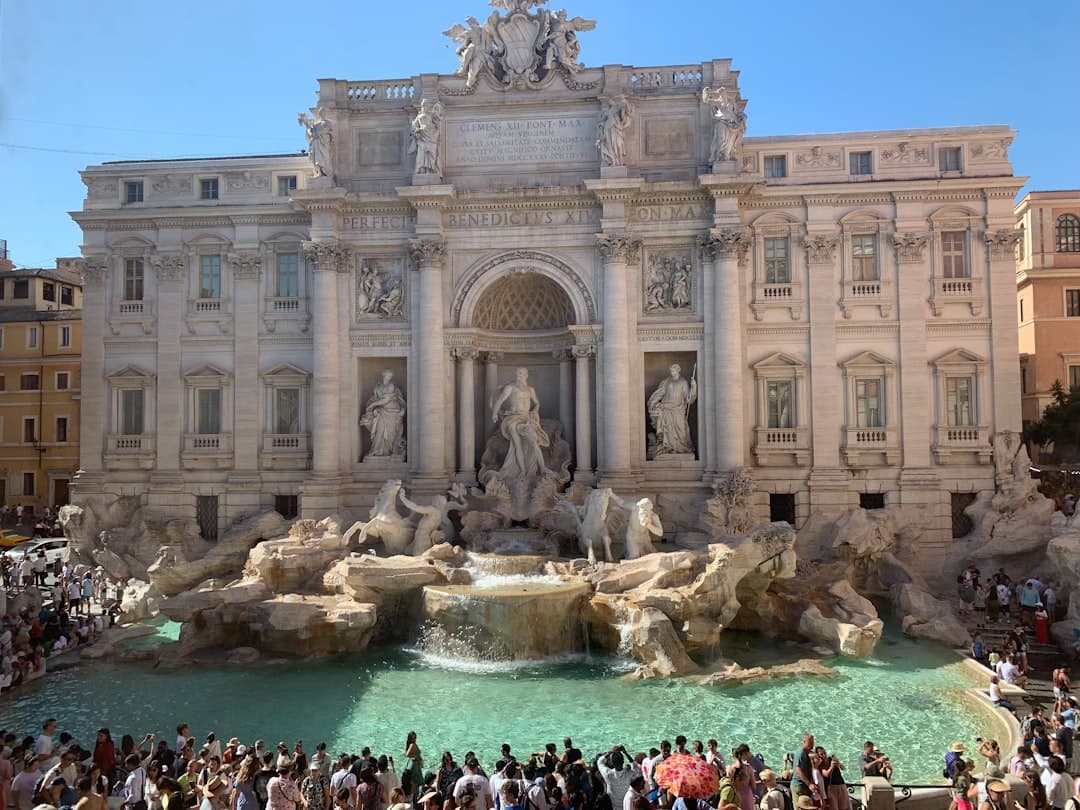
Most visitors come to do exactly what the legend demands: toss a coin over your left shoulder with your right hand into the basin, a tradition that supposedly guarantees a return to Rome. The fountain collects around €1.5 million in coins annually, which are donated to Caritas to support Rome's poor. Beyond the ritual, you're here to simply look — at the scale, the theatricality, the way the water cascades over travertine rocks, and the way the whole composition reads like a stage set with the palazzo as its backdrop. The piazza surrounding it is small and almost always crowded, which is part of the experience, for better or worse.
The opening hours listed reflect a ticketed viewing area introduced in recent years to manage crowds, but the fountain itself is visible from outside the barriers at all hours — you just may not be able to approach the edge. Come very early in the morning, before 8am, or late at night after 10pm, when the piazza thins out and the fountain is lit dramatically. The neighbourhood around it, Trevi, is worth exploring — duck into the tiny streets radiating off the piazza and you'll find some of Rome's better gelato shops and a few trattorias that have managed to stay decent despite the tourist pressure.