
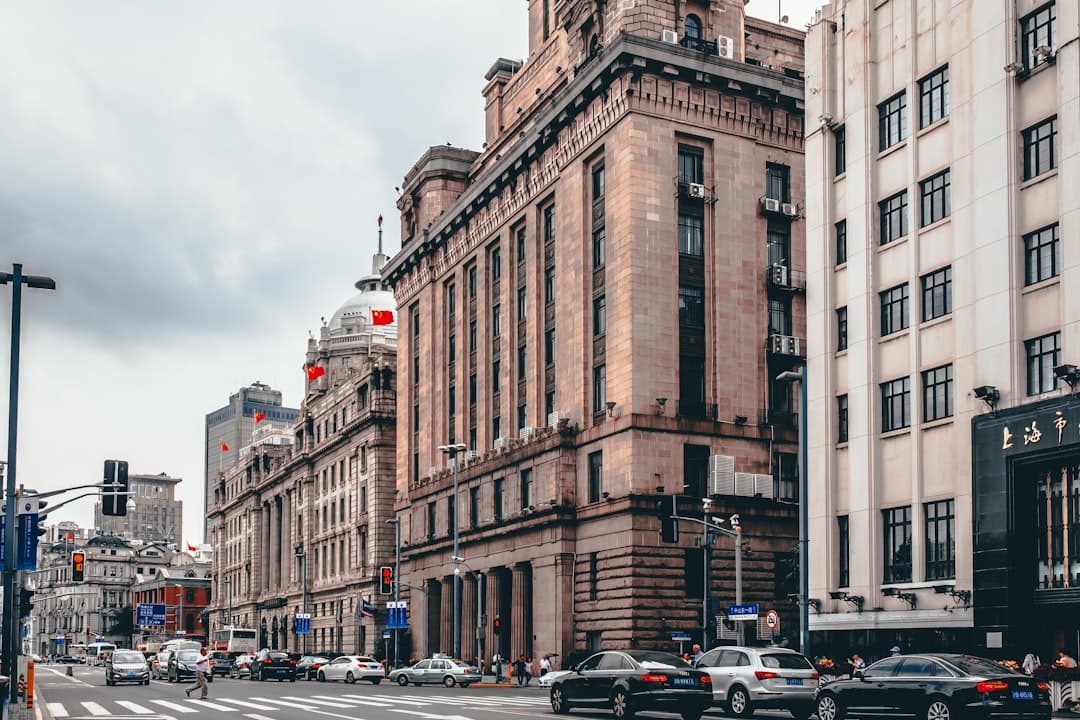
The Bund
Shanghai / The Bund

The Bund

Shanghai's most famous waterfront, where colonial grandeur meets futuristic skyline.

🏛️ Sights & Landmarks🎯 Activities & Experiences🏘️ Neighborhoods
👨‍👩‍👧 Family-friendly🎭 Cultural🌹 Romantic

The Bund is a roughly one-kilometer promenade running along the western bank of the Huangpu River in central Shanghai. It's lined with around 52 monumental buildings — banks, trading houses, hotels, and clubs — mostly built between the 1860s and 1930s in a parade of Western architectural styles: Beaux-Arts, Art Deco, Gothic Revival, Romanesque. In its heyday, this strip was the financial capital of the Far East, controlled by British, French, American, and other foreign powers during the treaty port era. Today it's a UNESCO-recognized historic streetscape and one of the most visited urban waterfronts in the world.

The experience is fundamentally about contrast. You walk the elevated riverside promenade with the old colonial facades at your back and, across the river, the shimmering towers of Pudong — particularly the Oriental Pearl Tower, the Shanghai Tower, and the Jin Mao Building — rising up in front of you. It's one of the great urban views anywhere. During the day, you can read the plaques on each building and trace the history of each former institution; at night, both sides of the river light up dramatically, and the Bund becomes genuinely spectacular. The promenade is always busy, but there's room to stroll, stop, and take it all in.

For the best experience, arrive early morning — around 6 or 7am — when locals practice tai chi along the water and the crowds haven't yet arrived. The northern end near Waibaidu Bridge (the historic iron bridge built in 1908) is slightly less trafficked and worth the extra few minutes' walk. If you want to go inside the buildings, the former HSBC Building (now a bank) occasionally opens its ornate mosaic lobby, and the Waldorf Astoria occupies the old Shanghai Club — the Long Bar in the lobby is one of the better spots for a drink with genuine historic atmosphere.

Local Tips

  1. 1

    The best photographs of the Pudong skyline from the Bund are actually taken from slightly north of center — near the crossing point by Chen Yi Square — where the framing of the towers is most balanced.

  2. 2

    Skip the tourist tunnel under the river; take the regular metro Line 2 from Nanjing East Road station to Lujiazui instead — it's faster, cheaper, and drops you directly in Pudong.

  3. 3

    The rooftop bar at Three on the Bund or the terrace at Bar Rouge (No. 18 on the Bund) give you elevated views of both the waterfront and the skyline without fighting the promenade crowds.

  4. 4

    Waibaidu Bridge at the northern end is a photogenic 1908 steel bridge that most tourists miss — cross it for a quiet view back down the full length of the Bund facade.

When to Go

Best times
Spring (March–May)

Mild temperatures and occasional atmospheric river mist make for comfortable walking and atmospheric photography.

Early morning (6–8am)

Crowds are thin, locals use the promenade for tai chi and exercise, and the light is beautiful on the facades.

Evening (after 7pm)

Both banks illuminate fully after dark and the Pudong skyline reflection on the river is at its most dramatic — the definitive Bund experience.

Try to avoid
National Golden Week (Oct 1–7)

Enormous domestic tourism crowds make the promenade extremely congested and the experience significantly less enjoyable.

Summer (July–August)

Shanghai's humidity and heat are intense in midsummer; midday walks on the exposed riverfront promenade can be genuinely uncomfortable.

Why Visit

01

The view across the Huangpu River to Pudong's futuristic skyline is one of the most dramatic urban panoramas on earth — worth seeing at both day and night.

02

The colonial-era architecture tells the story of Shanghai's extraordinary and turbulent history as the commercial hub of 20th-century Asia.

03

It's the connective tissue of central Shanghai — everything from the French Concession to Nanjing Road is close by, making it the natural anchor for a day of exploring.