Shibuya Crossing
Tokyo / Shibuya Crossing

Shibuya Crossing

Five hundred thousand people cross here daily — walking through it feels like theatre.

🏛️ Sights & Landmarks🎯 Activities & Experiences
🧗 Adventurous👨‍👩‍👧 Family-friendly🎭 Cultural

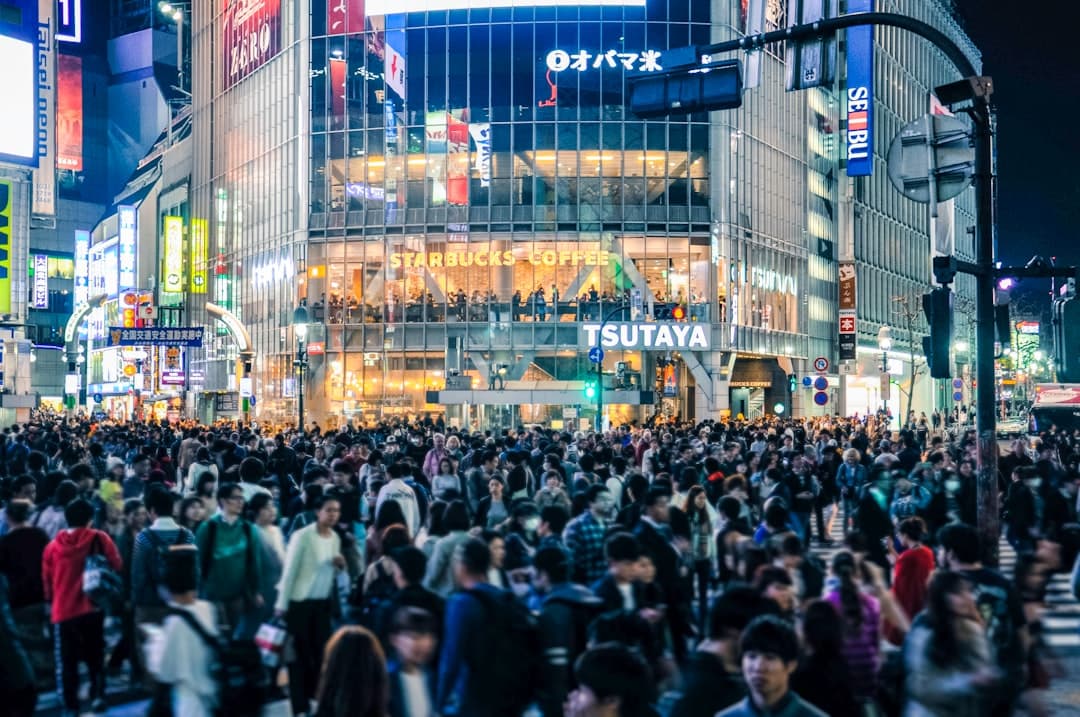
Shibuya Crossing is the world's most famous scramble intersection, sitting at the heart of one of Tokyo's busiest commercial districts. When the lights turn red in every direction, pedestrians flood in from all sides simultaneously — sometimes over 3,000 people in a single crossing cycle. It's not just a piece of infrastructure; it's a genuine spectacle, a symbol of Tokyo's organised intensity, and one of those rare places where the city's scale becomes viscerally real.

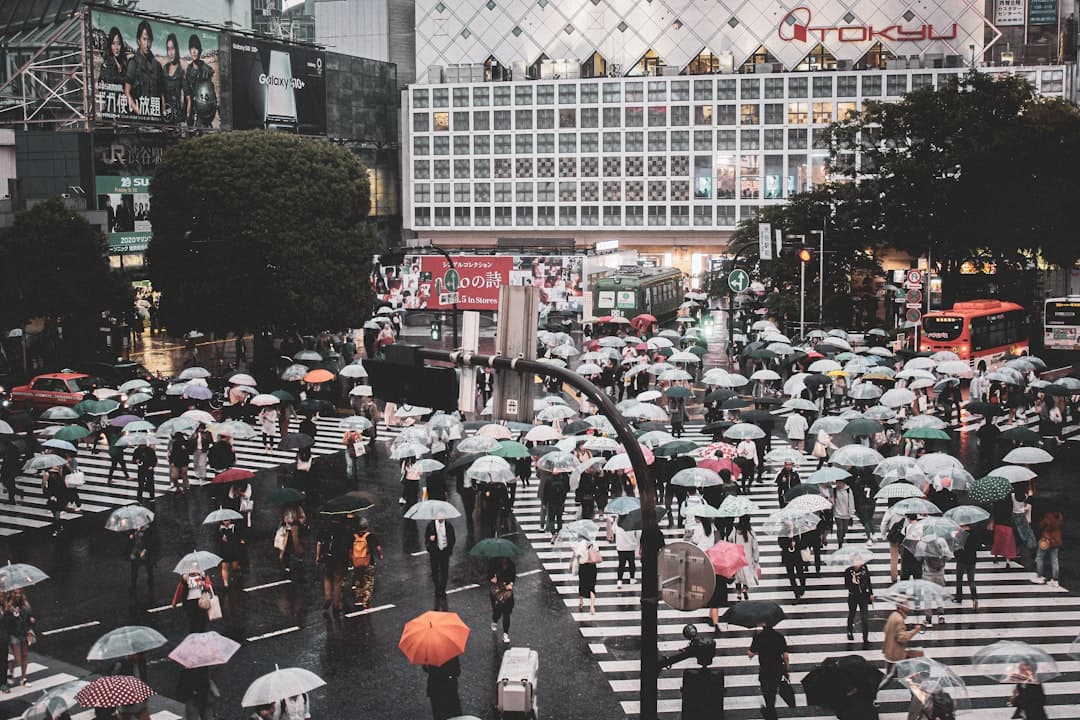
The experience is twofold. Standing in the middle of it during peak hours, surrounded by umbrellas and business suits and neon reflections on wet pavement, is oddly exhilarating — chaotic on the surface but strangely fluid, because Tokyoites are extraordinarily good at navigating crowds without collision. Then there's the overhead view: from the Starbucks on the second floor of the Tsutaya building, or the observation deck at Shibuya Sky on top of Shibuya Scramble Square, you can watch the whole choreography unfold from above, which puts the scale into proper perspective.

The crossing is free, open around the clock, and technically just a street corner — but it rewards time and attention. Rush hour on a weekday evening, roughly 6–9pm, delivers the densest crowds. Rain makes the scene dramatically photogenic, with umbrellas turning the intersection into an abstract canvas. The surrounding area — filled with department stores like Shibuya 109, restaurants, record shops, and izakayas — means you'll naturally spend far longer here than just crossing the street.
Local Tips

  1. 1

    The second-floor Starbucks inside the Tsutaya building (directly facing the crossing) is the most accessible overhead vantage point — it's free if you buy a drink, but seats by the window fill up fast. Arrive early or be patient.

  2. 2

    Shibuya Sky, the open-air rooftop observation deck on Shibuya Scramble Square, offers a higher and wider view of the crossing and requires a ticket — book online to avoid queues, especially on weekends.

  3. 3

    Cross during the light change, not during the wait. The real sensation is being swept along with the crowd mid-crossing, not standing at the edge watching — get in it.

  4. 4

    The Hachiko statue, just outside Shibuya Station's Hachiko Exit, is right next to the crossing. It's a well-known meeting point and a small but genuinely moving landmark — the story of the loyal Akita dog who waited for his deceased owner for nearly a decade is worth knowing before you visit.

When to Go

Best times
Evening rush hour (Mon–Fri, 6–9pm)

This is when pedestrian volumes peak and the crossing operates at its most dramatic. The combination of density, neon, and movement is unlike any other time of day.

Rainy days

Rain transforms the intersection photographically — umbrellas, reflections on the asphalt, and diffused neon create a cinematic quality that dry days simply can't match.

Early Sunday morning (before 8am)

The crossing is almost empty, which is its own kind of surreal — a completely different and surprisingly peaceful way to experience the same spot.

Try to avoid
New Year's Eve and major holidays

Crowds become genuinely overwhelming and the area around the crossing can feel unsafe or inaccessible. If you're not specifically there for the event atmosphere, it's worth avoiding.

Why Visit

01

Crossing it during evening rush hour is one of those rare travel moments that genuinely lives up to its reputation — the scale and energy have to be felt in person.

02

The view from above, either from the Starbucks in the Tsutaya building or the Shibuya Sky rooftop deck, transforms the intersection into a living art installation.

03

It anchors one of Tokyo's most rewarding neighbourhoods for wandering — record stores, ramen spots, vintage clothing shops, and izakayas fan out in every direction.