Ueno Park
Tokyo / Ueno Park

Ueno Park

Tokyo's great public park: museums, cherry blossoms, and 400 years of history in one place.

🏛️ Sights & Landmarks🌿 Nature & Outdoors🎯 Activities & Experiences🎭 Arts & Entertainment
🌿 Relaxing👨‍👩‍👧 Family-friendly🎭 Cultural

Ueno Park is Tokyo's oldest and most beloved public park, opened in 1873 on the grounds of the former Kan'ei-ji temple complex in the city's northeastern Taito ward. It's the kind of place that does everything at once — a major green space, a cultural campus, a gathering point for locals, and one of Japan's most famous cherry blossom viewing spots all rolled into a single sprawling precinct. If you're spending any meaningful time in Tokyo and want to understand how the city actually breathes, Ueno is essential.

The park is home to an extraordinary concentration of institutions: the Tokyo National Museum (Japan's largest, with over 110,000 objects), the National Museum of Nature and Science, the National Museum of Western Art (a Le Corbusier-designed UNESCO World Heritage building), the Tokyo Metropolitan Art Museum, Ueno Zoo — Japan's oldest — and the serene Shinobazu Pond, where lotus flowers bloom in summer and rowing boats are available for hire. Tosho-gu shrine, a surprisingly ornate gold-lacquered structure tucked among the trees, dates from 1627 and has survived fires, earthquakes, and war. You can easily spend a full day moving between institutions, or simply wander the tree-lined paths and watch the city at rest.

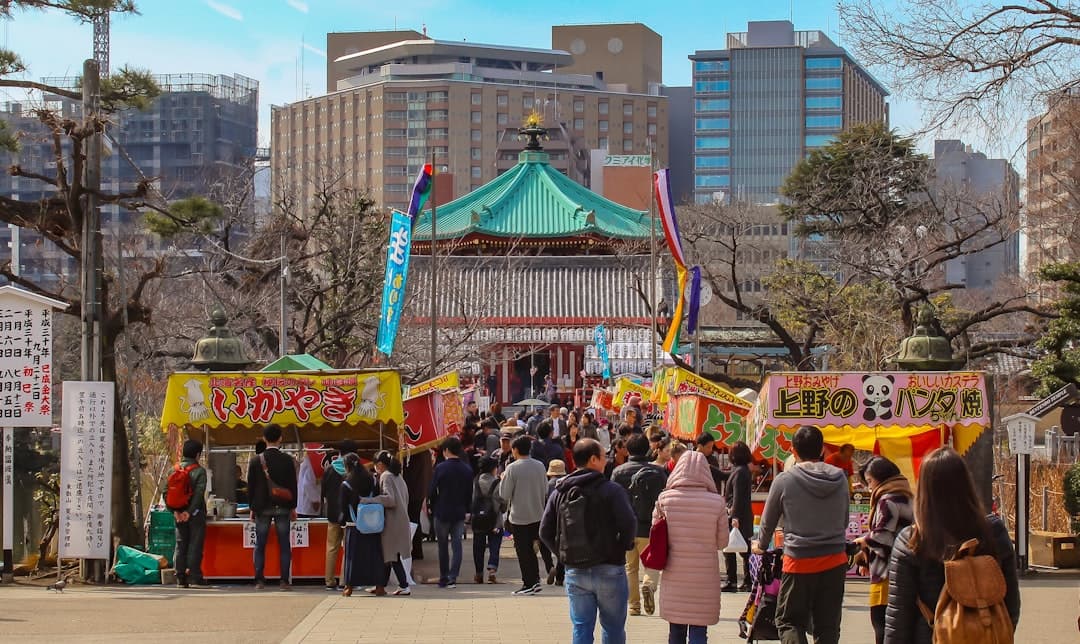
Ueno is most famous worldwide for hanami — flower viewing — during cherry blossom season in late March and early April, when the park's roughly 1,000 sakura trees create one of the most spectacular natural displays in Japan. It gets intensely crowded then, with blue tarp picnics covering every patch of ground under the trees. But outside that window, the park has a pleasantly lived-in quality — street musicians play near the fountain plaza, vendors sell grilled corn and taiyaki from small stalls along the main promenade, and the homeless community that has long sheltered here gives it an edge that Tokyo's more polished parks don't have. Enter from the JR Ueno Station park exit for the most direct route into the heart of it.
Local Tips

  1. 1

    Use the JR Ueno Station 'Park Exit' (公園口) — it deposits you directly at the main fountain plaza, right at the heart of the park. The Keisei Ueno exit is further away and adds unnecessary walking.

  2. 2

    The Ameya-Yokocho (Ameyoko) market street runs along the western edge of the park between Ueno and Okachimachi stations — it's a dense, chaotic street market selling everything from fresh seafood and dried goods to cheap clothing, and it's a sharp contrast to the park's green calm. Don't miss it.

  3. 3

    Tosho-gu shrine is consistently overlooked by visitors rushing between the big museums. The gilt detailing, stone lanterns, and wooded approach are quietly spectacular, and you'll often have it nearly to yourself.

  4. 4

    If you're visiting during cherry blossom season and want a photo without thousands of people in it, come before 7am. The light is better and the crowds haven't arrived. By 10am on a weekend, the main promenade is shoulder-to-shoulder.

When to Go

Best times
Late March – Early April

Cherry blossom season transforms the park into one of Japan's most spectacular hanami spots. The 1,000 sakura trees are stunning, but expect intense crowds, reserved picnic spots claimed from dawn, and limited space to move on weekends. Go on a weekday or arrive before 9am.

July – August

The lotus flowers on Shinobazu Pond bloom beautifully in summer, but Tokyo's heat and humidity are punishing. The pond is worth it; plan morning visits only and pace yourself.

November

Autumn foliage brings rich colour to the park's trees with far smaller crowds than cherry blossom season. One of the best times to visit the museums without queuing.

Try to avoid
April 1st week (peak sakura weekend)

The single busiest time of year. Blue tarps cover every inch of grass, alcohol flows freely, and the main promenade becomes genuinely difficult to walk. Magical in its own way, but overwhelming for many visitors.

Golden Week (late April – early May)

Japan's biggest national holiday cluster sends every museum and attraction in the park to capacity. Avoidable if you're flexible with your travel dates.

Why Visit

01

It packs five world-class museums, a 400-year-old shrine, a zoo, and a lotus pond into one walkable park — you can cover an enormous amount of Tokyo's culture without leaving the grounds.

02

Cherry blossom season here is one of Japan's signature experiences: 1,000 trees explode into bloom and the park transforms into a city-wide outdoor celebration unlike anything else in the country.

03

It's genuinely free to enter and used by actual Tokyoites every day — one of the best places in the city to see how people spend their leisure time, from early-morning joggers to weekend picnickers.