
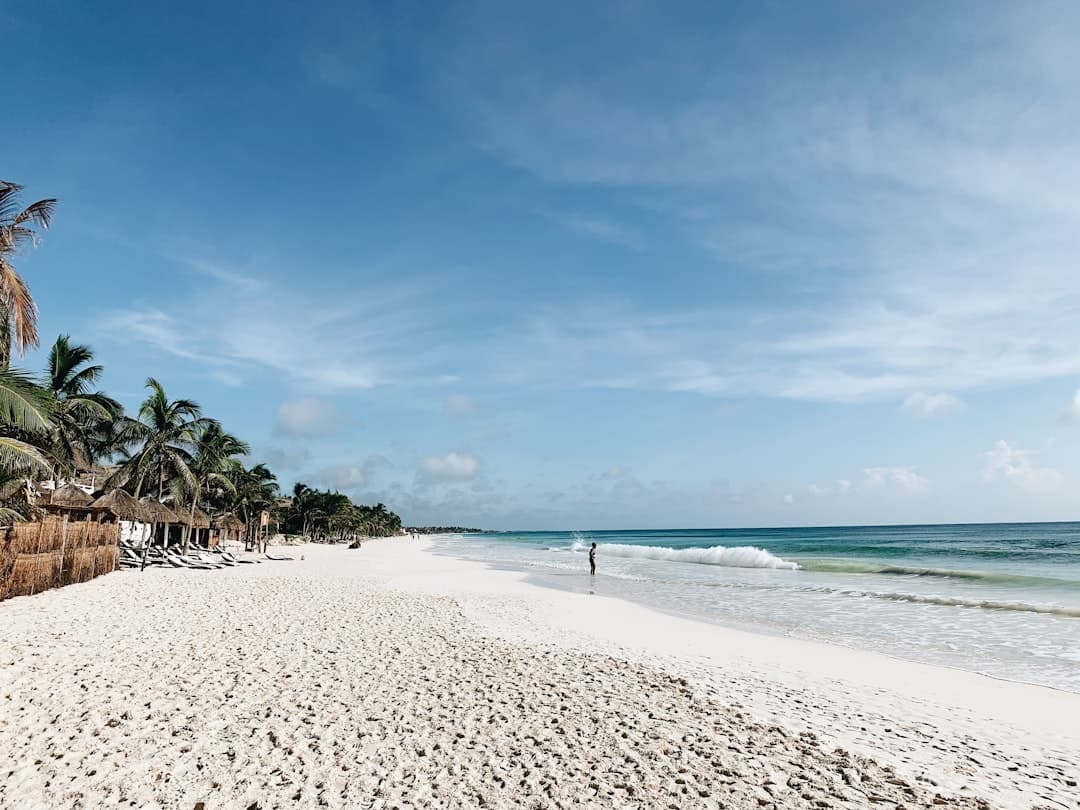
Tulum Beach
Ruins-backed Caribbean coastline where ancient history meets barefoot luxury.
Tulum Beach is a long stretch of white sand on the Caribbean coast of Mexico's Yucatán Peninsula, running south from the base of the cliffs where the ancient Mayan city of Tulum sits. It's one of the few places on earth where you can swim in turquoise water and look up to see a pre-Columbian archaeological site perched on a cliff above you — that combination is genuinely rare and genuinely spectacular. The beach sits within the broader Tulum corridor, which over the past decade has evolved from a backpacker secret into one of the most talked-about resort destinations in the world.
The experience shifts depending on where you plant yourself. The northern end, near the ruins, tends to be more accessible and day-tripper-friendly. Heading south along the hotel zone — the Zona Hotelera — you'll find a string of boutique eco-hotels, beach clubs, and open-air restaurants, many with their own stretch of sand. The water here is part of the Mesoamerican Barrier Reef system, the second largest in the world, so snorkeling reveals an entirely different dimension to the visit. The sand is powdery and the color of the water ranges from pale jade to deep turquoise depending on the light and depth.
The catch: Tulum Beach has become genuinely crowded and expensive, especially between December and March. Seaweed (sargassum) is a real and recurring issue from late spring through summer — it can pile up significantly on some days, making swimming less appealing, though beach staff at most clubs do regular clearing. Early morning is almost always the best time to arrive: the light is soft, the crowds haven't materialized yet, and you get the beach closer to what made it famous in the first place.