
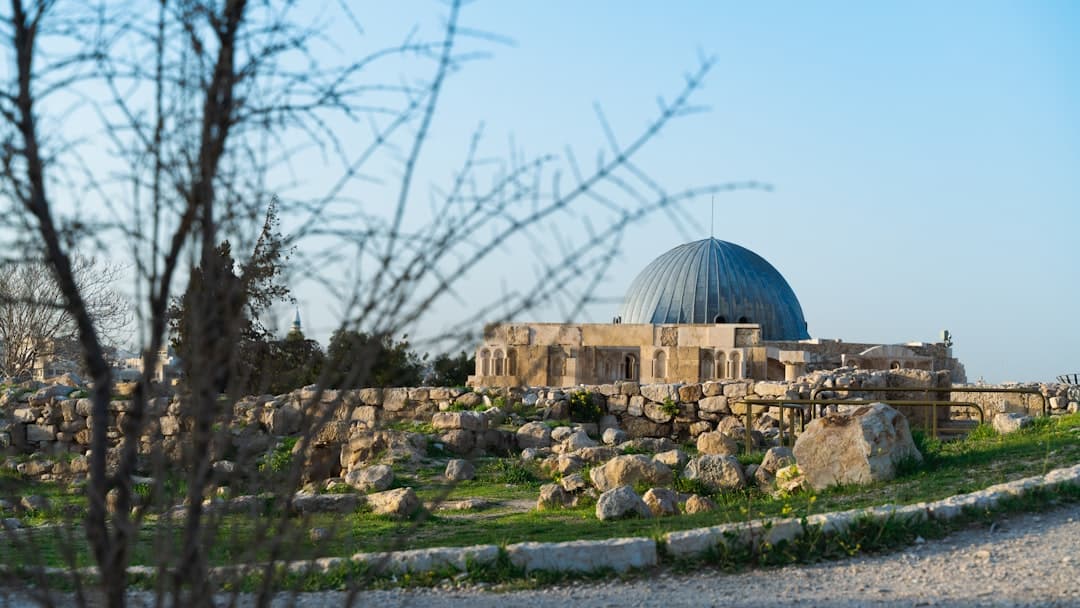
Amman Citadel
Three thousand years of civilization layered across one hilltop above Amman.
The Amman Citadel — known locally as Jabal al-Qal'a — sits on the highest of Amman's original seven hills, and it has been continuously occupied since at least the Bronze Age. The Romans built a temple here. The Byzantines added a church. The Umayyads constructed a palace. The result is one of the most densely layered archaeological sites in the Middle East, where you can walk between civilizations in a matter of steps. For a city that doesn't always get the credit it deserves from travelers rushing south to Petra, this hilltop is the single strongest argument that Amman itself is worth your time.
In practical terms, the site is an open-air archaeological park anchored by three major monuments: the Temple of Hercules, of which two enormous columns and a giant carved hand remain standing; the Umayyad Palace, a large 8th-century complex with a beautifully restored domed reception hall; and the small but excellent Jordan Archaeological Museum, which houses finds from across the country including the haunting Ain Ghazal statues — some of the oldest large-scale human figures ever discovered, dating back around 9,000 years. The views from the temple terrace down into the white limestone city are extraordinary, especially in the late afternoon when the light turns gold.
Come early in summer — the site has almost no shade and midday heat is brutal from June through August. The Jordan Pass covers admission, which is worth knowing if you're also visiting Petra and other major sites. The citadel sits directly above the Roman Theatre in the downtown Hashemite Plaza area, and combining both in a morning is the classic move. Taxis to the top are cheap; walking up from downtown is possible but steep.