Rijksmuseum
Home to Rembrandt and Vermeer, Amsterdam's greatest art collection under one roof.
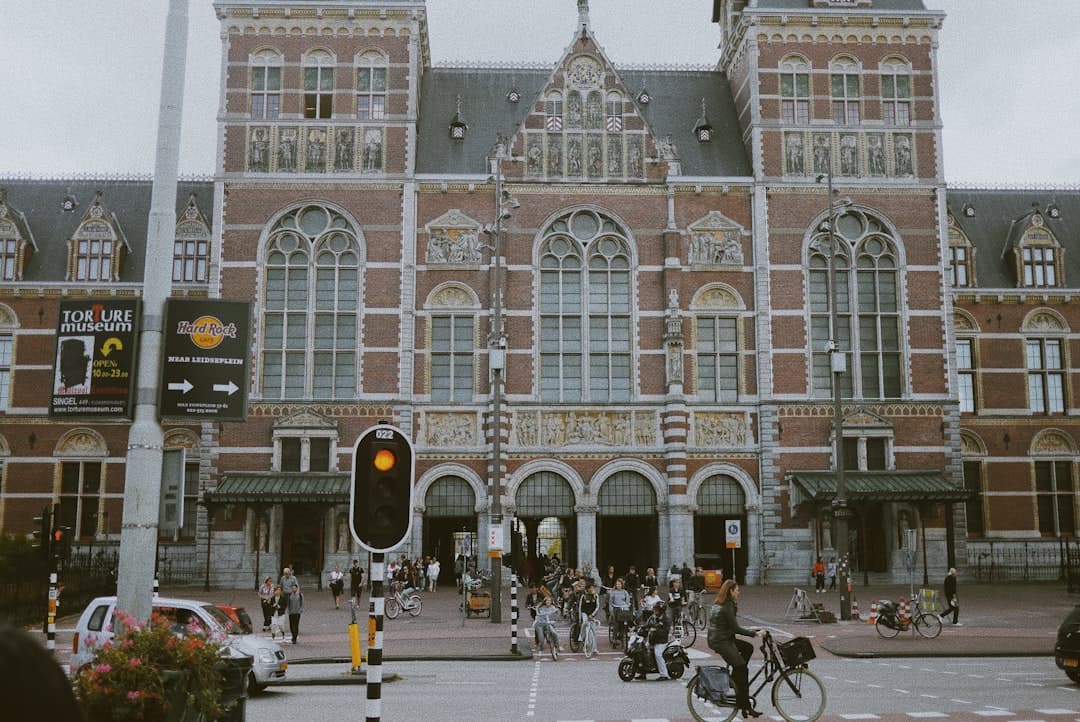
The Rijksmuseum is the Netherlands' national museum of art and history, housed in a vast neo-Gothic and Renaissance building designed by Pierre Cuypers, which opened in 1885. It holds around 8,000 objects on display — out of a collection of one million — spanning 800 years of Dutch and Flemish history, from medieval silverware to 17th-century masterpieces to Delftware and ship models. This is the single best place in the world to understand the Dutch Golden Age, a period in the 1600s when the Netherlands was the wealthiest trading nation on earth and its artists — Rembrandt, Vermeer, Frans Hals, Jan Steen — were producing some of the most extraordinary paintings ever made.
The experience centers on the Gallery of Honour, a grand enfilade of rooms on the second floor that leads to the Great Hall, where Rembrandt's enormous Night Watch hangs at the end like a punctuation mark. Seeing it in person — roughly 3.5 by 4.5 meters, painted in 1642 — is a genuine shock. Vermeer's The Milkmaid and Woman Reading a Letter are nearby, small and intimate and devastating in their quiet precision. Beyond the paintings, the museum rewards wandering: the Asiatic Pavilion has objects from Japan, China, and Indonesia reflecting the Dutch colonial trade networks, and the ground floor has sculpture, furniture, and decorative arts that put the paintings in social context.
The museum underwent a decade-long renovation and reopened in 2013, and the result is genuinely one of the most beautiful museum spaces in Europe — light-filled, legible, and intelligently laid out. Book timed-entry tickets online before you go; on busy days the queues for walk-ins can be brutal and tickets do sell out. The museum café inside is decent for lunch, but if you're visiting in good weather, Museumplein — the park directly outside — is one of Amsterdam's great public spaces for a post-visit decompression.