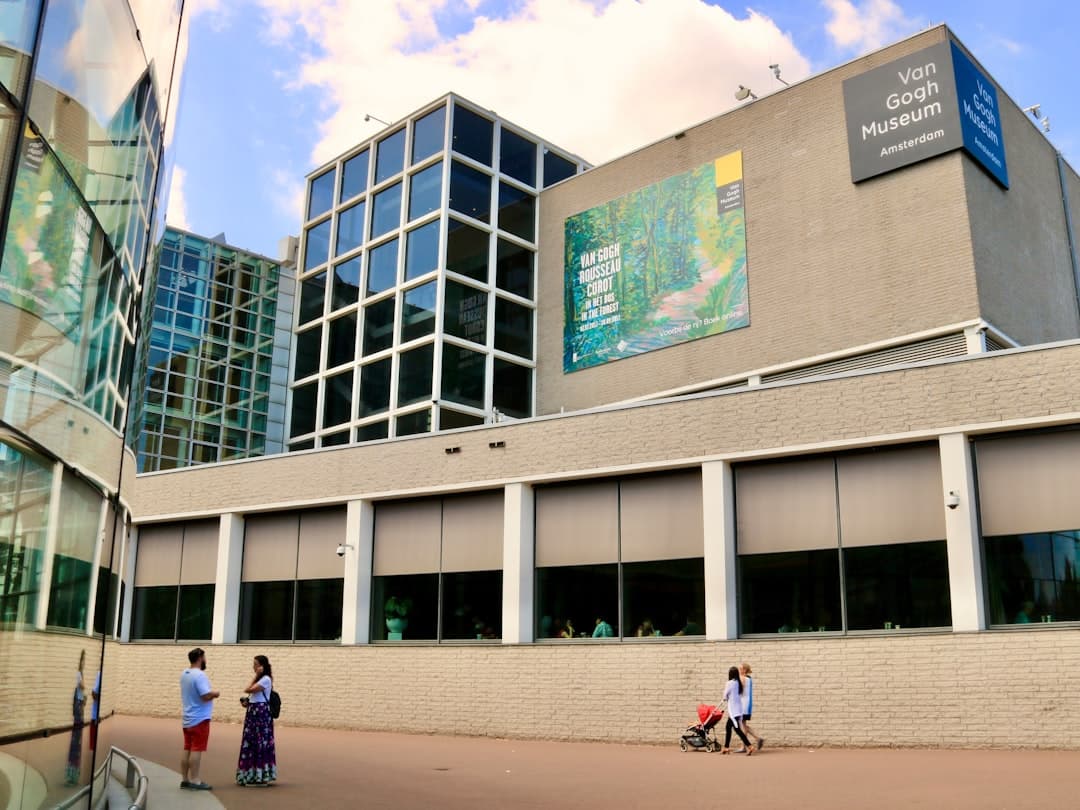
Van Gogh Museum
The world's largest Van Gogh collection, housed in a building as bold as the work inside.
Vincent van Gogh died at 37 having sold just one painting in his lifetime. Today, the museum dedicated to his work in Amsterdam holds more than 200 of his paintings, 500 drawings, and 750 personal letters — the most comprehensive collection of his output anywhere in the world. It opened in 1973, designed by the Dutch architect Gerrit Rietveld, with a later wing added by Kisho Kurokawa in 1999. Together they house not just an art collection but the full arc of a life: from the dark, earthy canvases of his Dutch period to the blazing colour and movement of his time in Arles and Saint-Rémy.
The experience is genuinely moving in a way that major museums often aren't. You walk chronologically through Van Gogh's decade-long career — ten years, that's all he had — and watch the work transform in real time. The Potato Eaters hangs in an early room, all shadow and struggle. A few galleries later, Sunflowers stops people in their tracks. The Bedroom, Wheatfield with Crows, Almond Blossom — these aren't reproductions on a poster, they're the real thing, and the scale and texture of the brushwork is something no screen can replicate. The museum also contextualises Van Gogh within his influences and contemporaries, with works by Gauguin, Toulouse-Lautrec, and Monet shown alongside.
Friday evenings are the insider move: the museum stays open until 9pm, the crowds thin considerably after 5pm, and the atmosphere shifts into something almost intimate. Book your timed entry ticket online well in advance — the museum regularly sells out, especially in summer and on weekends — and arrive at your designated time rather than early. The Museumplein square outside connects directly to the Rijksmuseum and Stedelijk, so a full day of Amsterdam's museum district is entirely feasible from this starting point.