
Beihai Park
A thousand-year-old imperial garden wrapped around a shimmering Beijing lake.
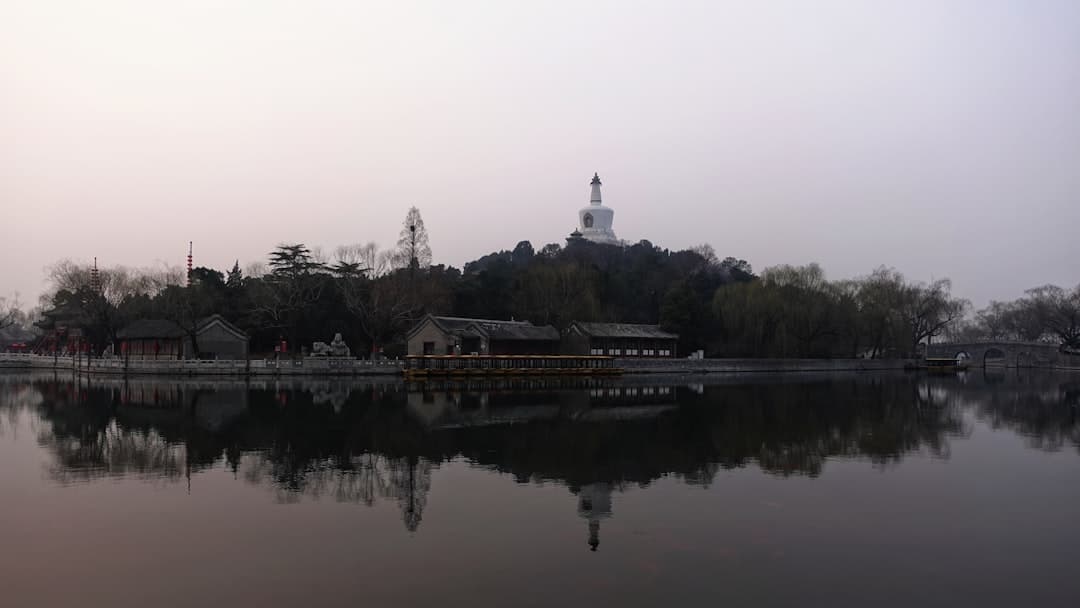
Beihai Park is one of the oldest and best-preserved imperial gardens in China, sitting just northwest of the Forbidden City in central Beijing. It was a pleasure ground for emperors dating back to the Liao dynasty roughly a thousand years ago, and its centrepiece — Beihai Lake — covers more than half the park's total area. The White Dagoba, a Tibetan-style Buddhist stupa perched on Jade Flower Island at the lake's heart, has been a fixture of the Beijing skyline since 1651, when it was built to commemorate a visit by the Dalai Lama. This is living imperial history that most visitors walk right past on their way to the Forbidden City.
In practice, Beihai rewards slow exploration. You can rent a rowboat or take a ferry across the lake to Jade Flower Island, climb up to the White Dagoba for sweeping views over the rooftops toward the Forbidden City, and wander through the Fangshan restaurant — one of Beijing's most famous, serving imperial court cuisine that traces its recipes back to the Qing dynasty. The northern shore is lined with covered walkways, pavilions, and the Nine Dragon Screen, a stunning glazed-tile wall dating to 1402 and one of only three in China. In winter, when the lake freezes, locals lace up skates and take to the ice.
The Google-listed hours of 6:30–9:00 AM look incorrect and almost certainly reflect early-morning entry times rather than closing times — the park typically opens around 6:30 AM and closes in the evening, with last entry around an hour before closing. Ticket prices are modest and split between park entry and individual attractions. Go on a weekday morning to have the willow-fringed paths to yourself, and budget more time than you think you'll need — this place has a way of holding you.