
Forbidden City
Beijing / Forbidden City

Forbidden City

Nine hundred rooms, five centuries of emperors, and one staggering axis of power.

🏛️ Sights & Landmarks🎭 Arts & Entertainment
👨‍👩‍👧 Family-friendly🎭 Cultural

The Forbidden City — officially the Palace Museum — is the largest surviving palace complex in the world, sitting at the dead center of Beijing and, for 500 years, the dead center of imperial China. Built between 1406 and 1420 under the Yongle Emperor, it housed 24 emperors of the Ming and Qing dynasties and was off-limits to ordinary people for centuries. Today it's a UNESCO World Heritage Site and one of the most visited places on earth, drawing around 17 million visitors a year. Walking through the Meridian Gate and into that first vast courtyard, with the Hall of Supreme Harmony rising ahead of you across a sea of stone, is one of those rare travel moments that lives up to the hype.

The complex is enormous — 180 acres, around 980 surviving buildings, and roughly 1.8 million artifacts in the collection. Most visitors follow the central axis north from Tiananmen Square, passing through the great ceremonial halls — the Hall of Supreme Harmony, the Hall of Middle Harmony, the Hall of Preserving Harmony — then into the more intimate residential quarters of the Inner Court. But the outer walls contain entire wings that most people miss entirely: the Clock Exhibition Hall in the east, the Treasure Gallery in the northwest, and quieter garden courtyards where you can lose the crowds entirely. The Imperial Garden at the northern end is genuinely beautiful and a good place to rest before exiting through the Gate of Divine Might.

Tickets must be booked in advance through the official website — they sell out, especially on weekends and holidays, and you cannot buy at the gate. Daily admission is capped at 80,000 visitors, which sounds like a lot until you're there on a golden week holiday. Arrive right at opening (8:30am), go straight through to the far end, then work your way back — you'll be moving against the main crowd flow. The Palace Museum app has genuinely good English audio guides. Monday closures are year-round.

Local Tips

  1. 1

    Skip the central axis crowds by ducking into the eastern or western peripheral courtyards — the Hall of Clocks and the Treasure Gallery require separate tickets but are far less packed and genuinely fascinating.

  2. 2

    The Palace Museum app (available in English) has an excellent audio tour and a live crowd map — worth downloading before you arrive rather than hunting for WiFi inside.

  3. 3

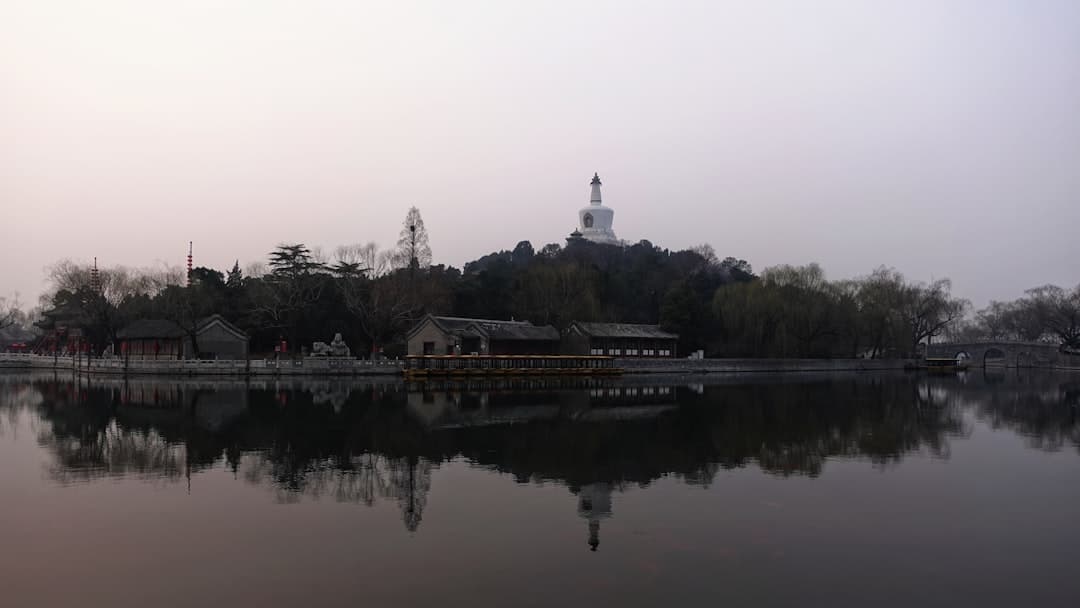
    Exit through the Gate of Divine Might (north gate) onto Jingshan Park — climbing the hill takes 10 minutes and gives you the definitive overhead view of the entire complex.

  4. 4

    The red walls and golden roofs photograph best in late afternoon light, but if you want people-free shots, aim for the side halls and garden courtyards early in the morning.

When to Go

Best times
October–November

Cool, clear autumn days bring the best light for photography and comfortable walking temperatures without summer's brutal heat.

March–April

Mild weather and fewer crowds than summer, though spring dust storms from the Gobi Desert can reduce visibility and air quality.

Early morning (8:30am opening)

Arriving at opening means you'll be ahead of the tour groups for the first hour — the difference in atmosphere is dramatic.

Try to avoid
July–August

Peak summer brings punishing heat, heavy humidity, and the largest crowds of the year — the open stone courtyards offer no shade.

Golden Week (early October & early May)

National holidays drive visitor numbers to their absolute maximum — the cap is hit daily and the experience is genuinely unpleasant.

Why Visit

01

It's the best-preserved imperial palace complex in the world — 980 buildings and 1.8 million artifacts from the height of Chinese civilization, all in one place.

02

The sheer theatrical scale of the ceremonial courts and halls is unlike anything else on earth — the kind of architecture designed to make you feel small in front of power.

03

Beyond the main axis, there are quieter gardens, clock collections, and treasure galleries most visitors never find — it rewards curiosity and time.