
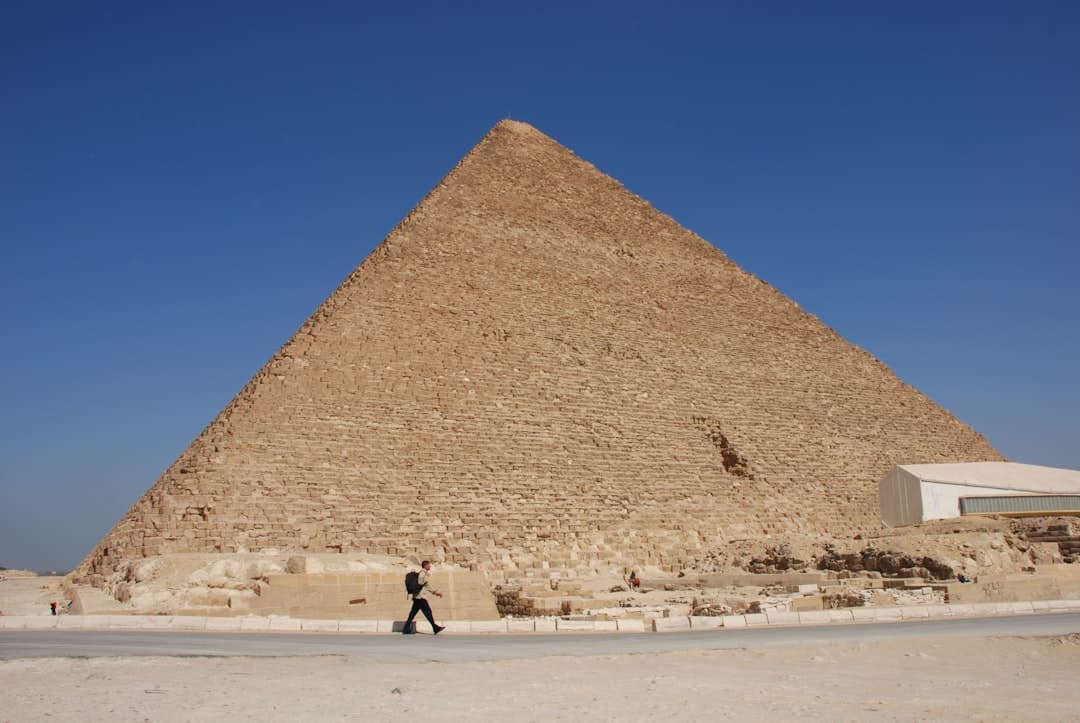
Saqqara
The world's oldest stone building complex, predating the Giza pyramids by centuries.
Saqqara is a vast ancient burial ground on the edge of the Western Desert, about 30 kilometres south of central Cairo, and it served as the necropolis for Memphis, Egypt's first capital. Its centrepiece is the Step Pyramid of Djoser, built around 2650 BCE by the architect Imhotep — the very first large-scale stone structure ever built by humans. This alone would make Saqqara extraordinary, but the site sprawls across several kilometres and contains dozens of other pyramids, mastabas, underground tombs, and temples spanning 3,000 years of Egyptian history. Most visitors focus on Giza and miss this place entirely, which is one of the great oversights in Egyptian tourism.
A visit here typically starts with the Step Pyramid complex, where you walk through a reconstructed colonnade into an open ceremonial court — the scale and atmosphere are genuinely humbling. From there, you can explore the Pyramid of Unas, whose interior walls are covered in the Pyramid Texts, the oldest religious writings ever discovered. The tomb of Mereruka, a vizier from the Old Kingdom, contains some of the most vivid and well-preserved painted reliefs in Egypt — hunting scenes, craftsmen at work, hippo hunts — all carved with remarkable detail. Recent excavations have also opened new areas: the animal catacombs at Serapeum, where enormous granite sarcophagi once held sacred Apis bulls, are genuinely jaw-dropping in scale.
The opening hours listed as 24-hour are almost certainly inaccurate — Saqqara operates on standard Egyptian heritage site hours, typically opening around 8am and closing by 5pm, though this can vary seasonally. Entry tickets are purchased on site and separate tickets are often required for specific tombs. Hiring a local guide is genuinely worth it here: the site is large, signage is sparse, and the historical layers are dense enough that context transforms the experience from a walk among old stones into something remarkable. Come early — the desert sun by midday is brutal and the best light for photography hits the monuments in the morning.