
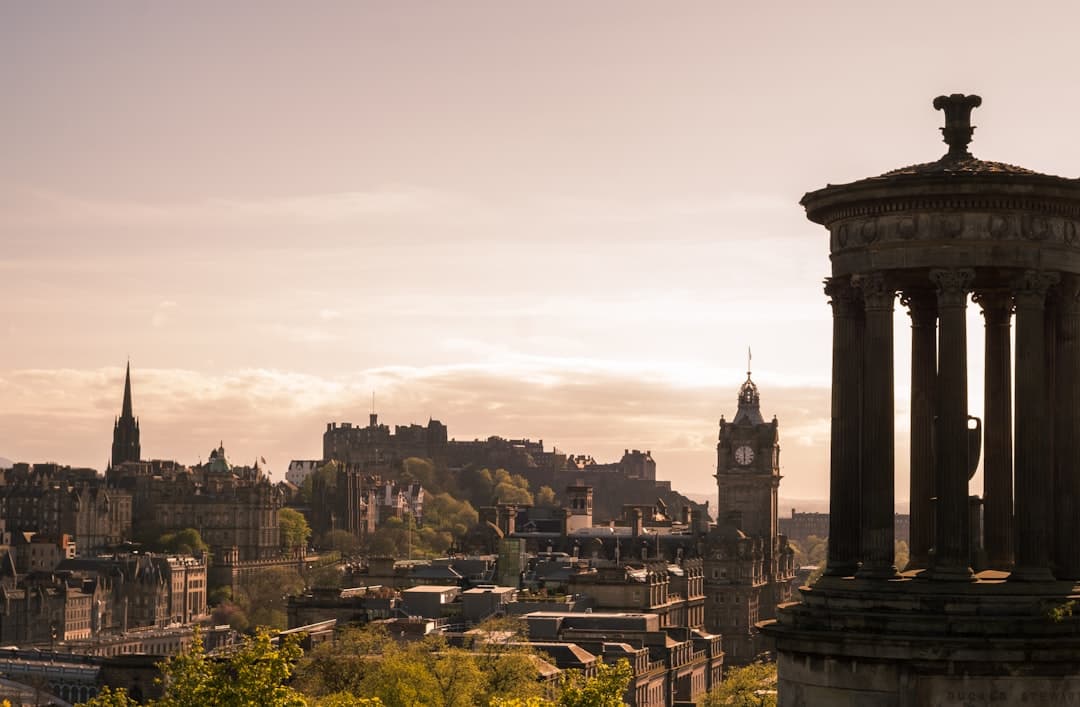
Edinburgh Castle
A thousand years of Scottish history perched on an ancient volcanic rock.
Edinburgh Castle is Scotland's most visited paid attraction and one of the most recognisable fortresses in Europe. Sitting on the plug of an extinct volcano called Castle Rock — formed around 350 million years ago — it has dominated the Edinburgh skyline since at least the 12th century. It served as a royal residence, military garrison, and state prison at various points in its history, and today it houses some of Scotland's most significant national treasures. This isn't a ruin you admire from the outside: it's a working, layered complex of buildings spanning several centuries, each with its own story.
Inside the walls, the highlights stack up fast. The Crown Room holds the Honours of Scotland — the crown, sceptre, and sword of state, which are among the oldest royal regalia in Europe — alongside the Stone of Destiny, the ancient coronation stone of Scottish kings. St Margaret's Chapel, tucked near the summit, is the oldest surviving building in Edinburgh, dating to around 1130. The Great Hall, with its hammer-beam roof, was built for James IV in the early 1500s. The One O'Clock Gun, fired every day except Sunday from the Mills Mount Battery, is a tradition that dates back to 1861 and still makes visitors jump. The views across the city and out to the Firth of Forth are genuinely spectacular.
Book tickets online in advance — the castle gets extremely busy, especially in summer, and the queues at the gate can be long. Give yourself at least two to three hours, though a thorough visit easily fills half a day. The audioguide is genuinely useful here, given how much history is packed into each building. Arrive early in the morning or late afternoon to beat the thickest of the crowds. The Esplanade — the wide forecourt at the entrance — is where the Royal Edinburgh Military Tattoo is staged every August, which transforms the whole area during festival season.