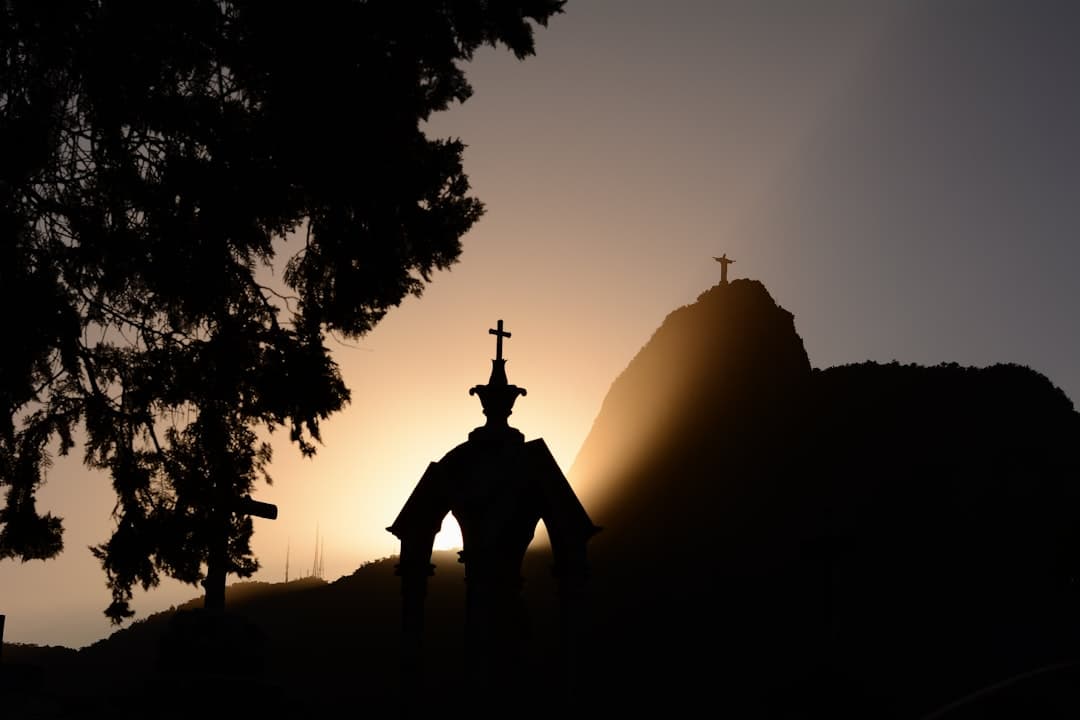

Sugarloaf Mountain
Rio's most iconic silhouette, earned by riding a century-old cable car.
Sugarloaf Mountain — Pão de Açúcar in Portuguese — is a 396-metre granite peak rising dramatically from the edge of Guanabara Bay, and it's been the defining image of Rio de Janeiro for over a century. The name likely comes from the loaf-shaped molds used to refine sugar in colonial Brazil, though the Tupi indigenous name Pau-nh-acuqua may also have played a role. It's not just a pretty rock: this is one of the most recognizable natural landmarks in the world, and standing on top of it gives you the kind of panorama — Copacabana, Ipanema, Cristo Redentor, the bay, the mountains — that reminds you why people have been calling Rio the Cidade Maravilhosa, the Marvelous City, for so long.
The experience unfolds in two stages. First, a gondola carries you up to Morro da Urca, the smaller hill midway, where there's a restaurant, a small outdoor stage (live music happens here regularly), and already-stunning views. From there, a second cable car climbs to the summit of Sugarloaf itself. The views from the top are genuinely staggering — the whole geography of Rio spreads out below you, and on clear days you can see far along the coast. There are walking paths around both stations, including some that wind through the Atlantic Forest vegetation clinging to the rock. Rock climbers tackle the sheer granite faces here too, a sport with deep roots in Rio's outdoor culture.
The cable car system dates to 1912, making it one of the oldest in the world, though the cars themselves have been updated. Queues can be brutal in peak season — arriving at opening time (around 9am) is the single most effective strategy. Sunset is magical but expect serious crowds. The Urca neighborhood at the base is one of Rio's quietest and most charming, and worth a wander before or after — the Praia Vermelha beach just below the mountain is calm, local, and almost free of tourists.