
Oia
The village where whitewashed cliffs meet the Aegean in a blaze of light.
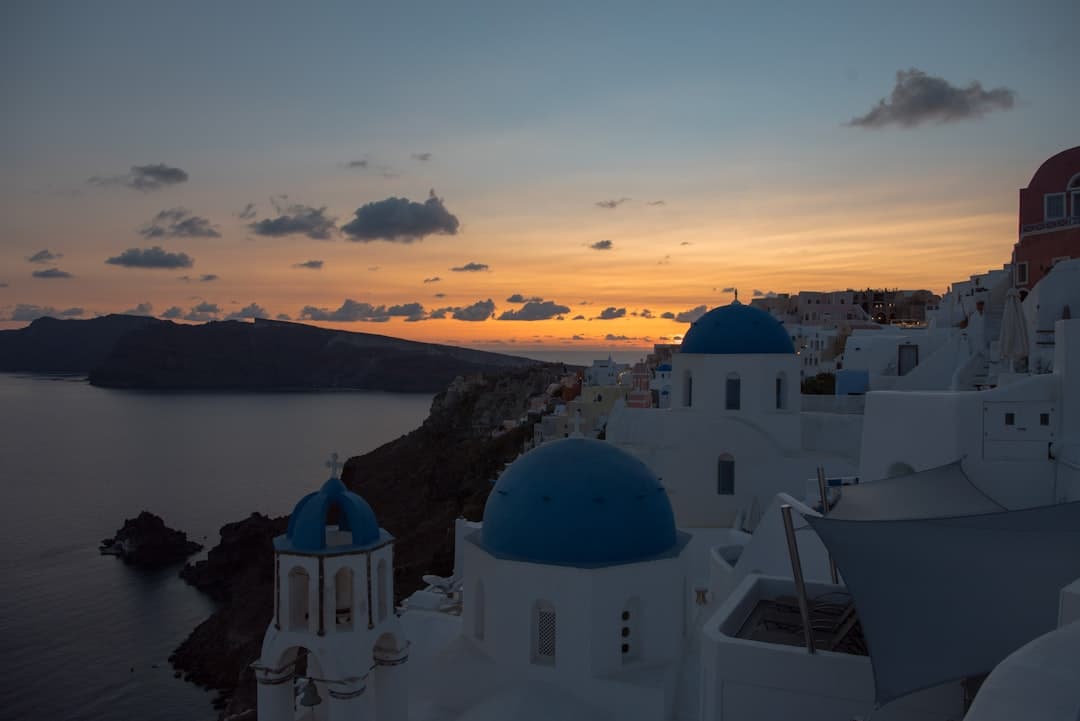
Oia is a small hilltop village perched on the northern tip of Santorini, carved into the rim of one of the world's most dramatic volcanic calderas. It's one of the most photographed places on earth for good reason: the combination of white-cube architecture, blue-domed churches, cave houses cut into the cliffside, and vertiginous drops to the deep blue sea below produces a landscape that looks almost too beautiful to be real. What started as a prosperous seafaring settlement — Oia was historically home to Santorini's sea captains, whose elegant mansions still line the main path — was largely destroyed by the 1956 earthquake and rebuilt in the iconic style visitors know today.
Walking through Oia means navigating a maze of narrow cobblestone paths lined with bougainvillea, boutique hotels carved into the cliffs, galleries, jewelry shops, and small tavernas with terraces that hang over the caldera edge. The famous Byzantine Kastro ruins at the western tip frame the sky dramatically, and the windmills that punctuate the ridge are a constant visual anchor. Most visitors come for one of two things: wandering the alleys in the quieter morning hours, or staking out a spot for the sunset — widely considered among the best in the world — which draws crowds every evening to the Kastro and the main viewing areas.
The honest insider reality: Oia's main drag gets genuinely overwhelming between roughly 4pm and 9pm in summer, especially July and August. Go early — the village at 8am, with mist still lifting off the caldera and almost no one else around, is a completely different and far more rewarding experience. The path from Fira to Oia along the caldera rim (about 10km on foot) is one of the best ways to arrive, giving you both the landscape and a sense of arrival you can't get from a bus. Stay for dinner rather than rushing back — the crowds thin noticeably after sunset.