
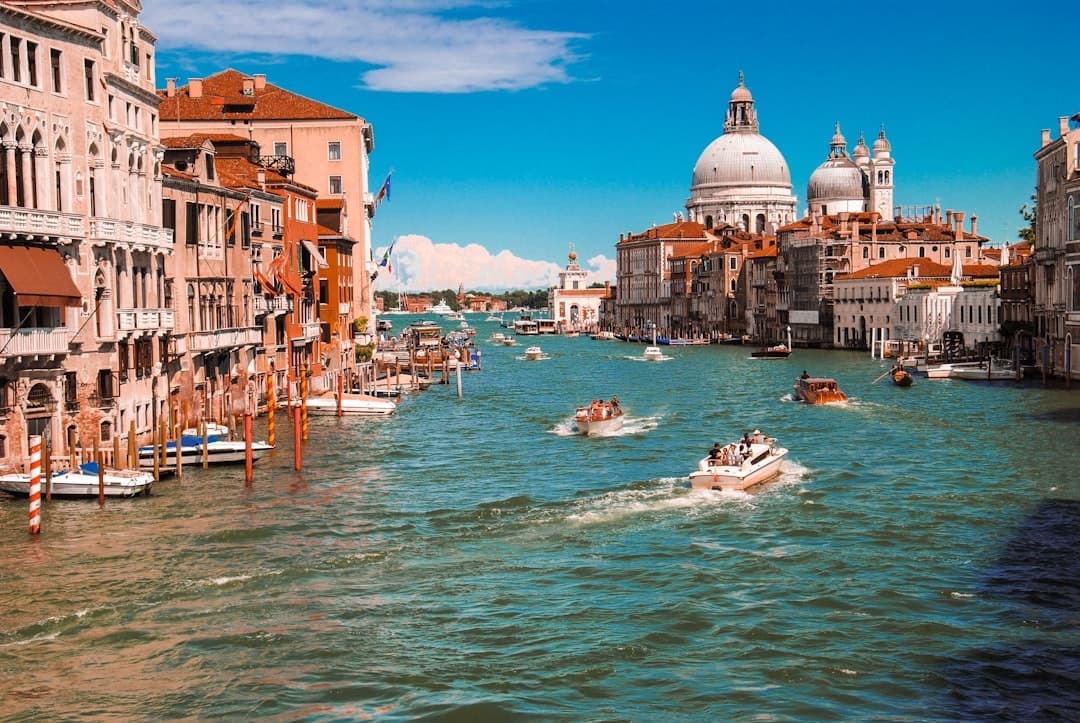
Arsenale di Venezia
The shipyard that built Venice's empire, now open to curious visitors.
The Arsenale di Venezia is one of the most historically significant industrial complexes in the world. Built in the early 12th century and massively expanded over the centuries, it was the engine behind Venice's dominance of Mediterranean trade and warfare. At its peak, the Arsenale employed up to 16,000 workers — known as arsenalotti — and could famously produce a complete warship in a single day using early assembly-line techniques. Dante was so impressed he referenced it in the Inferno. For centuries, the Arsenale was the beating industrial heart of the most powerful maritime republic in history, a place strictly off-limits to outsiders. The sheer scale of the complex — 46 hectares behind crenellated brick walls — still astonishes.
Access to the Arsenale is limited and somewhat unusual. The main entrance, marked by the iconic Renaissance gateway flanked by Greek lion sculptures looted from Athens and Piraeus in 1687, is always visible from the street. But the interior is only regularly open during major events like the Venice Biennale, when the vast covered dockyard halls — the Corderie, the Artiglierie, and the Gaggiandre dry docks — become extraordinary exhibition spaces. At other times, weekday visits are possible on a limited basis through the naval complex that still partly occupies the site. What you see inside is genuinely staggering: immense brick-vaulted rope-making halls stretching nearly 320 metres, dry docks where galleys were once fitted out, and a pervasive sense of industrial history on a scale Venice rarely shows you.
The best time to experience the interior properly is during the Venice Biennale (held in odd-numbered years for art, even-numbered years for architecture), when the spaces are fully open and animated by world-class exhibitions. Outside Biennale years, the gateway lions and exterior walls are always worth seeing — they're a short walk from the Castello neighbourhood's quieter streets — but interior access is genuinely restricted. If you're visiting during a Biennale, budget serious time here; if not, temper expectations about getting inside.