
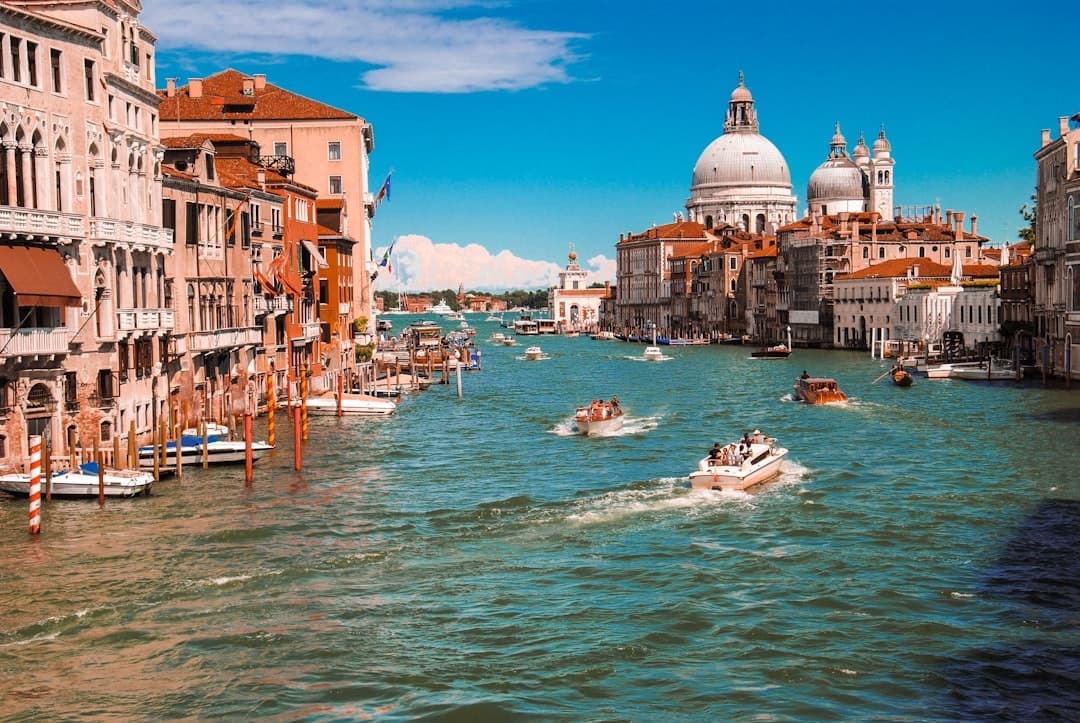
Grand Canal
Venice / Grand Canal

Grand Canal

The world's most famous waterway, cutting through a city built on water.

🏛️ Sights & Landmarks🌿 Nature & Outdoors🎯 Activities & Experiences
🌿 Relaxing🎭 Cultural🌹 Romantic

The Grand Canal is Venice's main artery — a reverse S-shaped waterway roughly 4 kilometres long that winds through the heart of the city, dividing it into two halves. It's not a canal in the ordinary sense of the word. It's the city's high street, its highway, its central piazza — just made of water. Lined on both sides by more than 170 buildings, many of them Gothic, Renaissance, and Baroque palaces that Venetian merchant families built to show off their wealth, the canal has been the backbone of Venetian life for over a thousand years. There is nowhere else on earth quite like it.

The best way to experience it is from the water. Take vaporetto Line 1, the slow public water bus that stops at every landing stage along the canal from Piazzale Roma to Piazza San Marco — it's essentially a floating sightseeing tour at the price of a transit ticket. You'll pass the Ca' d'Oro, one of the finest Gothic palaces in Italy, the Rialto Bridge — the oldest of only four bridges that cross the canal — the Ca' Rezzonico, where Robert Browning died, and the magnificent dome of Santa Maria della Salute rising at the canal's southern end. At dusk, when the light goes gold and the palaces glow amber, it's genuinely one of the most beautiful things you'll ever see.

For the view from above rather than the water, the Rialto Bridge is where most people head — it's always crowded, but deservedly so. Early morning is the time to do it, when the market traders are setting up on the nearby Erberia and the canal is thick with delivery barges rather than tourist boats. If you want something quieter, cross on the wooden Accademia Bridge instead, which gives an equally dramatic southward view toward La Salute without the souvenir stalls.

Local Tips

  1. 1

    Take vaporetto Line 1, not Line 2 — Line 2 is faster but skips most stops and ruins the experience. Buy a 24-hour travel pass if you plan to use the boats more than twice.

  2. 2

    The best seats on the vaporetto are at the very front or very back of the boat, in the open air. Board early at a terminal stop like Piazzale Roma or Santa Lucia train station to grab one.

  3. 3

    The Rialto Bridge view is best photographed from the water looking up at it, not from the bridge itself — a vaporetto passing underneath gives you the shot everyone tries to recreate.

  4. 4

    If you want to cross the canal without taking a bridge, look for the traghetto crossings — unmotorised gondola ferries run by locals at a handful of points, costing just a couple of euros and giving you a quick, authentic moment on the water.

When to Go

Best times
February (Carnival)

The canal is extraordinarily atmospheric during Carnival, with costumed figures crossing by gondola and the city at its most theatrical, but crowds are intense and prices spike sharply.

November–January

Acqua alta (seasonal flooding) can disrupt access to canal-side walkways, but the off-season crowd levels make the canal feel almost private — and the low winter light on the water is stunning.

Early morning (year-round)

Before 8am, the canal belongs to delivery barges and locals. The Rialto market comes alive, the light is soft, and you get the city as Venetians actually experience it.

Try to avoid
July–August

Summer heat, extreme tourist density, and heavy boat traffic make the experience more chaotic than magical. The canal itself smells more pronounced in the heat.

Why Visit

01

You're travelling through a city where the main road is water — the Grand Canal is the only way to understand how Venice actually works.

02

The palaces lining its banks represent the greatest concentration of medieval and Renaissance merchant architecture in Europe, many still privately owned.

03

The vaporetto ride at sunset along its full length is one of those rare travel experiences that genuinely lives up to the hype.