
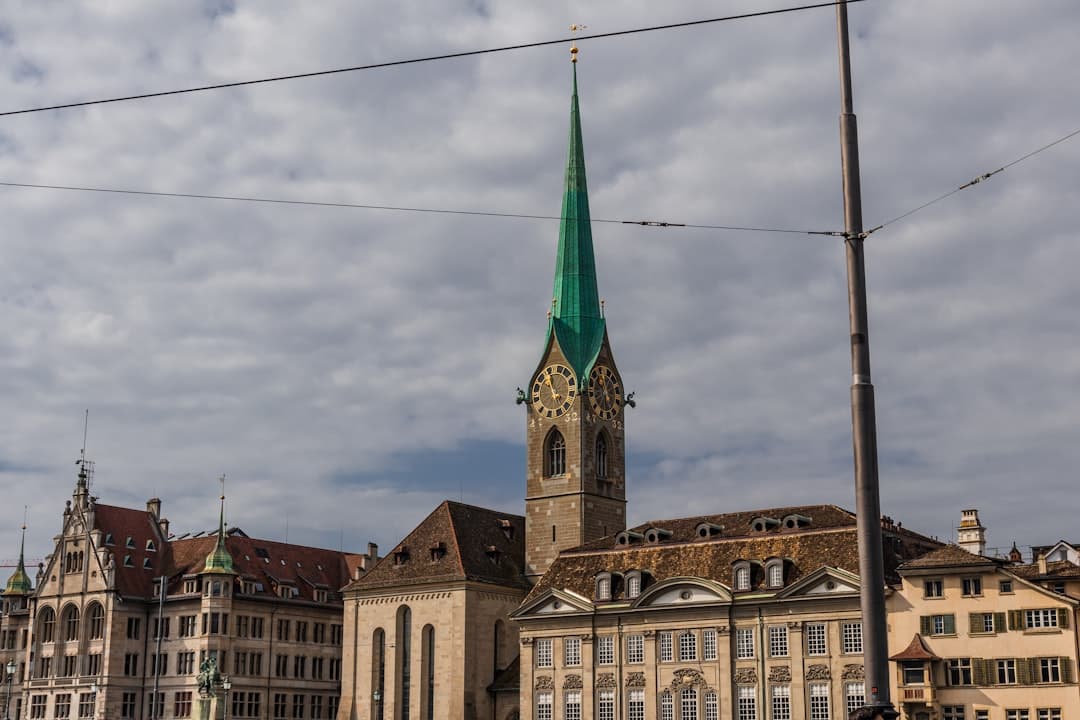
Old Town Zurich
Zurich / Old Town Zurich

Old Town Zurich

Medieval streets, guild halls, and lake views at the heart of Zürich.

🛍️ Shopping🏛️ Sights & Landmarks🍽️ Food & Drink🎭 Arts & Entertainment🏘️ Neighborhoods$$$
🌿 Relaxing🎭 Cultural🌹 Romantic

Old Town Zürich — known locally as the Altstadt — is the historic core of one of Europe's wealthiest and most livable cities. Straddling both banks of the Limmat River where it flows out of Lake Zürich, it's a remarkably well-preserved medieval quarter with cobblestone lanes, painted guild houses, and twin Romanesque churches that have defined the city's skyline for centuries. This is where Zürich was born, where Zwingli launched the Swiss Reformation in the 1520s, and where the city's identity as a serious, prosperous, but quietly beautiful place was forged.

In practice, exploring Old Town means wandering between the Grossmünster — the twin-towered Protestant cathedral where you can climb the Karlsturm for sweeping rooftop views — and the Fraumünster across the river, famous for its luminous Marc Chagall stained glass windows. The main pedestrian artery on the east bank, Niederdorfstrasse, buzzes with cafés, bars, and restaurants, while the west bank around Lindenhügel and Schipfe is quieter and more residential, with antique shops and the occasional hidden courtyard. The weekly markets, the old guildhalls repurposed as upscale restaurants, and the Kunsthaus Zürich just beyond the old walls fill out a full day easily.

The Altstadt is compact enough to cover on foot in a few hours, but rewarding enough to fill a whole day if you eat well and duck into churches and galleries along the way. Skip the souvenir trap shops on Niederdorfstrasse and instead head to Rindermarkt or Spiegelgasse — the street where Lenin famously lived in 1917, a short walk from the Cabaret Voltaire, birthplace of Dada — for a quieter, more atmospheric experience. Zürich is expensive, but the Old Town itself costs nothing to explore.

Local Tips

  1. 1

    Climb the Karlsturm of the Grossmünster for the best rooftop view in the city — it's cheap, rarely crowded, and the panorama over the Limmat and lake is exceptional.

  2. 2

    The Fraumünster's Chagall windows are best seen on a bright morning when the light hits them from the east — visit before noon for the full effect.

  3. 3

    Spiegelgasse 14 is where Lenin lived before returning to Russia in 1917; the Cabaret Voltaire at number 1 is where Dada was born the following year — two world-historical addresses on one short street.

  4. 4

    Avoid eating right on Niederdorfstrasse if you want value — duck one block in either direction and you'll find better food at lower prices aimed at locals rather than tourists.

When to Go

Best times
June–August

Summer brings the best weather for outdoor café terraces and Limmat riverbank walks; the lake is swimmable and the whole quarter is alive. Crowds peak in July and August.

December

Zürich's Christmas markets, particularly the one at Werdmühleplatz and the Christkindlimarkt at the main station, spill into the Altstadt — genuinely magical, not kitsch.

March–April

Shoulder season means thinner crowds and the Sechseläuten spring festival in April, where guilds parade in historical costume and burn a snowman effigy on the lake plain — a wonderfully strange local tradition.

Try to avoid
Late July (Street Parade weekend)

Zürich's massive techno Street Parade draws over a million people and the Altstadt gets extremely crowded and loud — not the weekend for a quiet sightseeing visit.

Why Visit

01

Two of Europe's most atmospheric medieval churches — Grossmünster and Fraumünster — sit minutes apart, one with Chagall windows, one with tower views over the city.

02

The streets themselves are the attraction: beautifully preserved guild houses, the Limmat River running through the middle, and lakeside promenades all within easy walking distance.

03

History runs unusually deep here — the Swiss Reformation, the birth of the Dada art movement, and Lenin's pre-revolution exile all happened on these same cobblestones.