
Acropolis
Athens / Acropolis

Acropolis

The 2,500-year-old hilltop temple complex that defines Western civilization.

🏛️ Sights & Landmarks🎯 Activities & Experiences🎭 Arts & Entertainment
🧗 Adventurous👨‍👩‍👧 Family-friendly🎭 Cultural

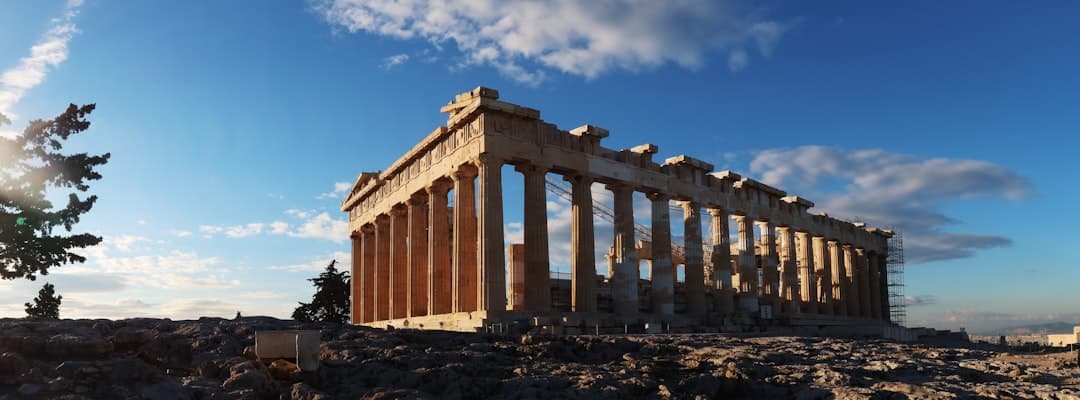
The Acropolis is a flat-topped limestone hill rising 150 metres above Athens, crowned by a cluster of ancient monuments that have shaped art, architecture, and democracy for millennia. The centrepiece is the Parthenon — a temple dedicated to the goddess Athena, completed in 432 BCE under the leadership of Pericles and the artistic direction of the sculptor Pheidias. It remains one of the most influential buildings ever constructed, a touchstone for architecture from ancient Rome to the U.S. Capitol. The site also includes the Erechtheion, with its famous Porch of the Caryatids — columns carved as draped female figures — as well as the Temple of Athena Nike and the grand gateway known as the Propylaea.

Visiting means climbing the hill via the Beule Gate and walking among ruins that are simultaneously fragile and monumental. You'll see the Parthenon up close — note that ongoing restoration work by the Acropolis Restoration Service has been running since the 1970s, so scaffolding is often present on parts of the structure, but this doesn't diminish the experience. The views from the top are extraordinary in every direction: the ancient Agora below, the Temple of Hephaestus, the Theatre of Dionysus on the southern slope (one of the world's first theatres), and the city of Athens sprawling to every horizon. Allow time to explore the southern slope separately, where the Odeon of Herodes Atticus still hosts live performances today.

Timing is everything here. The site opens at 8am and the first two hours — before the tour groups arrive in force — are significantly more peaceful. Tickets can be purchased as a combined ticket covering the Acropolis and several other ancient sites including the Ancient Agora, the Roman Agora, and Kerameikos, which represents excellent value. The Acropolis Museum, a world-class modern museum at the base of the hill, is best visited after the site itself — it houses the original Caryatid figures (the ones on the Erechtheion are replicas) and provides crucial context for everything you've just seen.

Local Tips

  1. 1

    The combined ticket (around €30 in peak season) covers seven ancient sites including the Ancient Agora and the Roman Agora — it's valid for five days and saves significant money over buying separately.

  2. 2

    Visit the Acropolis Museum at the base of the hill after your visit to the site itself — it's genuinely world-class, air-conditioned, and the exhibits make far more sense once you've walked among the ruins.

  3. 3

    The southern slope entrance near the Theatre of Dionysus is less crowded than the main western entrance and gives you a quieter approach to the hill.

  4. 4

    Wear proper shoes with grip — the Pentelic marble on the Acropolis has been worn smooth by millions of visitors and becomes treacherous when wet or even slightly damp.

When to Go

Best times
Early morning (8–10am)

The golden light is beautiful, crowds are minimal, and the temperature is manageable even in summer. This is consistently the best window to visit.

March–May and September–October

Ideal visiting conditions — mild temperatures, manageable crowds, and the site is fully open. Spring also brings wildflowers to the surrounding slopes.

December–February

Crowds are at their lowest and the light can be stunning, but some ancillary sites may have reduced hours and occasional rain makes the marble surfaces slippery.

Try to avoid
July–August

Extreme heat — temperatures regularly exceed 35°C on the exposed limestone hill with almost no shade. Crowds are also at their peak.

Why Visit

01

You're standing inside the birthplace of democracy and Western architecture — the Parthenon was already ancient when Julius Caesar visited Athens.

02

The 360-degree panorama from the summit takes in the entire city of Athens, the Saronic Gulf, and on a clear day, the island of Aegina.

03

The ongoing restoration project makes this a rare opportunity to witness ancient conservation in real time — one of the most ambitious archaeological efforts in the world.