
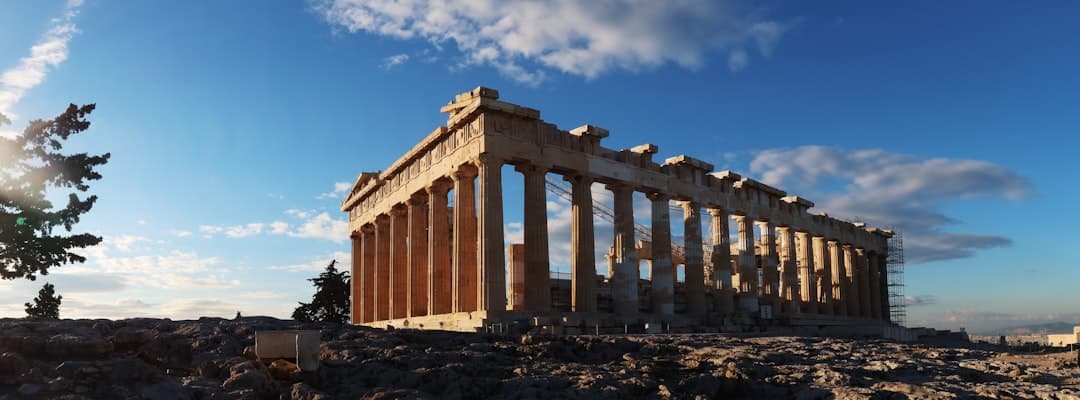
Ancient Agora
Athens / Ancient Agora

Ancient Agora

The beating heart of ancient Athenian democracy, still remarkably intact.

🏛️ Sights & Landmarks🎭 Arts & Entertainment
🌿 Relaxing👨‍👩‍👧 Family-friendly🎭 Cultural

The Ancient Agora was the civic center of ancient Athens — the open marketplace, meeting ground, and political hub where Athenian democracy was born and debated. This is where Socrates walked and talked, where citizens voted, where merchants sold goods and philosophers argued about the nature of justice. It predates the Roman Forum by centuries and in many ways was the template for what a city center could be. If the Acropolis is Athens' spiritual crown, the Agora is its living brain.

Walking through the site today is genuinely evocative in a way that many ancient ruins are not. The star attraction is the Temple of Hephaestus — one of the best-preserved ancient Greek temples in existence, nearly fully intact with its columns and roof still standing, which is extraordinary. Beyond that you'll wander among the foundations of the Stoa of Attalos, which has been reconstructed and now houses a small but fascinating museum with everyday objects recovered from the site: jury ballots, coins, clay toys, ostraka (the pottery shards used to vote for ostracism). The site itself is spacious and green, with olive and pomegranate trees planted to evoke the ancient landscape.

The Agora is often overshadowed by the Acropolis next door, which works in your favor — crowds are meaningfully lighter here. It's included in the combined Athens archaeological ticket, so if you're buying that, there's no reason not to visit. Come in the morning when light falls beautifully on the Temple of Hephaestus from the west, or late afternoon when the site empties out. The museum closes before the grounds, so prioritize it first.

Local Tips

  1. 1

    Buy the combined archaeological ticket rather than paying individually — it covers the Acropolis, Agora, Roman Agora, Kerameikos, and several other sites and pays for itself quickly.

  2. 2

    Prioritize the Stoa of Attalos museum early in your visit; it closes at the same time as the grounds but you can easily lose track of time outside and run short.

  3. 3

    The Agora has multiple entrances — the main one on Adrianou Street in Monastiraki is most convenient, but entering from the Thissio side (near the metro station) puts you closer to the Temple of Hephaestus from the start.

  4. 4

    There's almost no shade across the main open grounds, so a hat, sunscreen, and water are essential from April through October — the site has no café or significant shelter.

When to Go

Best times
Spring (April–May)

Ideal conditions — mild temperatures, wildflowers on the site, manageable crowds before the summer tourist surge.

Morning (opening until 10:30 AM)

Light is beautiful on the Temple of Hephaestus and the site is at its quietest — well before tour groups arrive.

Winter (December–February)

Crowd-free and often pleasantly cool, though some facilities may have reduced hours and occasional rain can make the paths slippery.

Try to avoid
Summer (July–August)

The site is almost entirely unshaded and temperatures regularly exceed 35°C. Midday visits can be brutal and potentially dangerous.

Why Visit

01

The Temple of Hephaestus is one of the most complete ancient Greek temples on Earth — seeing it standing nearly whole is genuinely jaw-dropping.

02

The on-site museum holds real artifacts of daily Athenian life, including actual ballots and ostracism shards, making democracy feel tangible rather than abstract.

03

Far fewer crowds than the Acropolis, with a spacious, green site that rewards slow wandering rather than elbow-to-elbow sightseeing.