
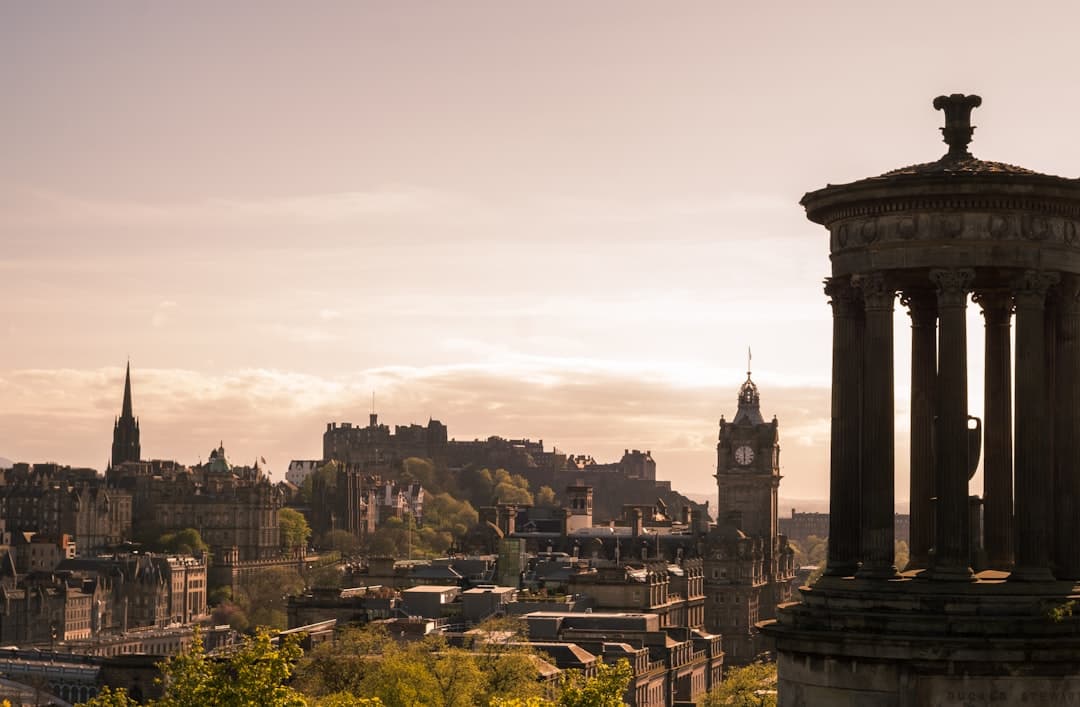
Scott Monument
Edinburgh / Scott Monument

Scott Monument

A Victorian Gothic tower honoring Scotland's most beloved novelist, climbable from within.

🏛️ Sights & Landmarks🎯 Activities & Experiences
🧗 Adventurous🎭 Cultural🌹 Romantic

The Scott Monument is a soaring 61-metre Gothic spire in the heart of Edinburgh's Princes Street Gardens, built in honor of Sir Walter Scott — the novelist who invented the modern historical novel and, some would argue, invented the romanticized idea of Scotland itself. Completed in 1846, it's the largest monument to a writer anywhere in the world, a fact that tells you everything about how seriously 19th-century Edinburgh took its literary identity. Inside the base sits a marble statue of Scott with his deerhound Maida, carved by John Steell, and 64 figures of characters from Scott's novels are carved into the structure's exterior niches.

The real experience here is the climb. Four narrow, winding staircases — 287 steps in total — spiral up through the tower's interior, opening onto four viewing platforms at different heights. Each level offers progressively more spectacular views: the rooftops of the Old Town, the castle on its volcanic crag, the Firth of Forth glittering in the distance on clear days, and Arthur's Seat rising behind the city. The stairways are genuinely tight and steep, which adds a slightly breathless, adventurous quality to what might otherwise be a purely reverential visit. The top platform, if you make it, is one of the best viewpoints in the city.

The monument's blackened sandstone — darkened by decades of Victorian-era coal smoke — gives it a Gothic, almost brooding quality that suits Edinburgh perfectly. Opening hours can be limited and the lunchtime closure is real, so check before you turn up. Entry is cheap by Edinburgh standards, which makes it one of the better-value elevated viewpoints in the city. Princes Street Gardens directly below are free to stroll, so combine the climb with a wander through the gardens afterward.

Local Tips

  1. 1

    The lunchtime closure (12:30–1:45 PM) is real and enforced — don't show up at 12:15 expecting to squeeze in, you'll be turned away.

  2. 2

    The staircase gets very narrow near the top and there's no passing room — if you're claustrophobic or have mobility issues, the lower platforms are still worthwhile but the summit may not be for you.

  3. 3

    Bring a layer even in summer — the upper platforms are exposed and the wind coming off the Forth can be surprisingly cutting.

  4. 4

    The view from the top looking directly down onto Princes Street is genuinely vertiginous and spectacular; most photos of Edinburgh are taken from other angles, so this perspective is unusually fresh.

When to Go

Best times
Summer (June–August)

Clear skies give the best views, but queues can build during peak tourist season — arrive early in the morning when it opens.

August (Edinburgh Festival)

The city is packed and the gardens below are lively, but the monument itself gets very busy — expect longer waits and a more crowded climb.

Try to avoid
Winter (December–February)

Short daylight hours and frequent low cloud can obscure views, and the exposed upper platforms are bitterly cold and windy. Not the most rewarding time to climb.

Why Visit

01

Climb 287 steps inside a Victorian Gothic spire for some of the best panoramic views in Edinburgh — castle, Old Town rooftops, and the Firth of Forth all at once.

02

It's the world's largest monument to a writer, and the ornate stonework and marble interior make it a genuinely impressive piece of 19th-century craftsmanship.

03

At a fraction of the cost of other city viewpoints, it's outstanding value — and the narrow spiral staircase gives it an adventure that a lift-accessed observation deck never could.