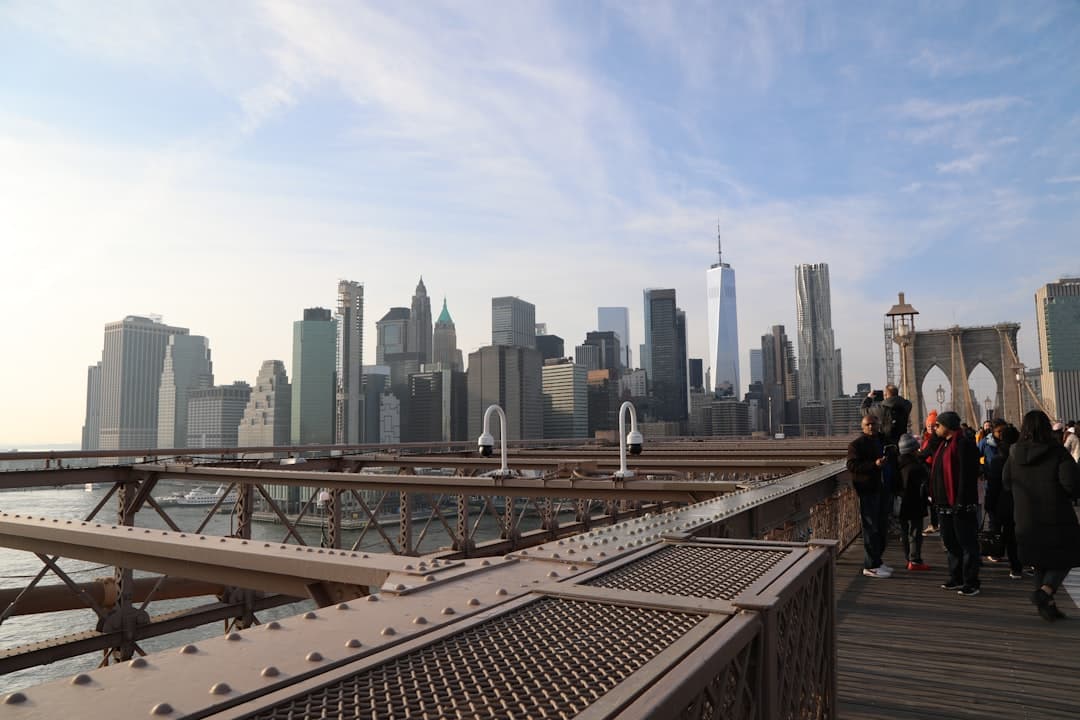
Brooklyn Bridge
A 140-year-old suspension bridge that still stops you in your tracks.
The Brooklyn Bridge connects the boroughs of Manhattan and Brooklyn across the East River, and when it opened in 1884 it was the longest suspension bridge in the world. Designed by John Roebling — who died before construction finished — and completed under his son Washington Roebling, it took 14 years to build and cost the lives of more than two dozen workers. For New Yorkers it's a daily commuter crossing; for everyone else it's one of the most recognizable and emotionally resonant pieces of engineering on earth.
The experience is straightforward: you walk or bike across. The dedicated pedestrian and cyclist path runs elevated above the vehicle lanes, and the roughly 1.1-mile crossing takes you through a Gothic archway of stone towers, past the web of steel cables that give the bridge its iconic silhouette, and delivers you to sweeping views of lower Manhattan's skyline, the Statue of Liberty in the distance, and the Brooklyn waterfront. On clear days the panoramas in both directions are genuinely breathtaking. Most people start from the Manhattan side at City Hall Park and walk toward Brooklyn, where you arrive in DUMBO — one of the city's most photogenic neighborhoods.
The bridge is free, open 24 hours, and needs no reservation. That said, the midday window on summer weekends is genuinely crowded — tour groups, cyclists, and pedestrians jostling for the same narrow path. Early morning is the insider play: the light is better, the crowds are thinner, and the whole crossing feels like it belongs to you. If you want the classic DUMBO photograph of the bridge framed between buildings on Washington Street, build in time for that after you cross.