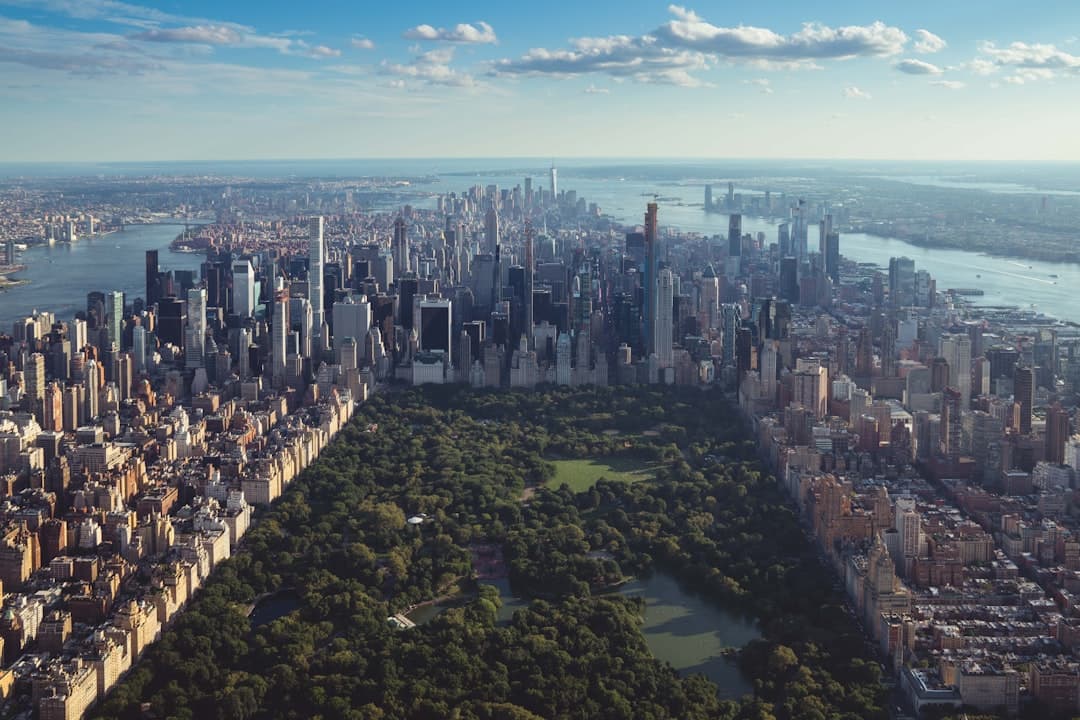
Central Park
843 acres of deliberately wild parkland at the centre of New York City.
Central Park is a vast public park that sits at the heart of Manhattan, stretching the equivalent of 51 city blocks from its southern to northern edge. Built in the mid-1800s on land that was cleared and entirely reshaped over two decades, it was designed to give New Yorkers access to open space and nature within what was already becoming one of the densest cities in the world. Today it draws tens of millions of visitors a year and remains genuinely green, varied, and large enough to get lost in.
The park has something for almost every kind of visit. The southern section has the most famous spots — an ornate fountain set on a wide terrace, a long tree-lined promenade, and a graceful iron bridge arching over a lake where rowboats can be hired by the hour. Further in, there are open meadows perfect for picnics, a large reservoir with a running track around it, wooded paths where the city noise fades, and formal gardens that are almost always uncrowded. In summer the park comes alive with outdoor concerts, food carts, and New Yorkers reclaiming the lawns on their lunch breaks.
Most visitors enter from the south and cover a relatively small portion of the park. The northern section is quieter, wilder in feel, and worth making the effort to reach. The park is free to enter with no tickets or queues — just walk in from any of the surrounding streets. Bikes and rollerblades are available to hire near the main entrances, and the main road through the park is closed to cars at weekends.