Istanbul Archaeology Museums
Three museums in one complex, home to artifacts spanning 5,000 years of human civilization.
The Istanbul Archaeology Museums is one of the oldest and most important museum complexes in the world, tucked into a corner of the first Topkapi Palace grounds in the Sultanahmet district. Founded in the late 19th century largely through the vision of Osman Hamdi Bey — a pioneering Ottoman painter and archaeologist who pushed through landmark legislation preventing antiquities from being exported — the complex actually comprises three separate buildings: the main Archaeological Museum, the Museum of the Ancient Orient, and the Tiled Kiosk Museum. Together they hold over one million objects, including some of the most significant ancient artifacts anywhere on earth.
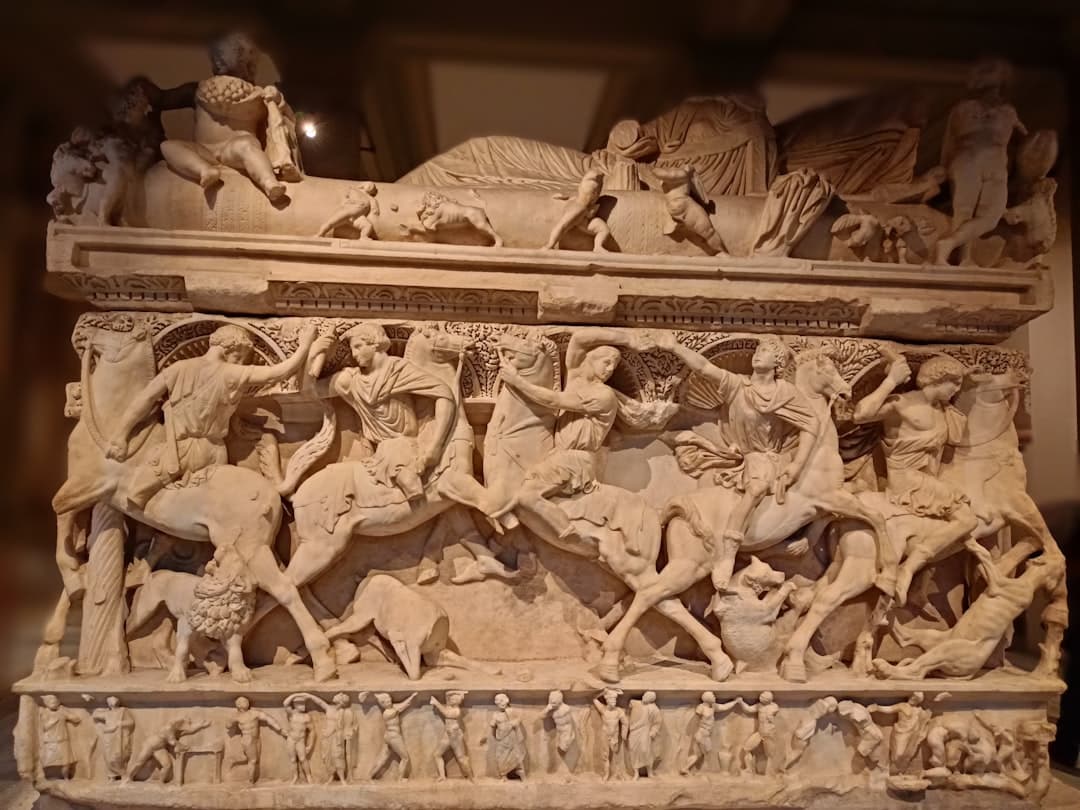
The headline attraction is the Alexander Sarcophagus in the main building — a breathtaking 4th-century BC marble coffin decorated with battle scenes in high relief, its original paint traces still faintly visible. Despite the name, it probably wasn't Alexander the Great's, but it's extraordinary regardless. Beyond that, you'll find the Treaty of Kadesh (one of the world's oldest known peace treaties, between the Hittites and Egyptians), Mesopotamian artifacts, Phoenician sarcophagi, Greek and Roman sculpture, and one of the most impressive ancient Near Eastern collections outside of London or Berlin. The Tiled Kiosk, dating from 1472, is one of the oldest surviving Ottoman secular buildings and worth the visit just for the architecture.
Arrive early — the complex sits just below the main Topkapi entrance and is easy to miss or leave too little time for after the palace. The Museum of the Ancient Orient often gets skipped but is genuinely remarkable. Buy your ticket at the complex itself rather than bundling with a museum pass unless you're already holding one. The shaded courtyard between the buildings is a quiet spot to regroup mid-visit, and the whole place is noticeably less crowded than Topkapi or Hagia Sophia, which is part of its appeal.