
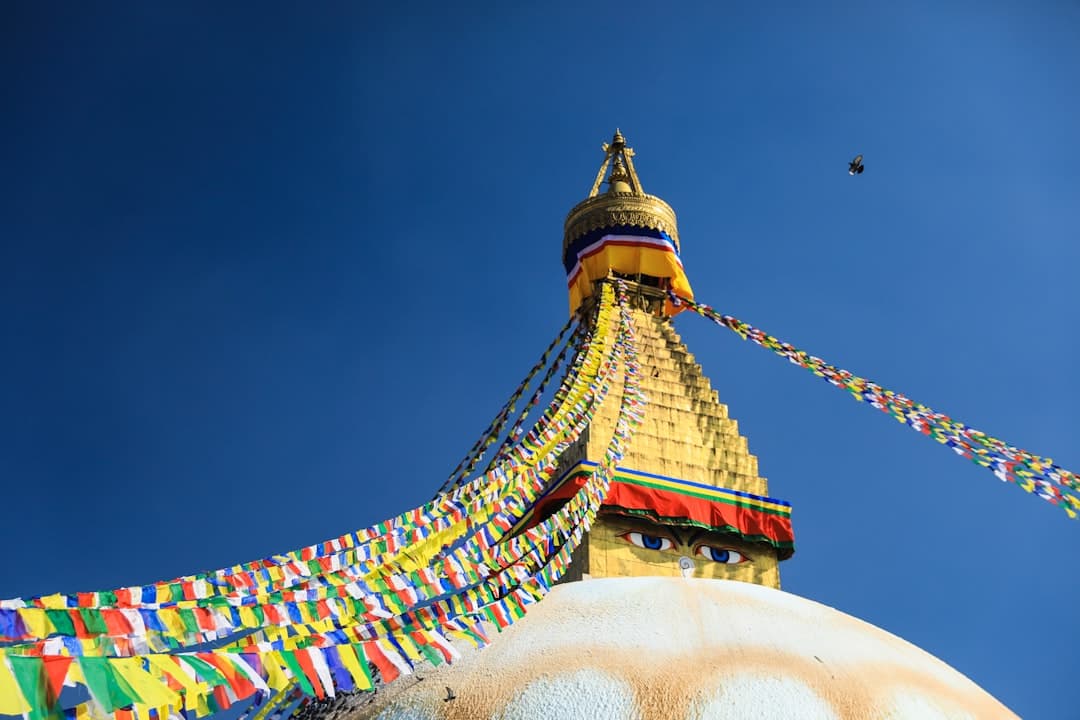
Boudhanath Stupa
Kathmandu / Boudhanath Stupa

Boudhanath Stupa

One of the largest Buddhist stupas on earth, still beating with living faith.

🏛️ Sights & Landmarks🎯 Activities & Experiences🎭 Arts & Entertainment
🌿 Relaxing👨‍👩‍👧 Family-friendly🎭 Cultural

Boudhanath is a massive, ancient stupa — essentially a dome-shaped Buddhist monument — located about 11 kilometers northeast of central Kathmandu. At roughly 36 meters tall with a base circumference of around 100 meters, it's one of the largest stupas in the world, and it has been a center of Tibetan Buddhist worship and pilgrimage for centuries. UNESCO added it to the World Heritage list in 1979, but that designation doesn't really capture what makes it special: this is a place where religion is alive, not preserved. Thousands of pilgrims, monks, and local Newar and Tibetan residents come here every day to pray.

The experience of visiting Boudhanath is anchored by the kora — the ritual circumambulation of the stupa. You join the clockwise stream of pilgrims walking around the base, past hundreds of spinning prayer wheels, butter lamps flickering in small shrines, and the constant murmur of mantras. The stupa's eyes — those iconic painted eyes on the square harmika near the top — seem to watch you from every angle. The surrounding plaza is ringed by monasteries and painted buildings housing thangka shops, cafes, and small restaurants, many of them frequented by the large Tibetan exile community that has made Boudhanath its spiritual home since the 1950s.

The stupa is technically open around the clock, but the most atmospheric times are early morning (from around 6am) when devotees gather at dawn with butter lamps and incense, and again at dusk when the kora fills up again and the light turns golden. There's an entrance fee for foreign visitors — around 400 NPR as of recent years — collected at a booth near the main entrance. The rooftop cafes and restaurants encircling the plaza are an excellent place to sit with a Nepali tea or a coffee and simply watch the ritual life below; Stupa View Restaurant and several others offer decent food with genuinely extraordinary views of the stupa dome.

Local Tips

  1. 1

    Always walk clockwise around the stupa — this is the correct direction for the Buddhist kora and walking counter-clockwise is considered disrespectful to pilgrims.

  2. 2

    Spin the prayer wheels as you walk, using your right hand. It's a meaningful gesture and not just a tourist move — locals do it with genuine devotion.

  3. 3

    Head to one of the rooftop cafes (look for spots above the monastery-lined ring road) for the best elevated view of the stupa dome and the surrounding plaza.

  4. 4

    The narrow lanes immediately behind the stupa are worth exploring — you'll find small monasteries, Tibetan refugee shops, and a much quieter side of Boudha away from the main plaza.

When to Go

Best times
October–November

Post-monsoon skies are crystal clear, the air is cool, and the Himalayan backdrop on clear days is stunning. Peak trekking season means the city is energized but the stupa itself rarely feels overcrowded.

February–March

Losar, the Tibetan New Year, typically falls in this window and transforms Boudhanath into a festival of color, music, and ceremony — one of the best times to visit by far.

Early morning (6am–8am)

Dawn is when the kora is at its most meditative and sincere — butter lamps are lit, monks chant, and the crowds are prayerful rather than touristic. Don't sleep through it.

Try to avoid
June–August

Monsoon season brings persistent rain and humidity; the kora can be slippery and less pleasant, though the stupa never really closes and pilgrims still come regardless.

Why Visit

01

The scale and spiritual energy are genuinely overwhelming — walking the prayer wheel circuit among real pilgrims is unlike anything else in Kathmandu.

02

Boudhanath sits at the heart of Nepal's Tibetan Buddhist community, making it one of the most authentic places outside Tibet to experience that culture and tradition.

03

The surrounding plaza — ringed with monasteries, thangka galleries, and rooftop cafes — makes for hours of wandering, eating, and people-watching beyond the stupa itself.