
Swayambhunath
Ancient hilltop temple complex where Buddhism, Hinduism, and monkeys collide.
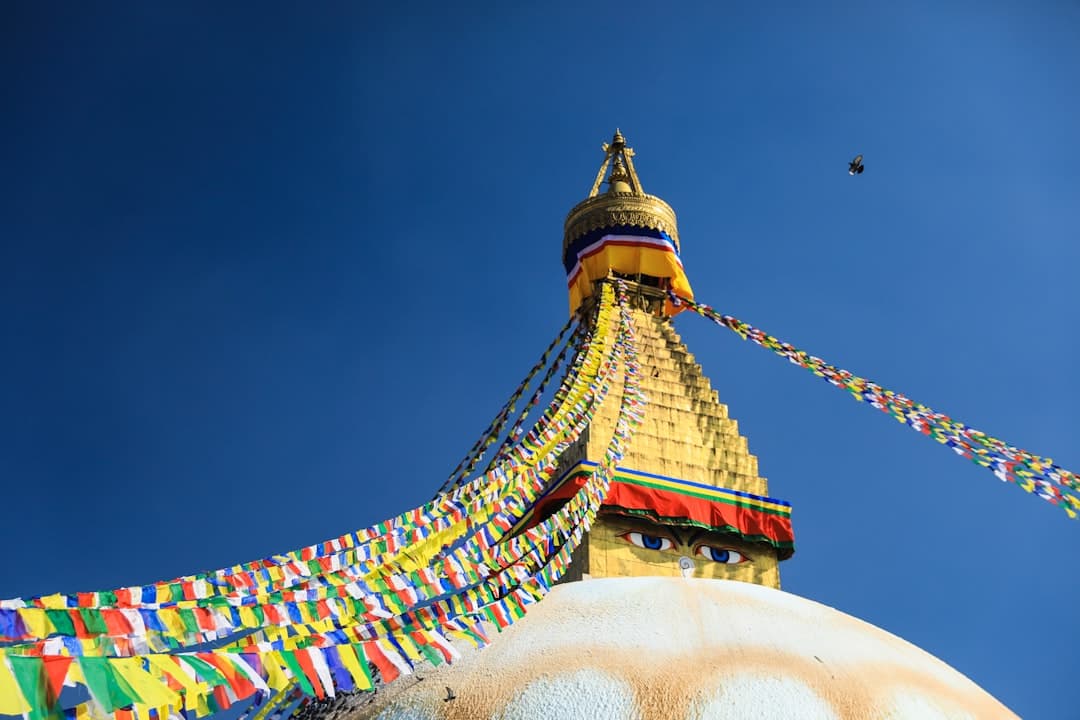
Swayambhunath — known affectionately as the Monkey Temple — is one of the oldest and most sacred religious sites in Nepal, sitting atop a forested hill on the western edge of Kathmandu Valley. The complex is believed to be over 2,500 years old, and the great white stupa at its crown, with its gilded spire and the famous painted eyes of the Buddha gazing out in all four directions, is one of the most recognizable images in all of Asia. For Buddhists, it is a site of deep pilgrimage. For Hindus, it is equally revered — a rare and genuinely shared sacred space where both traditions coexist without tension. UNESCO recognized the entire Kathmandu Valley, including Swayambhunath, as a World Heritage Site in 1979.
Getting there is half the experience: a steep staircase of 365 steps climbs through a forest thick with rhesus macaques — bold, photogenic, and entirely unintimidated by tourists. At the top, the stupa complex opens up into a world of shrines, butter lamps, prayer wheels, monks in saffron robes, and spinning prayer flags strung between pagodas. You walk the kora (the clockwise circumambulation route) around the stupa, spinning brass prayer wheels set into the base, passing shrines to Tara, Manjushri, and Harati, the goddess of smallpox turned protector of children. The view over Kathmandu Valley is sweeping — best in the early morning before the smog settles in.
There is an entry fee for foreign visitors (around USD $2–3, payable at the base of the stairs). The site is technically open around the clock, but dawn is the golden hour — monks chant, pilgrims do their morning rounds, and the light on the stupa is extraordinary. Come early, wear comfortable shoes for the climb, and keep a firm grip on your bag if you stop to photograph the monkeys — they are charming thieves.