Djemaa el-Fna
Marrakech's ancient beating heart: a square that never truly sleeps.
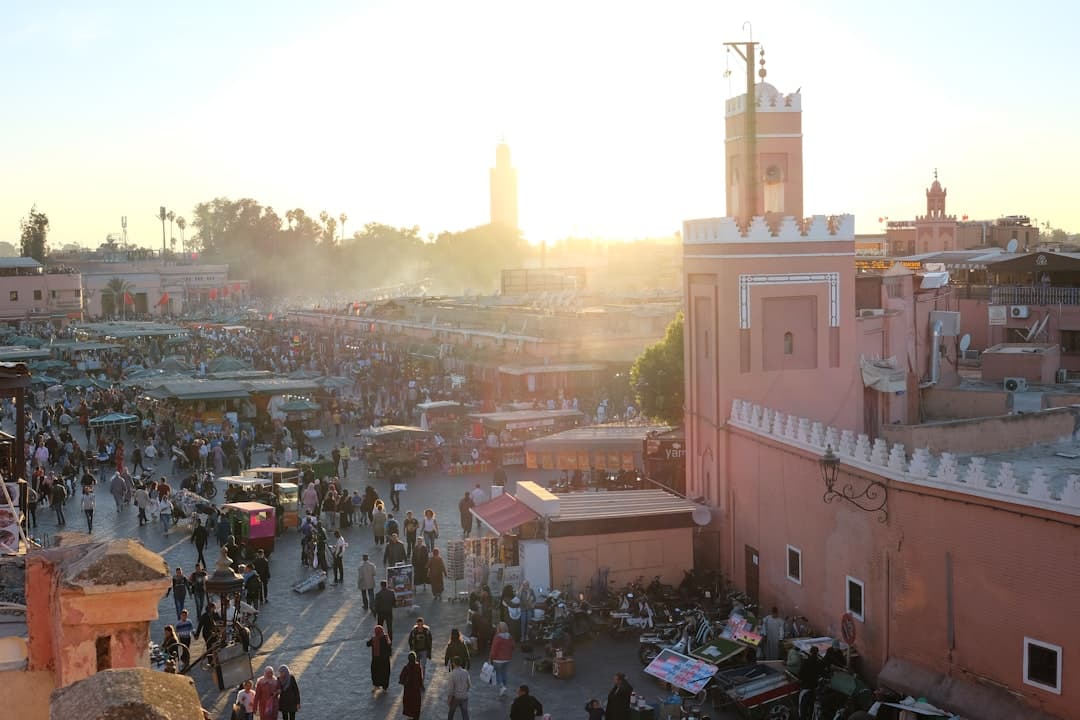
Djemaa el-Fna is the vast open plaza at the centre of Marrakech's medina — a UNESCO-recognised cultural space and one of the most alive public squares on earth. It has functioned as the social and commercial heart of the city for over a thousand years, and what happens here daily is genuinely unlike anything else: a rotating cast of storytellers, acrobats, snake charmers, Gnawa musicians, henna artists, and food vendors fill the space from mid-morning until well past midnight, creating something that feels more like organised chaos than a tourist attraction.
The square transforms as the day progresses. In the morning it's relatively calm — a good time to walk it without the crush — but by late afternoon the smoke from the food stalls starts rising and the crowd thickens dramatically. Come dusk, the stalls form a labyrinthine village of grills and lanterns, and the sounds layer over each other: drum circles, calls to prayer from the Koutoubia Mosque nearby, barkers announcing the evening's entertainment. You can eat grilled lamb, snail soup, fried fish, or fresh-squeezed orange juice from stalls that have operated in this square for generations. The terrace cafés and restaurants ringing the square — spots like Café de France and the rooftop at Grand Balcon du Café Glacier — offer a bird's-eye view of the whole spectacle.
The square is entirely free to enter and there is no ticketing, no queue, no formal organisation — which is both its appeal and its challenge. Prices at the food stalls are not fixed and hawkers can be persistently pushy; a friendly but firm 'no thank you' is your best tool. The square sits at the edge of the souks, making it the natural starting point for exploring the medina's labyrinthine shopping streets. Arrive with your wits about you, your camera ready, and no particular agenda — the square rewards wandering.