
Koutoubia Mosque
Marrakech / Koutoubia Mosque

Koutoubia Mosque

The minaret that has defined Marrakech's skyline for nine centuries.

🏛️ Sights & Landmarks🎭 Arts & Entertainment
👨‍👩‍👧 Family-friendly🎭 Cultural🌹 Romantic

The Koutoubia Mosque is the largest mosque in Marrakech and one of the most important examples of Moroccan-Andalusian architecture in the world. Built in the 12th century under the Almohad dynasty, its 70-metre minaret served as the architectural template for both the Giralda in Seville and the Hassan Tower in Rabat — a remarkable legacy that spread across continents. The name comes from the Arabic word for booksellers, a reference to the manuscript market that once surrounded it. For non-Muslims, the interior is off-limits, but the mosque's exterior and surrounding gardens are very much part of the Marrakech experience.

What you actually come here to do is absorb the scale and beauty of the minaret up close, and to sit in the rose-planted gardens that wrap around the mosque's base. The tower is a masterpiece of decorative stonework — each of its four faces is slightly different, featuring interlocking geometric patterns, a band of faience tilework, and ornate windows that change character as the light shifts throughout the day. At sunset, the warm stone turns golden and the call to prayer rings out, and it's one of those genuinely spine-tingling travel moments. The gardens themselves are a peaceful counterpoint to the chaos of the nearby Djemaa el-Fna square.

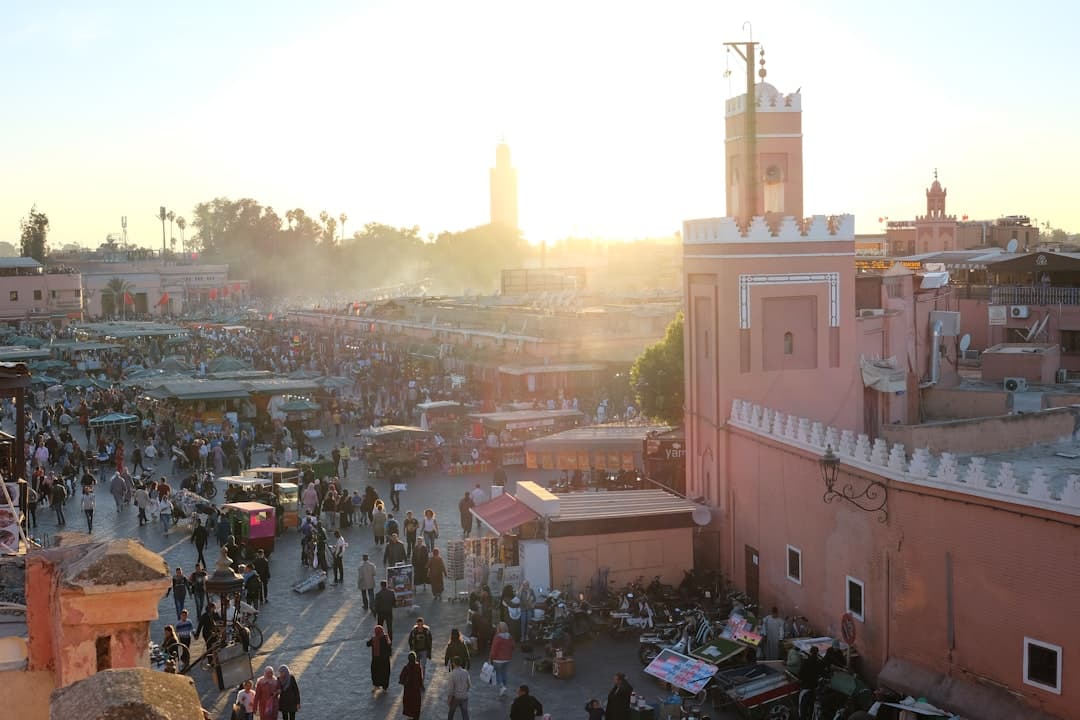
The Koutoubia sits right at the western edge of the medina, just a few minutes' walk from Djemaa el-Fna, making it an easy first stop or a natural anchor point for your explorations. Come in the late afternoon to catch the best light on the minaret and stay through the Maghrib call to prayer at dusk — the acoustics and atmosphere at that moment are extraordinary. The gardens are free to enter and open to all.
Local Tips

  1. 1

    Walk a full circuit around the mosque rather than just viewing it from the main road — the back and side angles of the minaret are less photographed and often less crowded.

  2. 2

    The best unobstructed view of the full minaret is from the Djemaa el-Fna side, but for an elevated perspective, the rooftop terraces of cafés on the square's western edge frame it beautifully.

  3. 3

    Come twice — once in daylight to appreciate the stonework details, and again after dark when the minaret is lit up and the square is at its most electric.

  4. 4

    The gardens close before the mosque's prayer times; check local prayer schedules and aim to arrive well before Maghrib if you want time to explore without being ushered out.

When to Go

Best times
Late afternoon / golden hour

The warm light transforms the minaret's sandstone into deep amber — this is when photographers and the simply curious should be here.

Spring (March–May)

Mild temperatures, roses in bloom in the gardens, and softer light make this the most pleasant time to linger outside.

Try to avoid
July–August midday

Marrakech summer heat is brutal; the gardens offer little shade at peak hours and temperatures regularly exceed 40°C.

Friday midday

Friday prayers draw large crowds and the area around the mosque becomes very congested — access to the gardens may be restricted.

Why Visit

01

The minaret is one of the finest examples of Islamic architecture anywhere — its intricate stonework and geometric patterns reward close inspection.

02

Sunset here, timed with the evening call to prayer, is one of the most atmospheric experiences Marrakech has to offer.

03

The surrounding rose gardens offer a rare pocket of calm just steps from the sensory overload of Djemaa el-Fna square.