The High Line
A former freight railway turned elevated park threading through Manhattan's west side.
The High Line is a 1.45-mile elevated public park built on a disused freight rail line that once ran through the meatpacking, Chelsea, and Hudson Yards neighborhoods on Manhattan's west side. The original tracks carried livestock and industrial goods into the city from the 1930s until the last train ran in 1980. For decades the structure sat abandoned, with wildflowers and grasses colonizing the old rails — and it was partly that eerie, self-seeded landscape that inspired two local residents, Joshua David and Robert Hammond, to fight for its preservation rather than demolition. The park opened in 2009 and has since become one of the most visited public spaces in the United States, a genuine rethinking of what urban infrastructure can become.
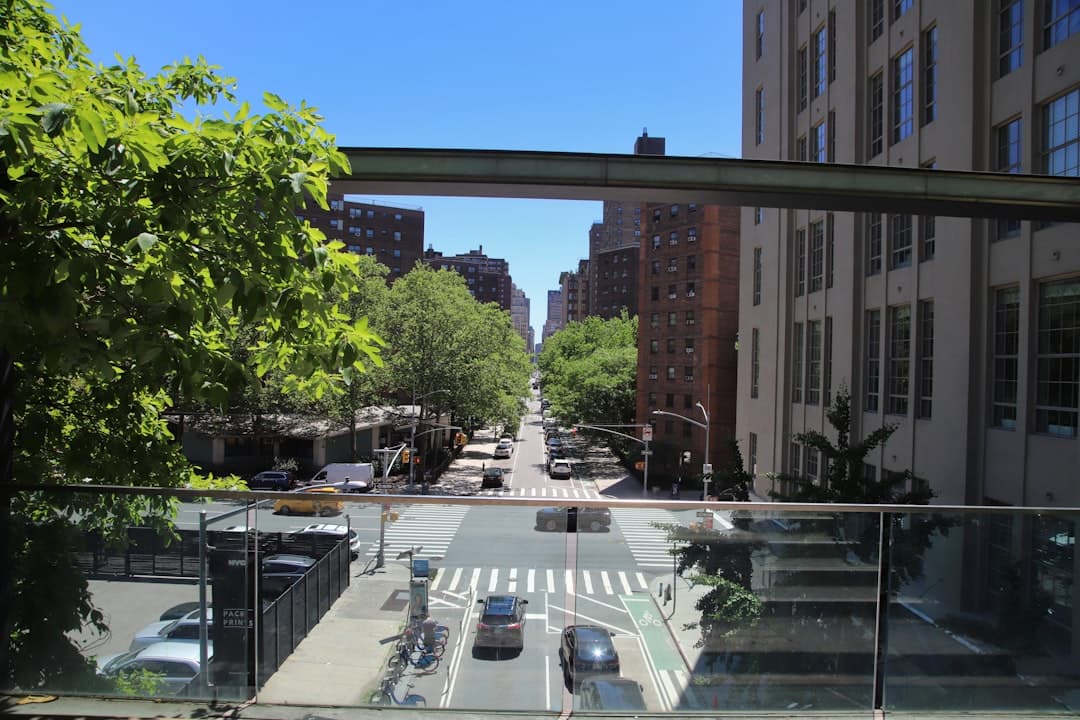
Walking the High Line, you move between carefully designed gardens planted by landscape architect Piet Oudolf — whose signature style uses grasses, perennials, and seed heads to create something that looks deliberately wild even in midwinter — and a series of art installations, seating areas, and one-of-a-kind views of the Hudson River, the Manhattan skyline, and the street grid below. The structure passes through buildings (the Standard Hotel straddles it dramatically), over the old rail yards now occupied by Hudson Yards, and past dozens of outdoor sculptures and rotating public art commissions. The 10th Avenue Square has a bleacher-style overlook where you can watch traffic below through a glass panel — unexpectedly mesmerizing.
The park runs from Gansevoort Street in the Meatpacking District north to 34th Street at Hudson Yards, with multiple entry and exit points along the way. It's entirely free and open daily. The crowds are real — especially on summer weekends between noon and 4pm — so going early morning or in the evening dramatically changes the experience. The southern section around Gansevoort and 14th Street tends to be the most photogenic and least congested; the northern stretch near Hudson Yards is newer, wider, and often quieter.