
Gwangjang Market
Seoul / Gwangjang Market

Gwangjang Market

Seoul's oldest covered market, built on a century of street food and silk.

🛍️ Shopping🏛️ Sights & Landmarks🍽️ Food & Drink🎯 Activities & Experiences
🍽 Foodie👨‍👩‍👧 Family-friendly🎭 Cultural

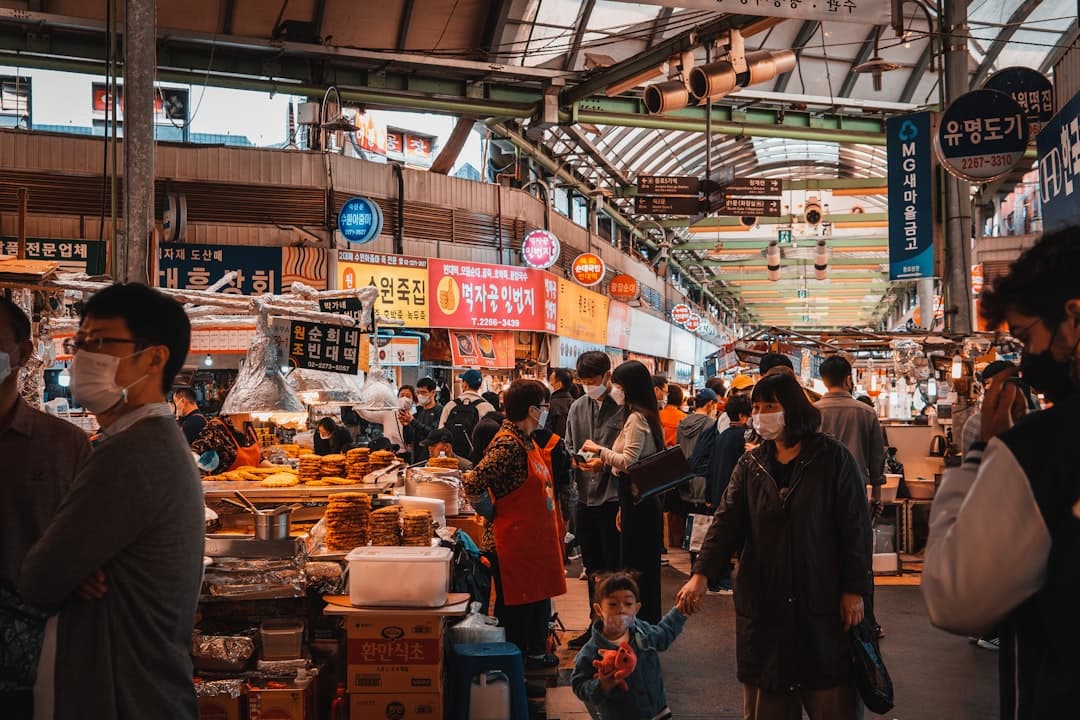
Gwangjang Market is one of the oldest and largest traditional markets in South Korea, founded in 1905 during the late Joseon dynasty — making it older than the country itself in its modern form. It stretches across a city block near the Cheonggyecheon Stream in the heart of old Seoul, housed under a long arched roof that gives the whole place the feel of a grand, slightly chaotic indoor bazaar. It is famous for two things above all else: food and fabric. The food stalls packed into the central hall have made Gwangjang internationally recognized, and the textile section — bolts of silk, linen, hemp, and traditional Korean fabric called hanbok cloth — remains one of the best places in the city to buy quality Korean textiles.

The experience is overwhelmingly sensory. The food hall runs down the center of the market, lined on both sides with small stall kitchens where vendors — many of them older women who have been here for decades — fry bindaetteok (mung bean pancakes), roll mayak gimbap (tiny, intensely flavored seaweed rice rolls said to be as addictive as narcotics, hence the name), and serve yukgejang (spicy beef soup) from bubbling pots. The smells, the sizzle of oil, the vendors calling out to passersby — it is alive in a way that sanitized food halls simply are not. Seating is communal and close; you sit at a vendor's counter, order directly, and eat alongside strangers.

Gwangjang is most rewarding in the late morning to early afternoon when the food stalls are fully operational and the fabric merchants are doing business. Arrive hungry and come with cash — most vendors do not accept cards. The market is close to Jongno 5-ga subway station on Line 1, which makes it easy to reach from most parts of the city. If you want a table at one of the more popular bindaetteok vendors without waiting too long, aim for a weekday morning rather than a weekend afternoon, when the crowds can get thick and tourist groups cycle through in waves.
Local Tips

  1. 1

    Bring cash — the vast majority of food stall vendors and fabric merchants do not accept credit cards, and the amounts are small enough that an ATM trip mid-visit is a real nuisance.

  2. 2

    Order the mayak gimbap from one of the vendors near the main entrance — these tiny rice rolls are a Gwangjang signature and cost almost nothing, making them a great first stop before committing to a full sit-down meal.

  3. 3

    If a vendor's stall has a queue or looks well-worn and busy, that's the one to choose — turnover is high enough that fresh batches of bindaetteok are coming off the griddle constantly at the popular spots.

  4. 4

    The textile floors and upper sections of the market are worth exploring even if you're not buying fabric — the scale of the bolts of silk and the density of the trade gives you a completely different side of the market from the food hall.

When to Go

Best times
Summer (June–August)

The covered market traps heat in summer and can become uncomfortably hot, especially in the food hall with all the cooking going on. Early morning visits are far more comfortable.

Weekday mornings (10am–1pm)

The food hall is fully running, the textile vendors are open, and crowds are manageable — the best overall window to visit.

Try to avoid
Lunar New Year and Chuseok

Many stall vendors close for the major Korean holidays, leaving large sections of the market empty. Worth checking dates before planning a visit around these times.

Why Visit

01

The bindaetteok (mung bean pancakes) fried fresh at the market stalls are some of the best versions of this dish you will find anywhere in Seoul — crispy, savory, and eaten hot at the counter with a cup of makgeolli rice wine.

02

The fabric and textile section is a genuine working market where seamstresses and hanbok designers shop, giving you access to high-quality Korean silk and traditional cloth at prices you won't find in boutique stores.

03

The market has been operating continuously since 1905, and that history is visible — in the vendors who have worked their stalls for thirty or forty years, in the architecture, and in dishes that haven't changed in generations.