
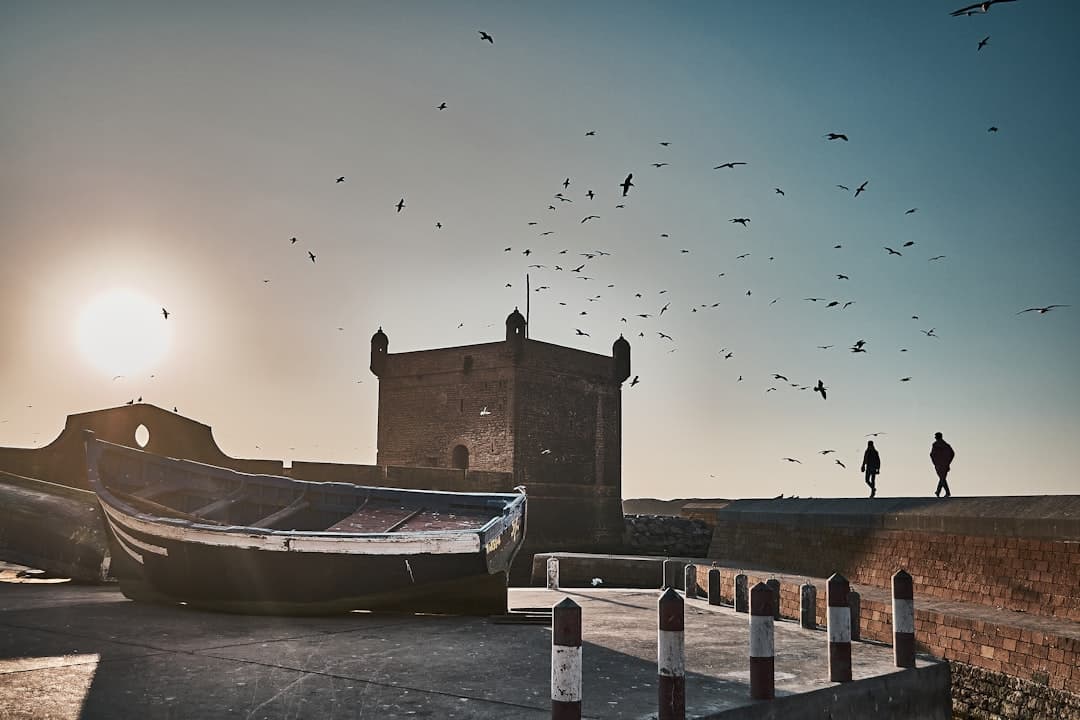
Bab Doukkala
One of Morocco's best-preserved medieval city gates, built to last centuries.
Bab Doukkala is one of the historic city gates that once controlled entry into Essaouira's medina, the old walled city on Morocco's Atlantic coast. Essaouira itself is a UNESCO-listed port town famous for its Portuguese-influenced ramparts, blue-and-white architecture, and reliably fierce ocean winds — and gates like Bab Doukkala were the original infrastructure that made the medina function as a fortified urban space. While Essaouira's most famous gate is Bab Marrakech, Bab Doukkala sits on the northern edge of the medina walls along Avenue Mohamed Zerktouni, marking one of the traditional entry points from the direction of Marrakech and the Doukkala region of Morocco.
Visiting Bab Doukkala is less about a formal attraction and more about reading the city's bones. The gate itself is a solid, imposing stone archway — the kind that makes you instinctively slow down and look up. Pass through it and you transition from the modern street outside into the tighter, older world of the medina lanes. It's a threshold experience, and that liminal quality is the whole point. The surrounding area near the gate tends to be less tourist-saturated than the central souks and the main medina arteries, which means you're more likely to see locals going about their day — picking up groceries, chatting outside shops, navigating on motorbikes.
The gate is best appreciated as part of a broader walk along Essaouira's ramparts and through the medina rather than as a standalone destination. Start here and head inward toward the souks, or use it as an exit point toward the newer part of town. Early morning is when the light hits the stonework well and the streets are quietest.