
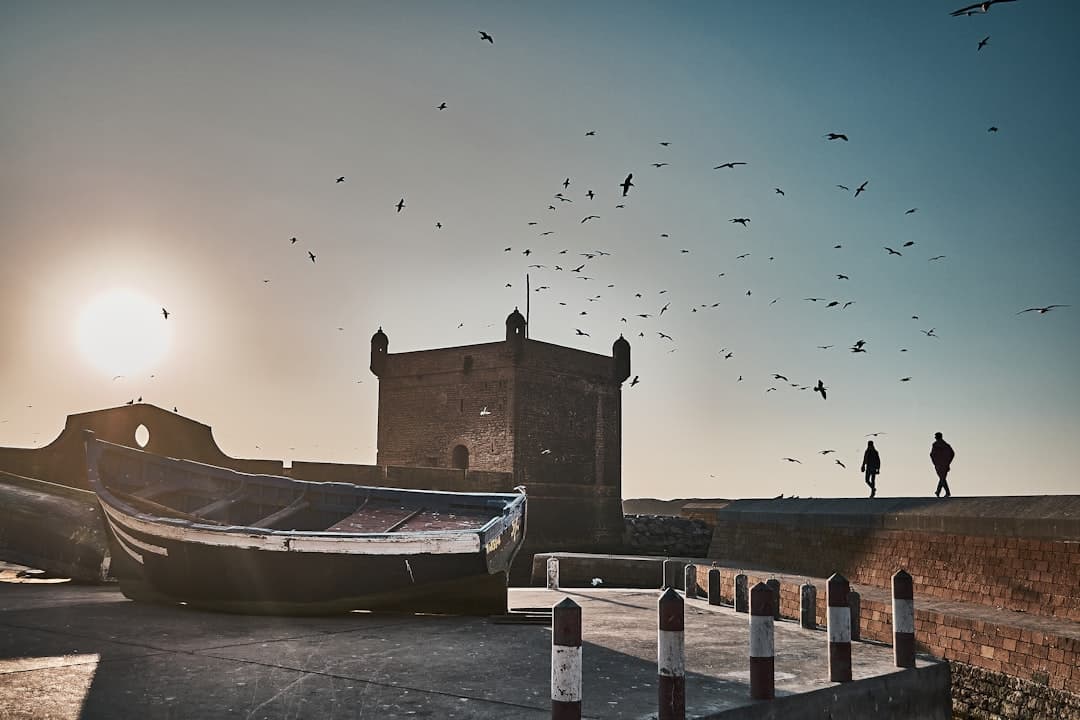
Mellah
Essaouira / Mellah

Mellah

The mellah tells Essaouira's Jewish history through crumbling beauty.

🏛️ Sights & Landmarks🏘️ Neighborhoods
🎭 Cultural🗺 Off the beaten path

The Mellah is Essaouira's old Jewish quarter, a distinct district within the medina that once housed a substantial Sephardic Jewish community that played a central role in the city's commercial and cultural life. For centuries, Essaouira — then known as Mogador — was home to one of the most prosperous Jewish trading communities in Morocco, and the mellah was their neighborhood: the place where they lived, worshipped, and built a world within a world. Most of that community emigrated to Israel and France in the mid-20th century, and the quarter today is quieter, its synagogues and grand townhouses standing as evidence of a community that shaped this city more than most visitors realize.

Walking through the mellah is a slow, atmospheric experience. The architecture is notably different from the rest of the medina — look for the tall, narrow townhouses with wrought-iron balconies characteristic of Jewish Moroccan domestic architecture, very different from the inward-facing riads of Arab neighborhoods. Some of Essaouira's historic synagogues still survive here, including Haim Pinto synagogue, a place of active pilgrimage connected to the revered rabbi whose legacy draws Jewish visitors from around the world. The streets are quieter and less touristy than the main souks, which gives the mellah a contemplative, slightly melancholy quality that rewards those who slow down.

This is not a ticketed attraction — the mellah is simply a neighborhood you walk through, so approach it with the mindset of a respectful wanderer rather than a checklist tourist. If you want to visit any of the synagogues inside, dress modestly, go during reasonable hours, and be aware that some are used for active religious purposes or require a caretaker to open them. The best approach is to combine a mellah stroll with a wider medina walk and give yourself enough time to get a little lost.

Local Tips

  1. 1

    The Haim Pinto synagogue is the mellah's most important site — a caretaker is often on hand to let you in, and a small donation is customary and appreciated.

  2. 2

    Don't rush through in 20 minutes. The mellah rewards slow exploration — duck down side alleys, look up at the balconies, and pay attention to the Hebrew inscriptions still visible on some doorways.

  3. 3

    Combine your mellah walk with a visit to the nearby Jewish cemetery on the edge of the medina walls, which is one of the largest and best-preserved Jewish cemeteries in Morocco.

  4. 4

    Locals in this part of the medina are generally less accustomed to being touristic hosts than vendors in the main souks — a greeting in Darija (the Moroccan Arabic dialect) goes a long way.

When to Go

Best times
Spring and autumn

Mild temperatures make wandering the quiet streets of the mellah genuinely pleasant — Essaouira's famous Atlantic wind is gentler and the light is beautiful for photography.

Moussem of Rabbi Haim Pinto (September)

An annual pilgrimage draws Jewish visitors from around the world to the Haim Pinto synagogue — a rare and moving occasion to witness living tradition, but expect the area to be busier than usual.

Try to avoid
Midsummer afternoons

Essaouira's notorious wind (the alizée) picks up most aggressively in summer afternoons, making open streets uncomfortable and dusty. Morning visits are far better.

Why Visit

01

It reveals a layer of Moroccan history most visitors miss entirely — the centuries-old Jewish community that made Essaouira one of North Africa's great trading ports.

02

The architecture is genuinely distinct, with balconied townhouses unlike anything in the rest of the medina, offering a different visual texture to explore.

03

The streets are noticeably quieter and less commercialized than the main souks, making it one of the few places in the medina where you can actually think.