
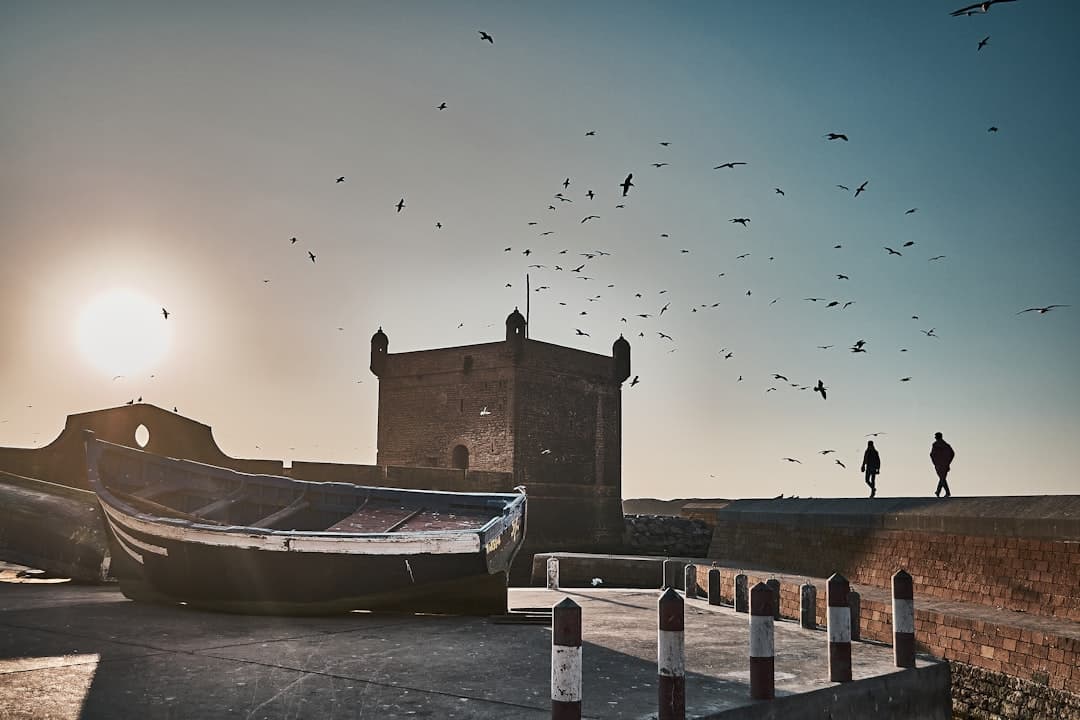
Essaouira Ramparts
Essaouira / Essaouira Ramparts

Essaouira Ramparts

Ancient sea walls where Atlantic winds meet centuries of Moroccan history.

🏛️ Sights & Landmarks🌿 Nature & Outdoors🎯 Activities & Experiences
🧗 Adventurous🎭 Cultural🌹 Romantic

The ramparts of Essaouira are the fortified stone walls and gun batteries that ring this coastal medina on Morocco's Atlantic coast. Built primarily in the 18th century under Sultan Mohammed ben Abdallah, who hired European — particularly French — military architects to design the fortifications, the walls protected a strategically vital port city that became one of the most important trading hubs on Morocco's western coast. Today the ramparts are a UNESCO World Heritage-listed part of the medina, and they remain one of the most visually striking and accessible historic fortifications in North Africa.

The star attraction is the Skala de la Ville, the great sea-facing bastion on the northwest corner of the medina, lined with antique Spanish bronze cannons pointed permanently out to sea. You walk the broad top of the walls with the Atlantic crashing below, seagulls wheeling overhead, and the whitewashed blue-shuttered city behind you. From here you can see the Îles Purpuraires — the small offshore islands that were once home to Phoenician settlers and later used to produce Tyrian purple dye. Further south, the Skala du Port guards the working fishing harbor, where blue wooden boats come and go and fishermen sell the morning catch straight off the dock.

The ramparts are free to walk and open much of the day, though the posted hours should be treated as approximate — access can be informal. Come in the late afternoon when the light turns golden over the ocean and the wind, which blows almost constantly here, feels less punishing than midday. Essaouira's famous gusts have earned it a global reputation as a windsurfing and kitesurfing destination, but on the ramparts that same wind is simply atmospheric. Bring a layer regardless of the season.

Local Tips

  1. 1

    Start at the Skala de la Ville on the northwest corner — this is the most impressive section with the bronze cannons — then walk south toward the port for the full rampart experience.

  2. 2

    The Skala du Port near the fishing harbor offers a different and quieter perspective than the main sea bastion; don't skip it just because it's less famous.

  3. 3

    Argan oil cooperatives and woodworkers using thuja root (a local specialty) line the base of the ramparts — worth a browse, but be prepared to negotiate and ignore aggressive sales pitches.

  4. 4

    The wind in Essaouira is not a rumor — it can be cold and strong even in July. A light jacket or scarf stuffed in your bag will make the rampart walk far more enjoyable.

When to Go

Best times
June–August

Summer brings the strongest Atlantic winds — thrilling for atmosphere on the ramparts but cold and relentless. Layer up even in midsummer.

April–May & September–October

Spring and autumn offer milder winds, pleasant temperatures, and fewer crowds — the best overall conditions for exploring the walls.

June (Gnaoua Festival)

The annual Gnaoua World Music Festival draws large crowds to Essaouira — the ramparts and surrounding area get very busy but the atmosphere is electric.

Try to avoid
Midday year-round

The sun and wind combined can be exhausting midday. Late afternoon, roughly an hour before sunset, gives the best light and a more comfortable experience.

Why Visit

01

Walk atop 18th-century cannon-lined walls with unobstructed views of the open Atlantic — one of the most dramatic coastal fortifications in Morocco.

02

The ramparts connect the medina's labyrinthine souks to the working fishing harbor, giving you the full sweep of the city in a single route.

03

The golden late-afternoon light on the white walls and blue sea is genuinely spectacular — this is one of the most photogenic spots on Morocco's coast.