Saadian Tombs
Royal tombs sealed for centuries, rediscovered by aerial photography in 1917.
The Saadian Tombs are the mausoleum of the Saadian dynasty, the royal family that ruled Morocco through the 16th and early 17th centuries. Built during the reign of Sultan Ahmad al-Mansur — the ruler who famously sacked Timbuktu and brought back enormous wealth — the tombs were walled up by his successor Moulay Ismail, who wanted to erase the Saadian legacy without committing the sacrilege of destroying a burial site. They sat hidden and forgotten for over two centuries until French aerial surveyors spotted the complex in 1917. That story alone — a royal necropolis sealed in time, accidentally preserved by political spite — makes this one of the more extraordinary archaeological finds in North Africa.
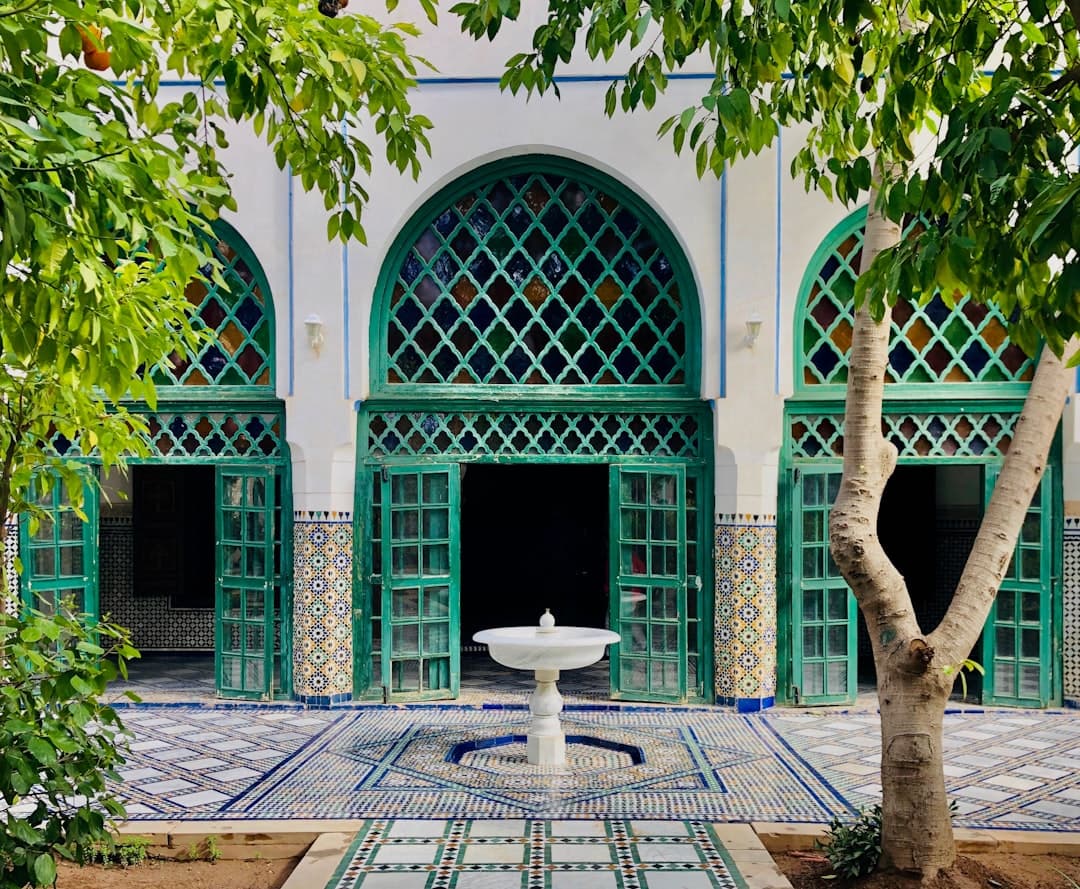
The site holds around 66 members of the Saadian royal family across two main chambers and a garden courtyard. The centrepiece is the Chamber of the Twelve Columns, a breathtaking room built for Ahmad al-Mansur himself, lined with Italian Carrara marble, intricate cedar wood carving, and some of the finest zellij tilework you'll see anywhere in Morocco. Servants and lesser royals are buried in the garden outside, their graves marked by simple stone slabs. The contrast between the opulence inside and the quiet simplicity of the garden is striking and genuinely moving.
The tombs sit just off Rue de la Kasbah in the Kasbah neighbourhood, a short walk from the Bahia Palace and the southern edge of the medina. Entry is cheap but the site gets crowded fast — tour groups descend from mid-morning onwards. The chambers are small and there's no controlling the flow of visitors, so the quality of your experience is very much a function of when you arrive. Come right at opening and you may have the Chamber of the Twelve Columns almost to yourself. Wait until noon and you'll be shuffling through shoulder to shoulder.