
All Places
1,073 places around the world
1,073 places · page 16 of 45
Groeningemuseum
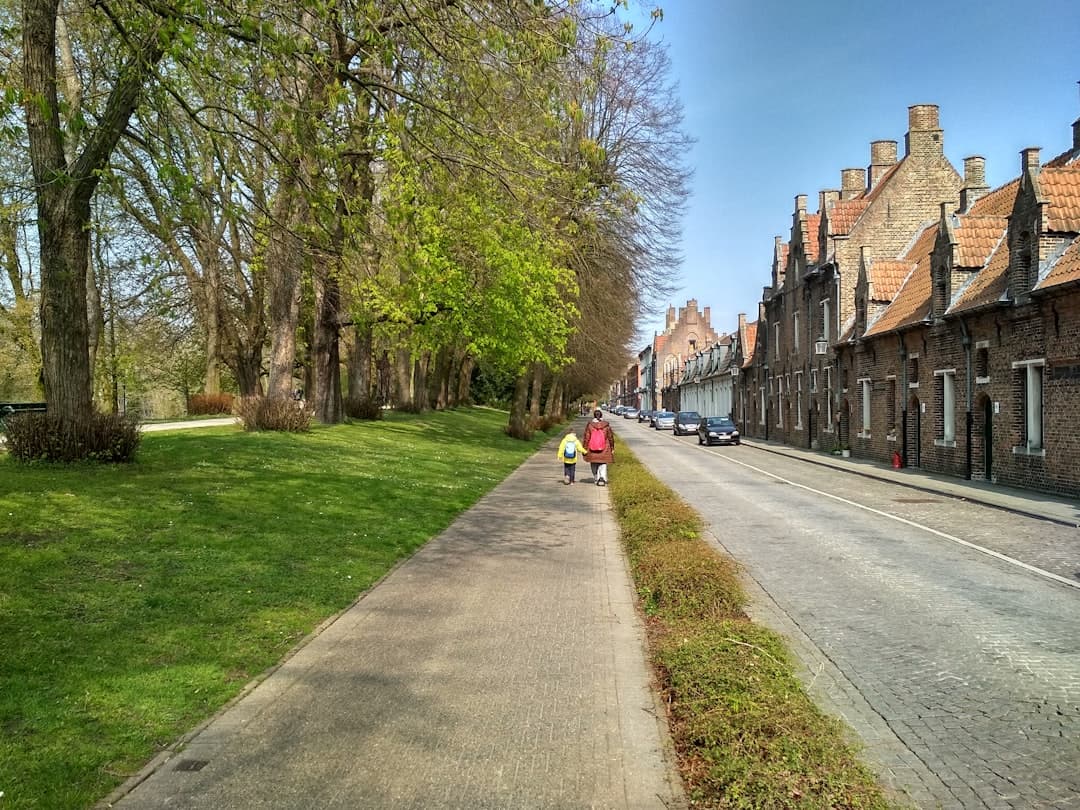
The Groeningemuseum is Bruges's flagship fine art museum and one of the most important art museums in Belgium. Its reputation rests on a single extraordinary achievement: housing the finest collection of Flemish Primitive paintings in existence. These are works from the 15th and 16th centuries by masters like Jan van Eyck, Hans Memling, Rogier van der Weyden, and Hieronymus Bosch — painters who essentially invented the techniques of oil painting and realistic portraiture that shaped all of Western art that followed. If you've ever wondered where modern painting really began, this is a strong argument that it started here, in Bruges. The collection spans six centuries of Flemish and Belgian art, but the medieval rooms are the reason people come. Jan van Eyck's Madonna with Canon van der Paele (1436) is considered one of the greatest paintings ever made — the detail in the armour alone could hold you for an hour. Hugo van der Goes's tender and melancholy work sits nearby. There are also sharp-eyed portraits, altarpieces with jewel-like colours, and Hieronymus Bosch's unsettling Last Judgement triptych, which feels as strange and original today as it must have in 1500. Beyond the medieval highlights, the museum traces Belgian art through the Baroque, Neoclassical, and into 20th-century Expressionism, including strong work by Constant Permeke and Gustave De Smet. The museum is compact by major-institution standards, which is genuinely a virtue — you won't hit the wall of exhaustion that kills visits to larger galleries. A focused two-hour visit covers the highlights comfortably. It's located along the Dijver canal, close to the Groeninge Park and the Arentshof garden, so pairing it with a walk along the water makes for a natural afternoon. Monday closures are easy to miss when planning, so double-check before you go. Audio guides are available and genuinely worth using for the van Eyck rooms specifically.
Grossmünster
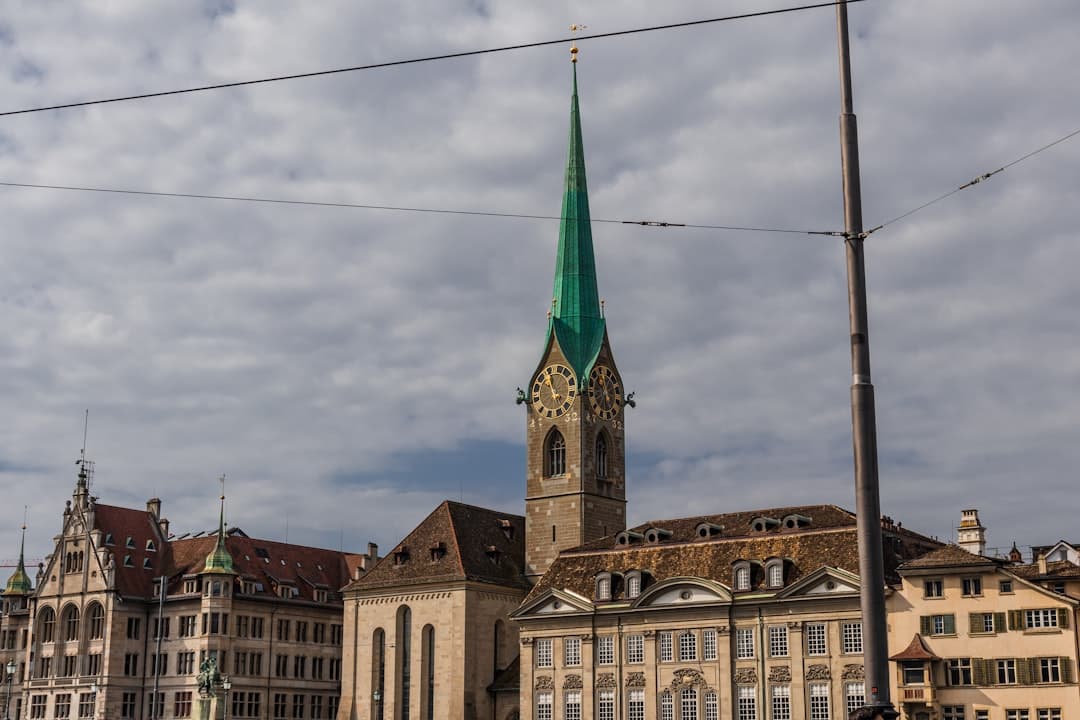
The Grossmünster is Zurich's most iconic church — a Romanesque cathedral whose two distinctive crenellated towers have defined the city's skyline for nearly a thousand years. Built from the 11th to 13th centuries on the east bank of the Limmat, it's the church where Ulrich Zwingli launched the Protestant Reformation in Switzerland in 1519, making it one of the most historically significant religious sites in Central Europe. If you've ever wondered why Swiss Protestantism feels so austere compared to the ornate Catholic churches of southern Europe, the answer starts here. Inside, the nave is deliberately stark — Zwingli stripped it of ornament, which means the architecture itself does the heavy lifting. What you'll notice is the quality of light, the solidity of the Romanesque stone, and the unexpected colour of Augusto Giacometti's stunning abstract stained glass windows in the choir, installed in the 1930s. There are also newer windows by Sigmar Polke added in 2009 that incorporate agate slices — they glow in a way that feels almost supernatural. Climb the Karlsturm (the south tower) for a sweeping panorama over the old town, the Limmat river, and Lake Zurich stretching south. The cathedral is free to enter at ground level, but the tower climb costs a small fee and is absolutely worth it. Try to visit on a weekday morning before the tour groups arrive — the interior is meditative and quiet then in a way it simply isn't at noon on a Saturday. The church sits right on the Limmatquai, within easy walking distance of the Rathaus and the Niederdorf neighbourhood, so it fits naturally into any stroll through the Altstadt.
Grouse Mountain
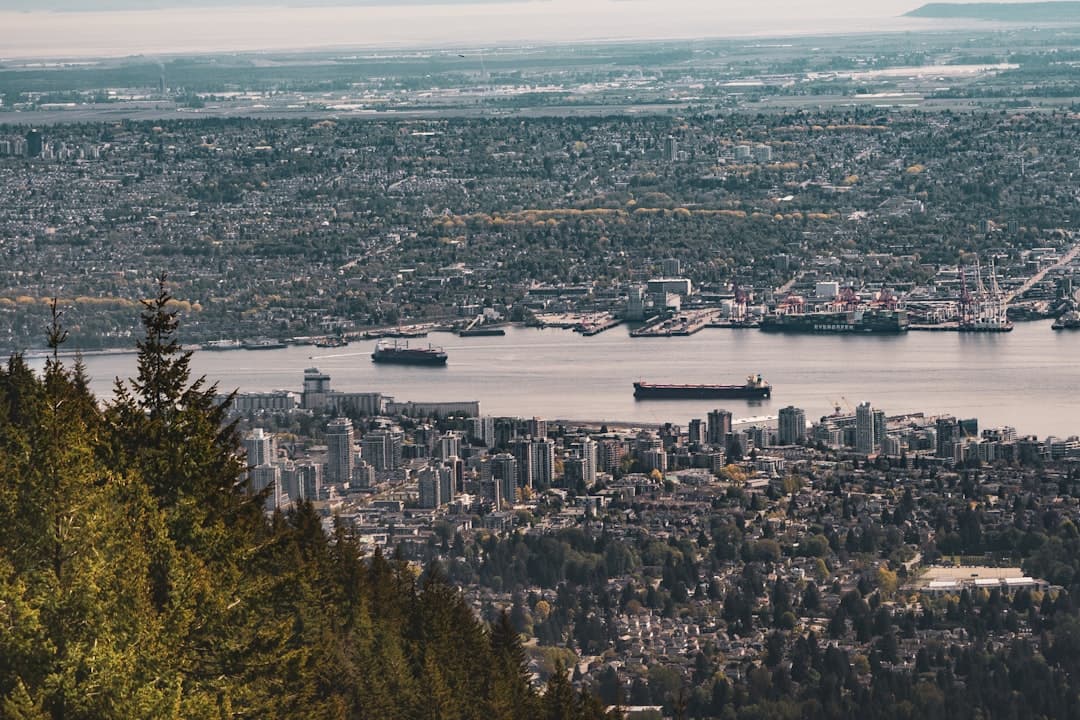
Grouse Mountain is a ski and recreation resort sitting 1,231 metres above sea level on the North Shore, directly across Burrard Inlet from downtown Vancouver. It's one of the most accessible mountain experiences in any major city on earth — you can be eating breakfast in Gastown and standing in the snow within 45 minutes. The Skyride gondola, one of the largest aerial tramways in North America, hauls visitors up 900 vertical metres and has been doing so since 1966. The views of the Vancouver skyline, the Fraser River delta, and the Gulf Islands on a clear day are genuinely spectacular. Once you're up top, the experience shifts dramatically depending on the season. In winter, Grouse operates as a full ski and snowboard resort with night skiing — one of the few places in the world where you can ski under lights with a major city glittering below you. There's also snowshoeing, ice skating on an outdoor rink, and sleigh rides. In summer and shoulder seasons, it becomes a hiking and wildlife destination: the Grouse Grind, a brutally steep 2.9-kilometre trail up the mountain's face, draws tens of thousands of people each year and has become a genuine local ritual. The resident grizzly bears, Grinder and Coola, have lived at the mountain's wildlife refuge since 2001 and are a real highlight, especially for families. The Skyride ticket covers most of the on-mountain attractions, but add-ons like the zipline, helicopter tours, and the lumberjack show cost extra. The Theatre in the Sky, a 180-degree film presentation about BC's wilderness, is included and surprisingly good. Weekends get crowded — arrive early or go on a weekday evening when the light on the city below turns golden. If you're hiking the Grind up, note that you pay for the gondola ride back down only, which is a much better deal.
Guggenheim Museum
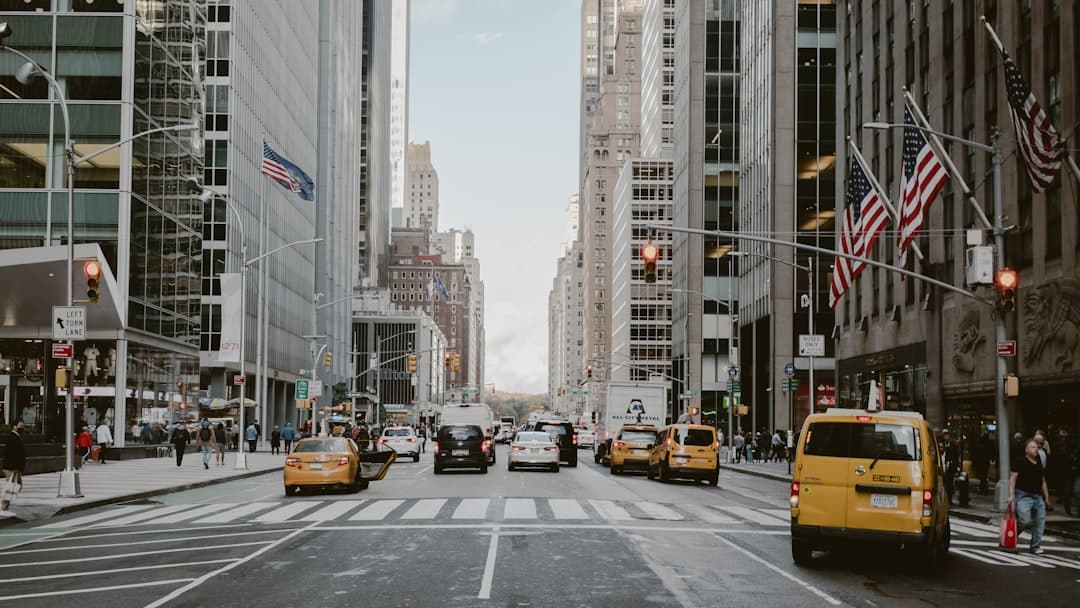
The Solomon R. Guggenheim Museum is one of the most recognizable buildings in the United States — a continuous white spiral designed by Frank Lloyd Wright that took 16 years to get built and opened in 1958, just months before Wright died. It sits on the corner of Fifth Avenue and 89th Street, on the eastern edge of Central Park, and its swirling concrete form looks unlike anything else on the block, or really anywhere in New York. The building itself is a UNESCO World Heritage Site and is as much the attraction as whatever is hanging on the walls. Inside, the experience is genuinely unlike any other museum visit. Rather than moving from room to room, you take an elevator to the top and walk down a continuous gently sloping ramp that spirals six stories to the ground floor, the art arranged along the curved outer walls. The central atrium is open all the way up, flooded with natural light from the domed skylight above. The permanent collection is extraordinary — Kandinsky, Picasso, Chagall, Mondrian, Pollock — and rotating exhibitions have ranged from major retrospectives to bold thematic shows that use the building in surprisingly creative ways. The lower-level annex adds more conventional gallery space for larger works. Tickets are timed, so buying in advance online makes a meaningful difference in how smoothly your visit starts. Saturday evenings used to feature pay-what-you-wish admission, though this has changed over the years — worth checking the official website before you go. The museum is right on Museum Mile, so pairing it with the Met or the Neue Galerie a few blocks south is easy. Come on a weekday morning if you can: the crowds on weekend afternoons can make the ramp feel more like a busy footpath than a contemplative art experience.
Guinness Storehouse
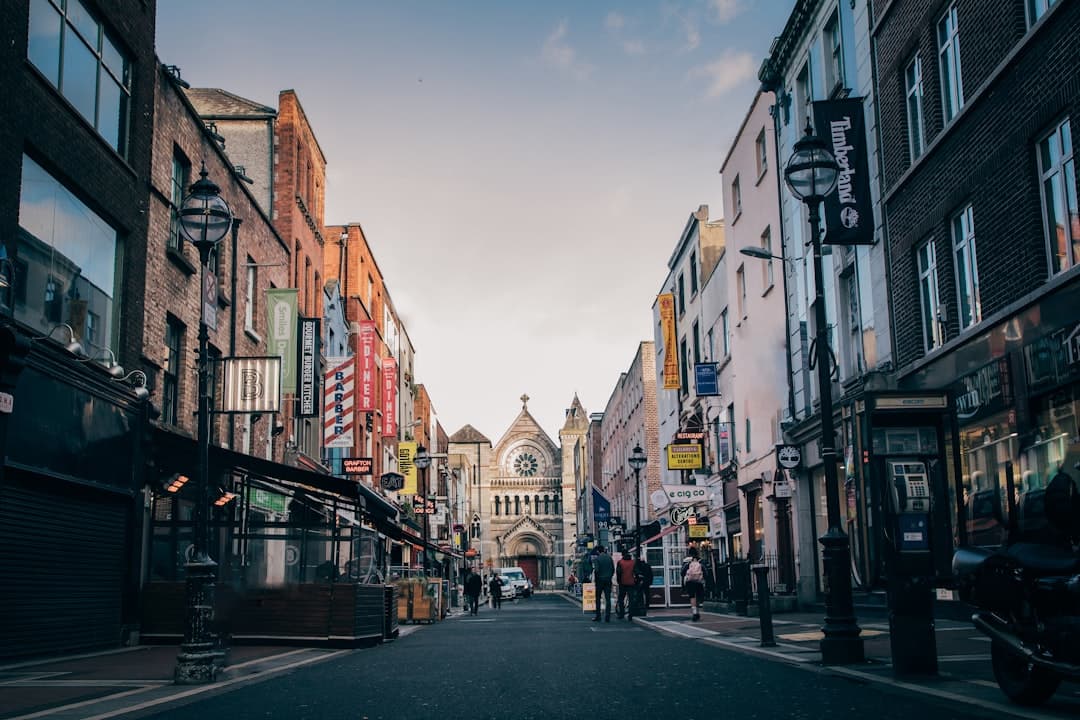
The Guinness Storehouse is built inside the old fermentation plant at St. James's Gate, the same brewery where Arthur Guinness first signed his famous 9,000-year lease in 1759. It's now Ireland's most visited tourist attraction — a seven-storey experience designed around the story of the world's most recognisable stout, from the raw ingredients through the brewing process and on to the advertising, culture, and global identity that made Guinness something far bigger than a drink. You work your way up through the building floor by floor, starting with the four ingredients — water, barley, hops, and yeast — and moving through exhibitions on fermentation, cooperage, transport, and the extraordinary advertising legacy Guinness built over the past century. The famous Gilroy posters, the toucan, the harp — it's all here, and it's genuinely entertaining even if you have no particular interest in beer. The building itself is shaped like a giant pint glass from the inside, which sounds gimmicky but actually works. At the top is the Gravity Bar, a 360-degree glass-enclosed bar where your ticket price includes a complimentary pint and the best panoramic view of Dublin you'll find without paying a premium somewhere else. Book your ticket online in advance — the Storehouse draws huge crowds and walk-up queues can be long, especially in summer and on weekends. The included pint is best enjoyed at the Gravity Bar itself rather than rushing it downstairs. If you want to eat, the Arthur's Bar on the ground floor does decent food. Budget around two hours to move through properly; the experience rewards taking your time rather than racing to the bar.
Gwangjang Market
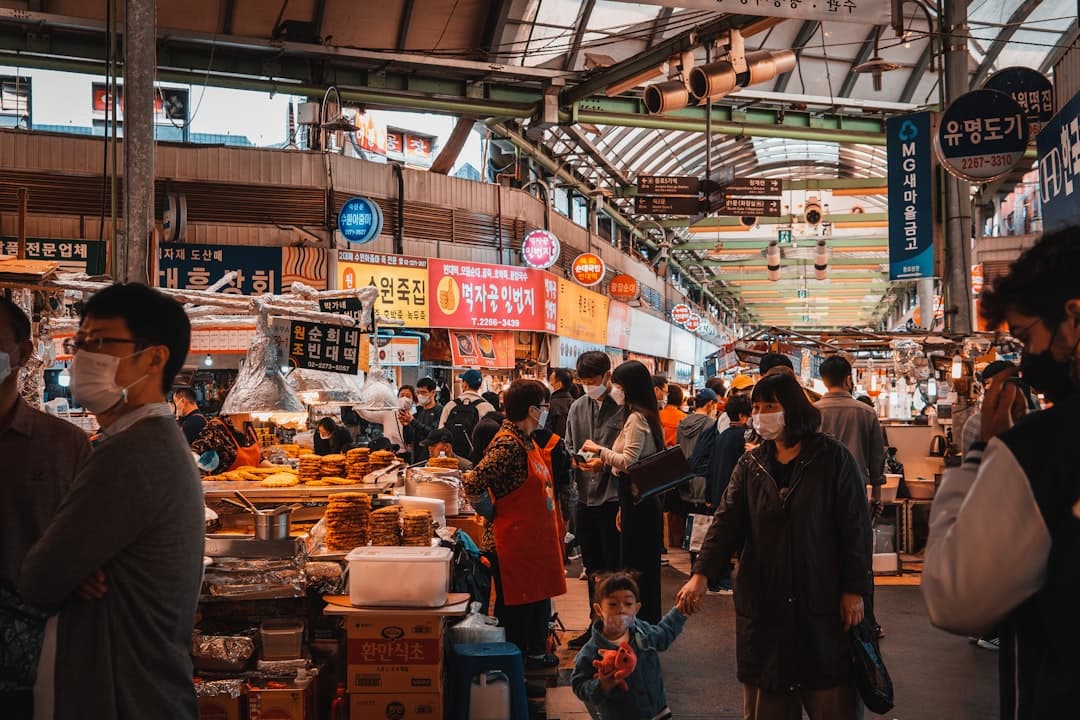
Gwangjang Market is one of the oldest and largest traditional markets in South Korea, founded in 1905 during the late Joseon dynasty — making it older than the country itself in its modern form. It stretches across a city block near the Cheonggyecheon Stream in the heart of old Seoul, housed under a long arched roof that gives the whole place the feel of a grand, slightly chaotic indoor bazaar. It is famous for two things above all else: food and fabric. The food stalls packed into the central hall have made Gwangjang internationally recognized, and the textile section — bolts of silk, linen, hemp, and traditional Korean fabric called hanbok cloth — remains one of the best places in the city to buy quality Korean textiles. The experience is overwhelmingly sensory. The food hall runs down the center of the market, lined on both sides with small stall kitchens where vendors — many of them older women who have been here for decades — fry bindaetteok (mung bean pancakes), roll mayak gimbap (tiny, intensely flavored seaweed rice rolls said to be as addictive as narcotics, hence the name), and serve yukgejang (spicy beef soup) from bubbling pots. The smells, the sizzle of oil, the vendors calling out to passersby — it is alive in a way that sanitized food halls simply are not. Seating is communal and close; you sit at a vendor's counter, order directly, and eat alongside strangers. Gwangjang is most rewarding in the late morning to early afternoon when the food stalls are fully operational and the fabric merchants are doing business. Arrive hungry and come with cash — most vendors do not accept cards. The market is close to Jongno 5-ga subway station on Line 1, which makes it easy to reach from most parts of the city. If you want a table at one of the more popular bindaetteok vendors without waiting too long, aim for a weekday morning rather than a weekend afternoon, when the crowds can get thick and tourist groups cycle through in waves.
Gyeongbokgung Palace
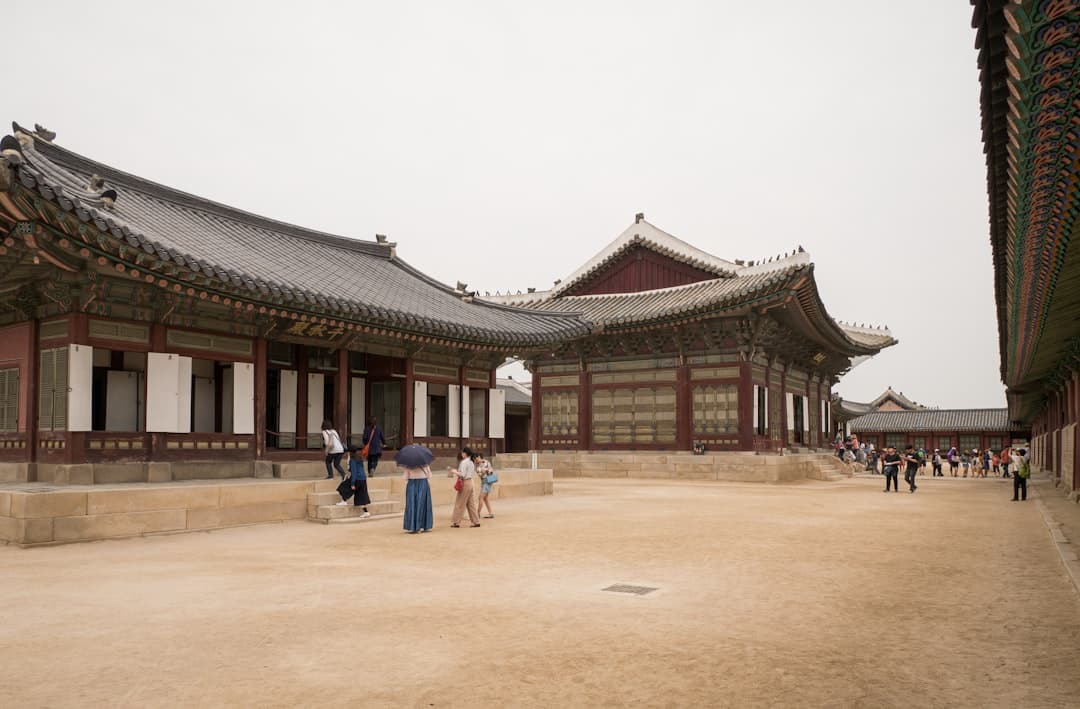
Gyeongbokgung is Seoul's largest and most historically significant royal palace, built in 1395 as the main seat of the Joseon dynasty — the ruling power of Korea for over 500 years. Destroyed twice by Japanese forces and largely left in ruins through much of the 20th century, it has been painstakingly restored since the 1990s and now stands as one of the most powerful symbols of Korean national identity. The name translates roughly to 'Palace Greatly Blessed by Heaven,' and walking through its main gate, Gwanghwamun, still carries a ceremonial weight that no amount of tourist crowds can fully dilute. The complex covers a vast area and contains dozens of buildings, pavilions, and gardens. The centerpiece is Geunjeongjeon, the throne hall where kings were crowned and received foreign envoys — a tiered stone terrace building surrounded by ranked stone markers that once indicated where officials stood by rank. Behind it, you'll find the National Folk Museum and the National Palace Museum of Korea (both on the grounds), the serene Hyangwonjeong pavilion floating on a small lotus pond, and the striking rear garden areas. The changing of the guard ceremony at Gwanghwamun Gate is performed several times daily and is genuinely theatrical — full historical costume, drums, and choreography. Come early on weekday mornings to get the wide courtyards largely to yourself — by midday on weekends the place fills up considerably. If you're wearing hanbok (traditional Korean dress), entry is free, and rental shops cluster just outside the palace gates, so many visitors arrive already dressed. Gyeongbokgung station on subway Line 3 deposits you almost directly at the front gate. Budget at least a half day if you plan to visit both onsite museums, or two to three hours if you're focused on the palace itself.
Habous Quarter
The Habous Quarter — also called the New Medina — is a planned neighborhood built by French colonial authorities in the 1930s as a model Islamic city, designed to house Moroccans who had been displaced by rapid urban expansion. The French brought in Moroccan architects and craftsmen to do it properly, and the result is something unexpected: a neighborhood that looks and feels like a traditional medina but has wider streets, cleaner sight lines, and a certain quiet order that the old cities of Fez or Marrakech never quite had. It sits just south of the city center, close to the Royal Palace, and it remains one of the few corners of Casablanca where the pace genuinely slows down. Walking through Habous is a full sensory loop. The covered souks sell pastilla pastry and fresh msemen, argan oil and rose water, leather babouche slippers in every color, and intricate woodwork. The architecture is a distinctive hybrid — Moorish arches and geometric tilework married to French urban planning — and it holds together beautifully. The central square, lined with cafés where older men play cards over mint tea, is one of the most pleasant public spaces in the city. The Royal Palace gardens border the neighborhood on one side, lending it a composed, almost regal atmosphere. This is not a tourist trap. Habous is a working neighborhood where locals shop for wedding gifts, religious goods, and specialty foods. That said, it's very visitor-friendly — vendors are used to browsers, prices are more fixed than in some souks, and the layout is easier to navigate than a true medina. Go on a weekday morning when it's quieter, pick up a box of Moroccan sweets from one of the pastry shops near the main square, and allow yourself to get slightly lost in the covered sections. Friday afternoons can be crowded and some shops close midday for prayers.
Hagia Sophia
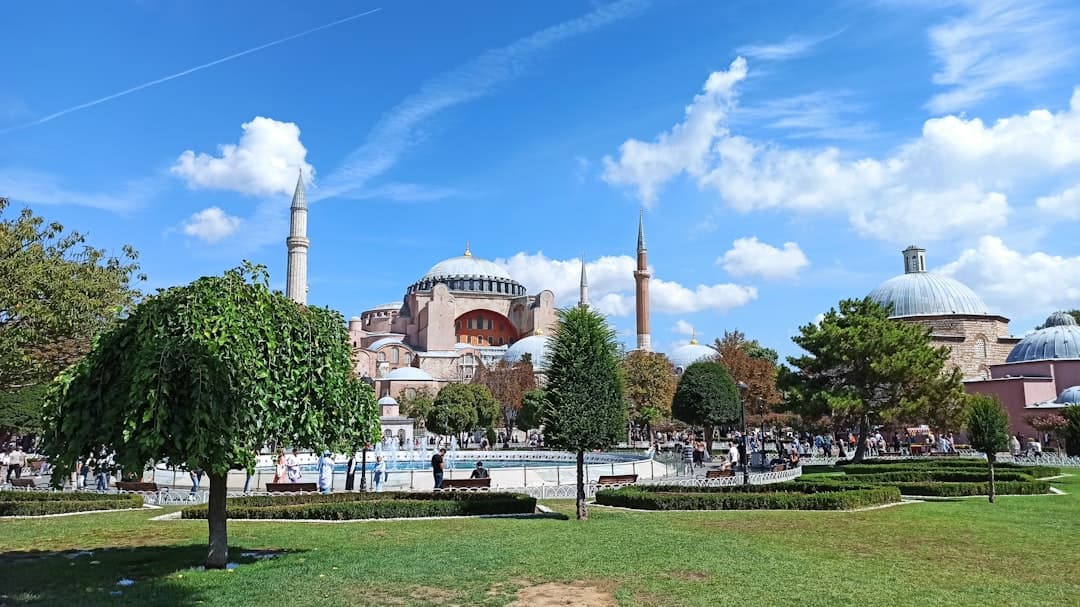
Hagia Sophia is one of the most important buildings ever constructed. Built by the Byzantine Emperor Justinian I in 537 AD, it served as the greatest Christian cathedral in the world for nearly a thousand years, then became a mosque after the Ottoman conquest of Constantinople in 1453, then a museum in 1934 under Atatürk's secular republic, and finally a working mosque again from 2020 onward. That arc alone — Byzantine Christian, Ottoman Islamic, secular monument, living mosque — tells the whole story of Istanbul, a city that has been at the center of civilizations for millennia. The building's central dome, 55 meters high and 31 meters wide, was the largest in the world when it was built and remained so for centuries. Standing inside it, you genuinely feel that. Visitors enter the vast interior where Byzantine gold mosaics coexist with Ottoman calligraphic medallions and the structural bones of Justinian's original engineering. The famous Deësis mosaic in the upper gallery — Christ flanked by the Virgin Mary and John the Baptist — is considered one of the finest examples of Byzantine art in existence, its humanistic rendering far ahead of its time. The upper gallery offers vertiginous views down into the main nave and closer access to the mosaics. Because it is now an active mosque, prayer times punctuate the day and worshippers fill the space during the five daily salat, which is itself extraordinary to witness. Since its reconversion to a mosque in 2020, non-Muslim visitors are still welcomed but the experience has changed. Entry is free, but certain areas are closed during prayer times and some mosaic zones may have restricted access. The building sits in Sultanahmet Square, directly across from the Blue Mosque, and the area around it is dense with vendors, tour groups, and genuine pilgrims. Come early in the morning — well before 9am if you can — to have any sense of the space before the crowds arrive. Remove shoes before entering and dress accordingly.
Haight-Ashbury
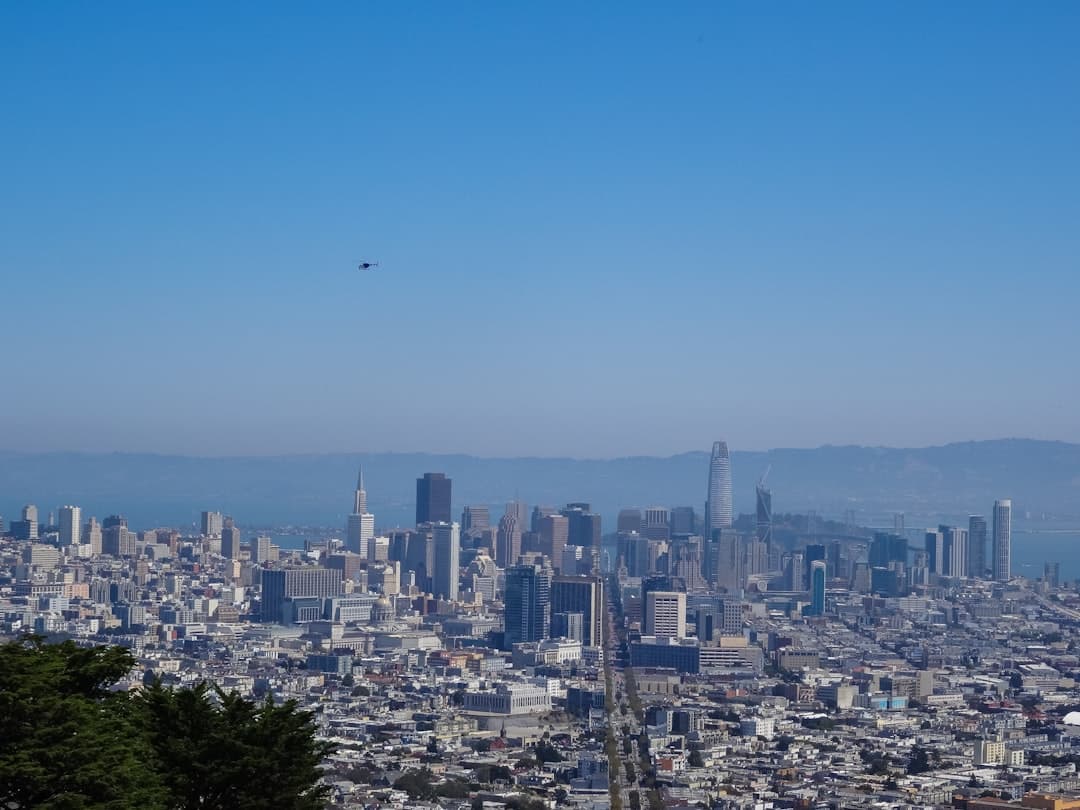
Haight-Ashbury is the San Francisco neighborhood that became the symbolic heart of the 1960s counterculture movement — the place where the Summer of Love happened in 1967, where Janis Joplin and the Grateful Dead lived in shared Victorian houses, and where an entire generation decided to rewrite the rules of American life. The intersection of Haight and Ashbury Streets is one of the most historically charged street corners in the country, and the neighborhood around it has never quite shaken — or wanted to shake — that identity. Today, Haight-Ashbury is part living museum, part working neighborhood, and part shopping street. You walk the length of Haight Street past psychedelic mural art, vintage clothing shops, record stores, and head shops that look like they've been there since Nixon was in office (some have). The Victorian and Edwardian painted ladies that line the side streets are stunning — stop on Ashbury Street and look up. You can find the house at 710 Ashbury where the Dead lived, or the pink Victorian at 635 Ashbury where Joplin stayed. Amoeba Music on Haight is one of the last great independent record stores in America. Buena Vista Park, at the neighborhood's eastern edge, offers sweeping city views if you're willing to climb. Come on a weekday morning if you want to actually browse the shops without navigating crowds. The neighborhood attracts a mix of nostalgic tourists, actual locals, and a persistent contingent of street kids — some travelers find the latter part of the vibe, others find it grating, but either way it's real San Francisco rather than polished tourism. The Upper Haight (closer to Golden Gate Park) is generally more navigable and interesting than the Lower Haight, which bleeds into a different residential stretch. Give yourself at least half a day to do it justice.
Haji Ali Dargah
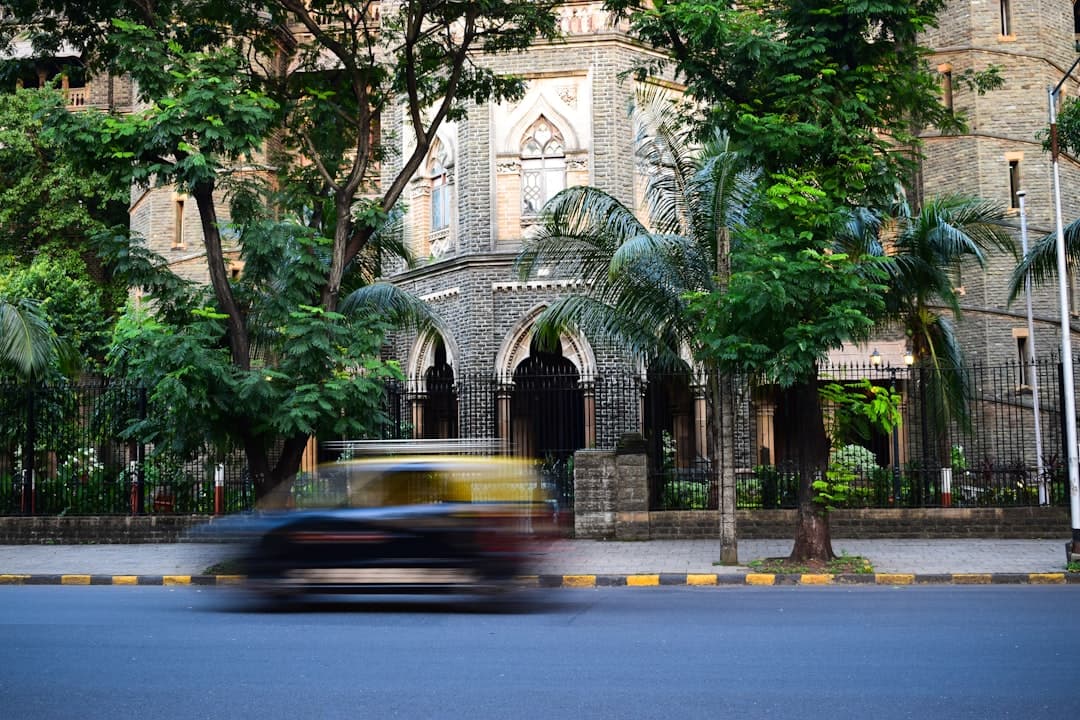
Haji Ali Dargah is one of Mumbai's most iconic religious sites — a white marble mosque and tomb complex built in 1431, dedicated to the Sufi saint Pir Haji Ali Shah Bukhari. According to legend, the saint asked to be buried wherever his coffin washed ashore after he died at sea, and it came to rest on this small rocky islet about 500 metres off the Worli coastline. Today the dargah is sacred to Muslims across India, visited by people of all faiths, and one of those rare places in Mumbai that genuinely stops you in your tracks. Getting there is part of the experience: a narrow causeway, just wide enough for two people to pass, connects the islet to the mainland. During high tide the path is submerged and the dargah becomes briefly unreachable, so timing your visit matters. Walk the causeway and you'll be flanked by vendors selling rose petals and attar, flower garlands, and chaadar cloth for offerings. Inside the complex, the inner sanctum holds the saint's tomb, covered in a cloth of red and green silk and surrounded by silver railings. Qawwali devotional music fills the air on Thursday and Friday evenings — one of the most atmospheric things you can experience in the city. The views back toward Mumbai's skyline, especially at golden hour, are extraordinary. The dargah is free to enter and open to all faiths, though the inner sanctum has separate entry for men and women. Friday afternoons see the largest crowds, with thousands of devotees making the crossing. If you want a more contemplative visit, early morning on a weekday is your best bet. The causeway floods roughly two hours either side of high tide — check tide tables before you go, especially during monsoon season when conditions can be unpredictable.

Hallgrímskirkja
Hallgrímskirkja is a Lutheran church and the tallest building in Iceland, standing 74.5 metres tall at the centre of Reykjavik. Designed by state architect Guðjón Samúelsson, it took over 40 years to build — construction began in 1945 and wasn't completed until 1986. The building's dramatic stepped facade was inspired by the basalt lava columns found across Iceland, the same geological formations you see at places like Svartifoss waterfall. It's both a functioning place of worship and the city's most recognisable landmark, visible from nearly everywhere in Reykjavik. Most visitors come for the tower. For a small fee, you can take an elevator to the observation deck near the top and look out over the coloured rooftops of the old city, the harbour, and on a clear day, the snow-capped mountains beyond. Inside the nave, the space is strikingly austere — white walls, simple lines, and a vast pipe organ built by the German firm Marcussen & Søn that dominates the west wall. The organ has 5,275 pipes and is genuinely one of the most impressive instruments in northern Europe. In front of the church stands a statue of Leif Eriksson, the Norse explorer, gifted by the United States in 1930 to mark the Althing's millennium. The church is active — services happen regularly, so some areas may be closed to visitors during worship. Arrive early in the morning to beat the tour groups, which tend to arrive mid-morning. The area around the church, Skólavörðuholt hill, is also worth a slow wander — the surrounding streets have some of Reykjavik's better independent shops and cafes.
Hampton Court Palace
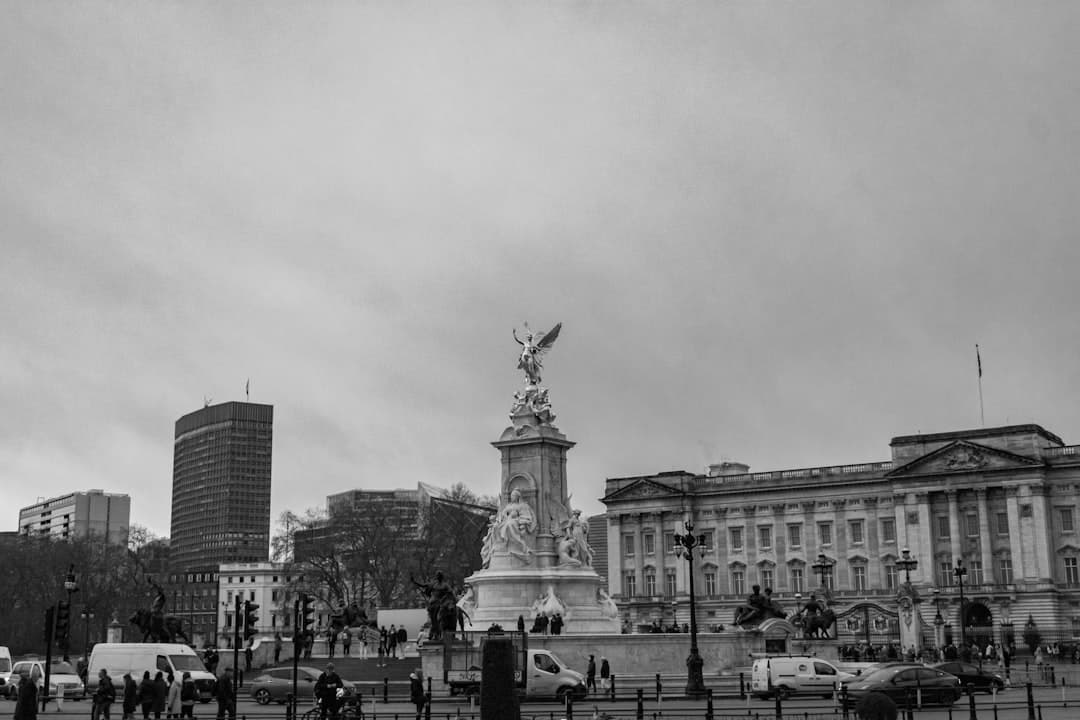
Hampton Court Palace is one of England's greatest royal residences, sitting on the north bank of the Thames about 15 miles southwest of central London. Built in the early 16th century by Cardinal Wolsey and then seized by Henry VIII, it became the most important palace in the kingdom — a place where Henry held court, married two of his six wives, and set the template for Tudor power. Unlike many historic sites that feel frozen and distant, Hampton Court has a rare quality: it genuinely transports you. Walk through the Great Hall and you're standing where Henry VIII feasted with his court. The scale of it — the kitchens, the courtyards, the sprawling formal gardens — makes the history feel tangible rather than academic. The palace is essentially two buildings in one. The Tudor sections, including the Great Hall, the Chapel Royal, and the vast kitchens (among the best-preserved in Europe), sit alongside a second, entirely different palace built for William III by Christopher Wren in the 1690s, with baroque state apartments that rival anything in continental Europe. You can spend hours moving between these two worlds. The gardens are a serious attraction in their own right: 60 acres of formal grounds including the famous yew-tree maze — the oldest surviving hedge maze in England, planted around 1700 — and the Great Vine, a single grapevine planted in 1768 that still produces grapes harvested each autumn. Hampton Court is not in central London — it takes around 35 minutes by train from London Waterloo to Hampton Court station, or you can arrive by boat from Richmond or Westminster in summer, which is a genuinely lovely way to approach the palace from the river. Buy tickets online in advance; they're not cheap, but the entry price covers almost everything including the maze. The palace is busiest in summer holidays and on weekends — arrive early or aim for a weekday. The café and restaurant options on-site are decent but not the main event, so don't rearrange your day around them.
Hanoi Old Quarter
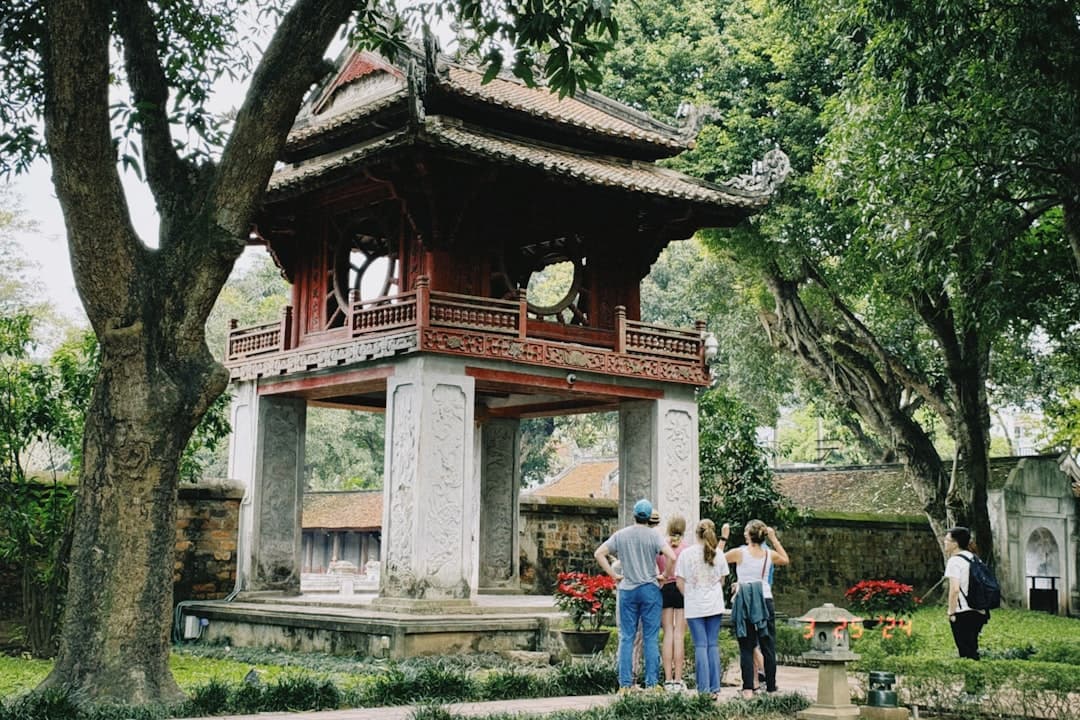
The Old Quarter — Phố Cổ in Vietnamese — is the beating commercial heart of Hanoi, a dense warren of 36 ancient guild streets that has been continuously inhabited and traded upon since the 13th century. Each street was historically dedicated to a single trade, and many still carry those names today: Hàng Bạc (Silver Street), Hàng Đào (Silk Street), Hàng Thiếc (Tin Street). It's one of the best-preserved medieval urban quarters in Southeast Asia, and visiting it feels less like a tourist attraction and less like a theme park than it should — because people actually live and work here, in the same narrow tube-house architecture their ancestors built. On the ground, the experience is joyfully overwhelming. You weave through motorbikes, past women carrying bánh mì baskets on bamboo shoulder poles, down alleyways where entire families run tailoring shops from their living rooms. The food alone could occupy days: bún chả grilled pork noodles on Hàng Mành, egg coffee at Cà Phê Trứng on Đinh Tiên Hoàng, pho at the no-name stalls that open only at dawn. Beyond food, you'll find Đồng Xuân Market (the quarter's enormous covered wholesale bazaar), centuries-old communal houses tucked behind unmarked doors, and the weekend Walking Street around Hoàn Kiếm Lake when the roads close to traffic. The Old Quarter rewards wanderers more than planners. Pick a direction, get lost, and say yes to whatever a street vendor hands you. Early mornings — before 8am — are genuinely magical: the light is soft, the traffic is light, and the food stalls are in full swing. Avoid the peak heat of midday in summer by ducking into the covered sections of Đồng Xuân or sitting down for an iced cà phê đá. The area around Tạ Hiện Street, known informally as Beer Street, is the nightlife nucleus — chaotic, cheap, and completely unpretentious.
Hanoi Opera House
The Hanoi Opera House is one of the most striking buildings in all of Southeast Asia — a miniature version of the Paris Opera Garnier, built by French colonial administrators between 1901 and 1911. It sits at the eastern end of Tràng Tiền Street, a grand avenue that the French laid out to remake Hanoi in their own image, and the building has been a centerpiece of the city ever since. With its elaborate neoclassical façade, green-shuttered arched windows, and wrought-iron balustrades, it looks genuinely out of place in the best possible way — a piece of 19th-century Paris dropped into a tropical Vietnamese city. Today the Opera House functions as Hanoi's premier performing arts venue, hosting everything from Vietnamese traditional opera and ballet to visiting international orchestras and contemporary dance companies. The interior is as impressive as the exterior — a gilded, red-velvet horseshoe-shaped auditorium that seats around 600 people. Unless you attend a performance, you can't go inside, but the exterior alone draws visitors who come to photograph the façade, especially beautiful when lit up at night. The broad plaza in front is a popular gathering spot and a great place to take in the building from a distance. Performance schedules are posted at the venue and through the official website — tickets are reasonably priced by any international standard and sell out for popular shows, so checking ahead is smart. The surrounding Tràng Tiền area is Hanoi's most elegant neighborhood, with the upscale Sofitel Legend Metropole Hanoi just a short walk away and Hoan Kiem Lake only five minutes on foot. Come in the early evening when the light is golden and the building glows — it's one of the most photogenic moments in the city.
Harajuku
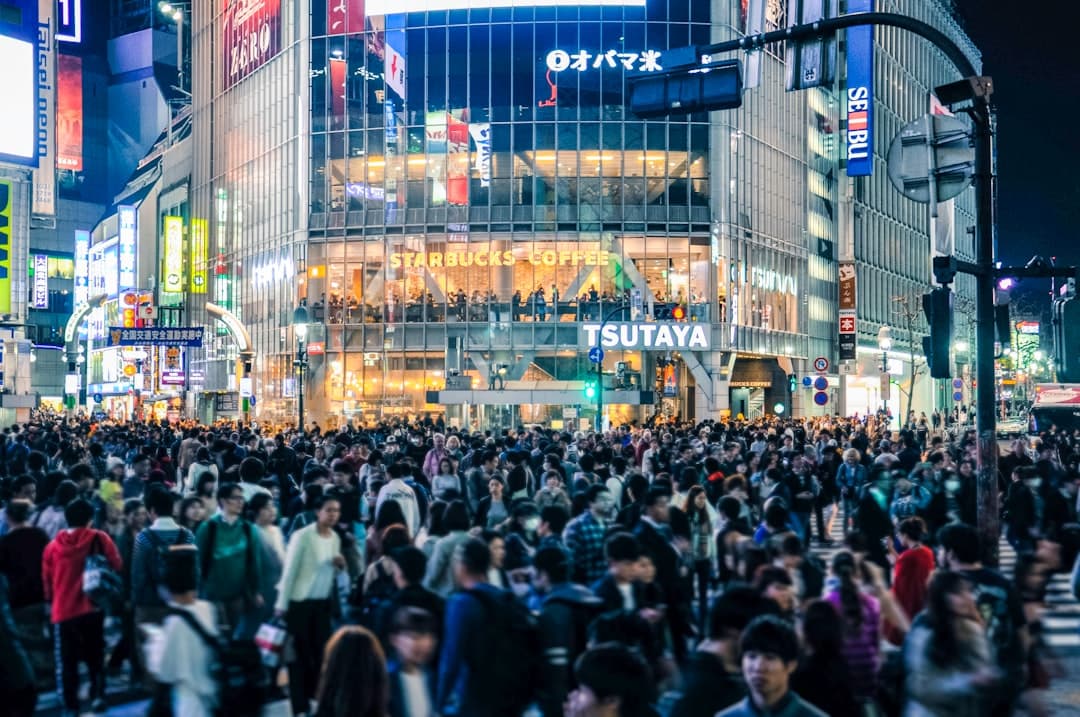
Harajuku is a neighborhood in Shibuya ward that became famous as the birthplace of Japan's most experimental youth fashion subcultures — think Lolita, Visual Kei, decora, and a dozen other styles that exist nowhere else on earth quite like this. It surrounds Harajuku Station, one of Tokyo's oldest wooden station buildings (now rebuilt), and sits between the serene Meiji Shrine to the north and the upscale boutiques of Omotesando to the south. That contrast — sacred forest beside candy-colored chaos — is exactly what makes this neighborhood feel so distinctly Tokyo. The main artery is Takeshita Street (Takeshita-dori), a narrow pedestrian lane packed wall to wall with crepe stands, dollar-store accessories, vintage fashion shops, and stalls selling things you won't find anywhere else. It's loud, it's crowded, and it's genuinely fun. The famous Harajuku girls who used to gather at the nearby Jingu Bridge on Sundays are less of a fixture than they once were, but fashion-forward locals and international visitors still fill the streets. Beyond Takeshita, the quieter backstreets — sometimes called Ura-Harajuku — hold independent designers, concept stores, and streetwear labels that draw serious fashion pilgrims. Weekends are peak Harajuku time, when the energy is highest and the outfits most spectacular — but also when crowds on Takeshita Street can feel genuinely shoulder-to-shoulder. Come early on a weekday if you want to browse without friction. The crepes here are a Tokyo institution — Angel Heart and Marion Crepes have been staples for decades — and the neighborhood is walkable to both Meiji Shrine and the luxury shopping of Omotesando, making it a natural anchor for a full half-day.
Harpa Concert Hall
Harpa is Reykjavik's concert hall and conference centre, opened in 2011 on the city's old harbour waterfront. Designed by Henning Larsen Architects in collaboration with Icelandic artist Olafur Eliasson, the building's cascading geometric glass facade — composed of thousands of steel-framed hexagonal glass panels — was inspired by Iceland's basalt column landscapes and changes colour depending on the light and your angle of approach. It quickly became one of the most photographed buildings in Iceland, and in 2013 it won the European Union Prize for Contemporary Architecture. It's the home of both the Iceland Symphony Orchestra and the Icelandic Opera, making it the cultural heartbeat of the city. You don't need a concert ticket to visit. The public areas — the lobby, the main atrium, and several of the upper levels — are open during the day, and wandering through them is genuinely worthwhile. The interplay of natural Icelandic light through the coloured glass panels is different every time you visit, and on a sunny day the interior becomes a kaleidoscope of shifting colour. The building houses multiple performance spaces of different sizes, a gift shop with quality Icelandic design goods, and a restaurant. Guided architectural tours run regularly and give you access to parts of the building most visitors miss, including backstage areas and detailed explanation of Eliasson's geometric system. Harpa sits right at the edge of the old harbour, which means the views from inside — across the water toward Mount Esja and the Snæfellsnes peninsula on clear days — are exceptional. If you're in Reykjavik for a few days, checking what's on at Harpa before you arrive is worth doing; even a smaller performance in one of its intimate halls makes for a memorable evening. The building is also one of the best spots in the city to photograph the northern lights in winter, when the glass exterior catches and refracts the aurora in ways that are genuinely hard to describe.
Harvard Square
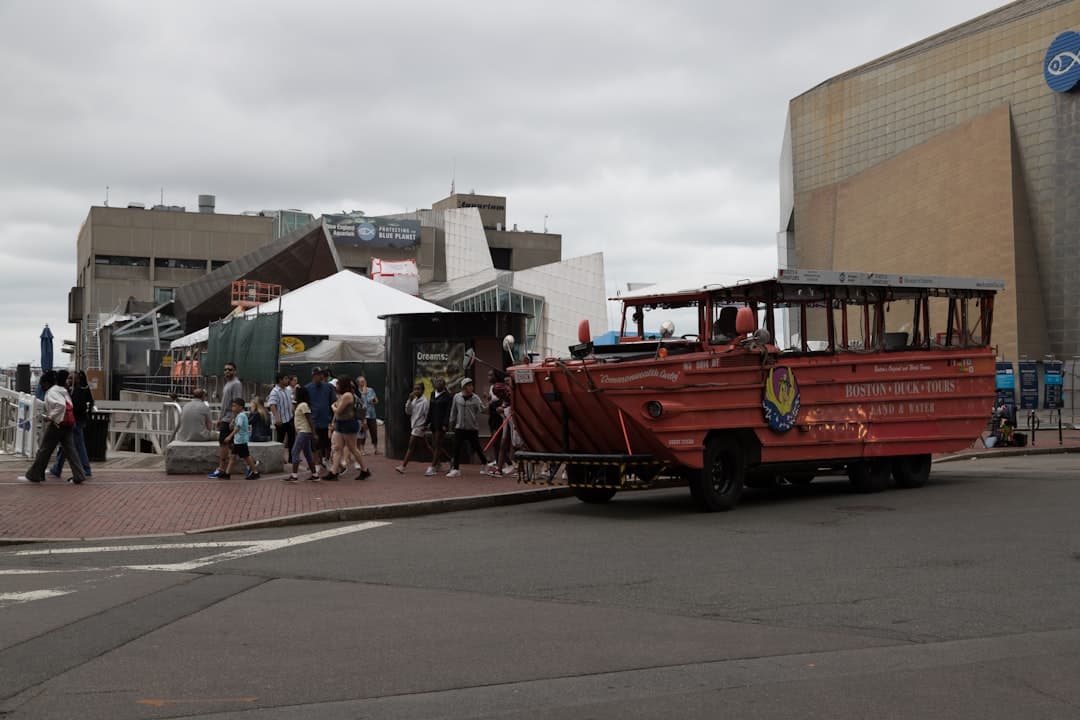
Harvard Square is a vibrant, open-air neighborhood hub in Cambridge, Massachusetts, sitting right at the main gate of Harvard University — one of the oldest and most famous universities in the United States, founded in 1636. It's not just a campus landmark; it's a fully functioning neighborhood with its own distinct identity, mixing students, professors, locals, tourists, and a rotating cast of buskers who've been performing here for decades. The Red Line T stop puts you at its center, and from there the square radiates outward into a dense tangle of bookstores, cafés, restaurants, and independent shops that have made this one of the most intellectually charged street-level experiences in the country. Wandering Harvard Square means doing a bit of everything. You'll likely start at the MBTA kiosk plaza and work your way toward Johnston Gate, the main entrance to Harvard Yard, where you can walk freely among the brick paths and centuries-old elms. The Coop — the Harvard cooperative bookstore — is worth a browse for its Harvard-branded everything and decent book selection. But the real discovery is heading up Brattle Street, where you'll find the Brattle Theatre (a beloved arthouse cinema since 1953), independent cafés, and the kind of restaurants that punch well above their square footage. Tatte Bakery on Brattle is excellent for a morning pastry. Mr. Bartley's Burger Cottage on Massachusetts Avenue has been feeding students since 1960 and names its burgers after political figures — absurd and delicious in equal measure. The Square rewards slow exploration more than a checklist approach. On any given afternoon you might stumble onto a folk guitarist playing near the Out of Town News kiosk (a Cambridge institution even in its current stripped-back form), browse the stacks at Harvard Book Store on Massachusetts Avenue — not to be confused with the Coop — or catch a reading or panel at one of the nearby academic venues. Go on a weekday if you want the neighborhood to feel lived-in rather than tourist-heavy; weekends in fall, when Harvard's campus turns the color of a New England postcard, are spectacular but crowded.
Hassan II Mosque
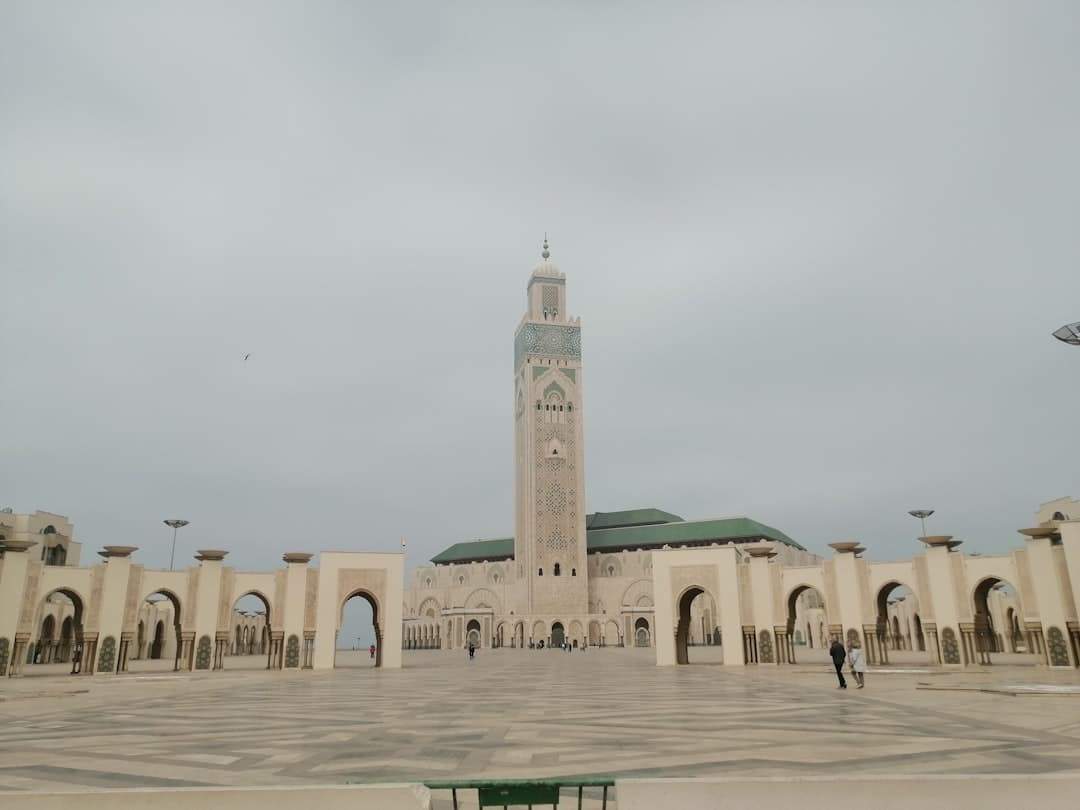
The Hassan II Mosque is a genuinely staggering feat of architecture and ambition, completed in 1993 after six years of construction and commissioned by King Hassan II to mark Morocco's greatness in stone and tile. It sits on a promontory jutting into the Atlantic Ocean — the king reportedly wanted it built on water, inspired by a Quranic verse — and can accommodate 105,000 worshippers inside and on its esplanade. The minaret stands 210 metres tall, making it the tallest religious structure in the world, and a laser beam at its tip points toward Mecca each night. Visitors who aren't Muslim can explore the mosque's interior on a guided tour, which is genuinely worth doing. The prayer hall is breathtaking: carved cedar ceilings, hand-cut zellige tilework, Italian marble floors, and retractable glass panels in the roof that can open to let in the sky. The scale is almost disorienting — the hall holds 25,000 people and the columns dwarf everything. Below the prayer hall, there's a hammam and ablutions hall open to visitors, both executed with the same extraordinary craftsmanship. Tours typically run several times daily in multiple languages and last about an hour. Non-Muslim visitors cannot enter independently — you must join a guided group — so plan around the tour schedule, especially on Fridays when access may be restricted. The mosque is set in a large open esplanade that's free to walk around at any time, and the view from outside — particularly at sunset or when the minaret is illuminated at night — is spectacular even without going inside. Budget a bit of extra time to sit on the sea wall and take it all in.
Hawa Mahal
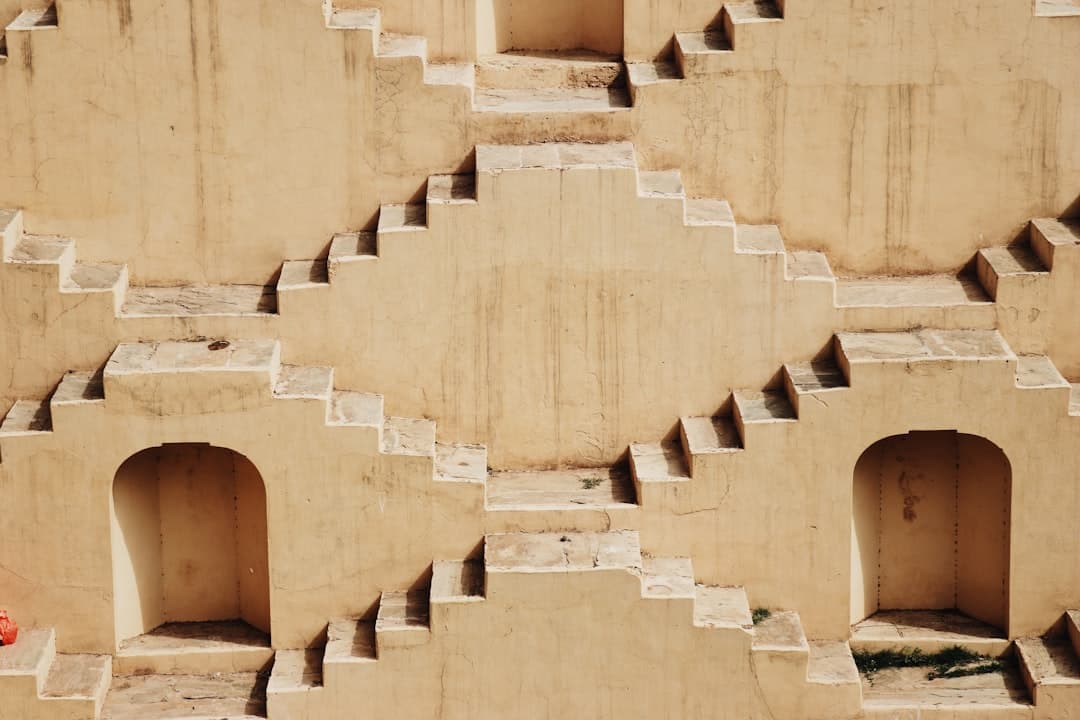
Hawa Mahal — which translates literally as 'Palace of Winds' — is one of the most recognizable buildings in India. Built in 1799 by Maharaja Sawai Pratap Singh, it rises five stories above the main bazaar of the old city in a latticed sandstone facade of 953 small windows, called jharokhas, each screened with delicate carved grilles. The building was designed specifically for the women of the royal household, who observed street life and royal processions below while remaining hidden from public view — a product of the purdah system of female seclusion practiced at the time. The pink-orange tint of its sandstone is the same hue that gives Jaipur its famous nickname, the Pink City. From the street, the facade is the spectacle — it's essentially a five-story screen with almost no rooms behind it, more theatrical backdrop than conventional building. Entry takes you around to the back, where you climb a series of ramps (there are no staircases) through small chambers to reach the upper levels. Each floor offers progressively better views: of the old city bazaar below, the City Palace complex, and on clear days, the distant Nahargarh Fort on the ridge above the city. The jharokhas frame these views beautifully, the carved stone acting as a natural filter for the chaos of the market outside. Early morning light hits the facade from the east, which is when it's at its most photogenic from the street. Hawa Mahal sits right on the edge of the old city's main commercial strip, Johari Bazaar, so combining a visit with a wander through the jewelry and textile markets is easy and satisfying. The interior small museum is modest — a few artifacts and coins — but the architecture itself is the draw. Tickets are inexpensive by any standard, and the building is rarely so crowded that it feels overwhelming, even in peak season. Come at opening time to get the facade in golden light before the tour buses arrive.
Heian Shrine
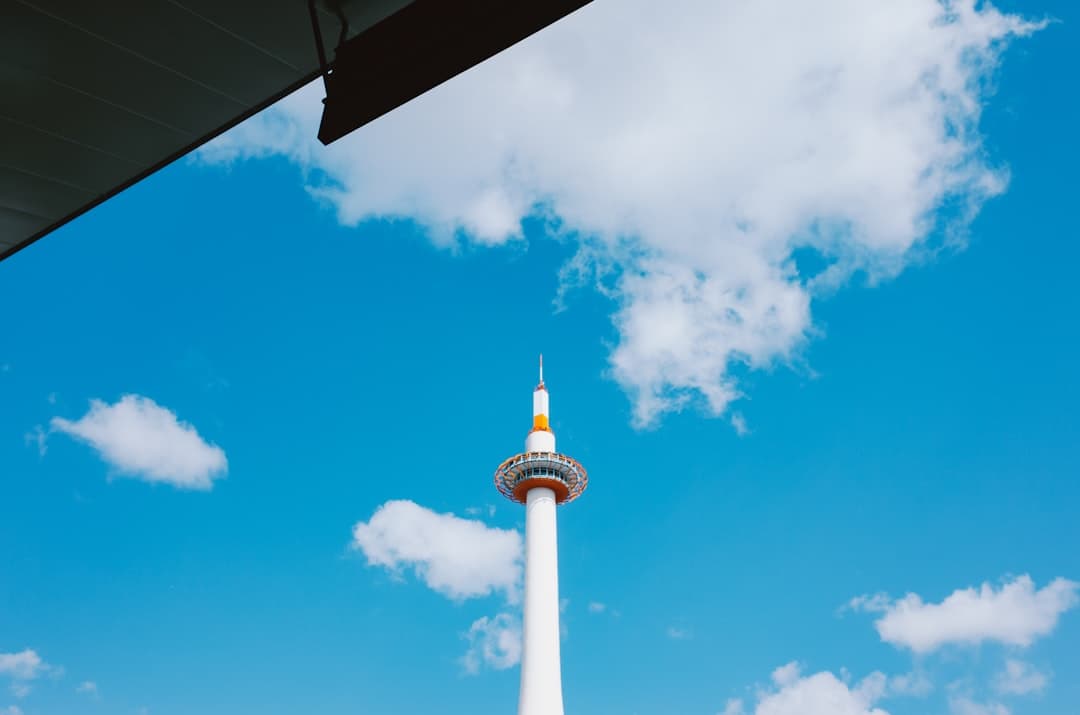
Heian Shrine was built in 1895 to commemorate the 1,100th anniversary of Kyoto's founding as the imperial capital. It's a large-scale replica of the original Imperial Palace from the Heian period — the era roughly between 794 and 1185 when Kyoto was the heart of Japanese civilization and culture. The complex is dedicated to the spirits of Emperor Kanmu, who founded the capital, and Emperor Komei, the last emperor to reign from Kyoto before the seat of power moved to Tokyo. The towering vermilion torii gate that greets you on the approach is one of the largest in Japan — a landmark you'll see long before you reach the shrine itself. The shrine grounds are striking, with dramatic orange-and-white architecture set against a wide, raked gravel courtyard. But the real secret of Heian Shrine is the strolling garden — the Shin-en — that wraps around the back of the main buildings across four connected sections. Designed in the Meiji era, it uses ponds, stepping stones, weeping cherry trees, water irises, and a covered wooden bridge to create one of the most serene and carefully composed landscapes in Kyoto. You pay a separate small fee to enter the garden, and almost everyone who skips it regrets it. Heian Shrine sits in the Okazaki district, an area packed with museums, the city zoo, and a broad canal-lined boulevard that gives the whole neighborhood an unusually spacious, uncrowded feel compared to central Kyoto. The shrine itself draws visitors year-round, but the garden truly earns its reputation in late March and mid-June when the cherries and irises are at their peak. Come early in the morning to have the gravel courtyard nearly to yourself — by mid-morning, tour groups arrive in force.
Heineken Experience
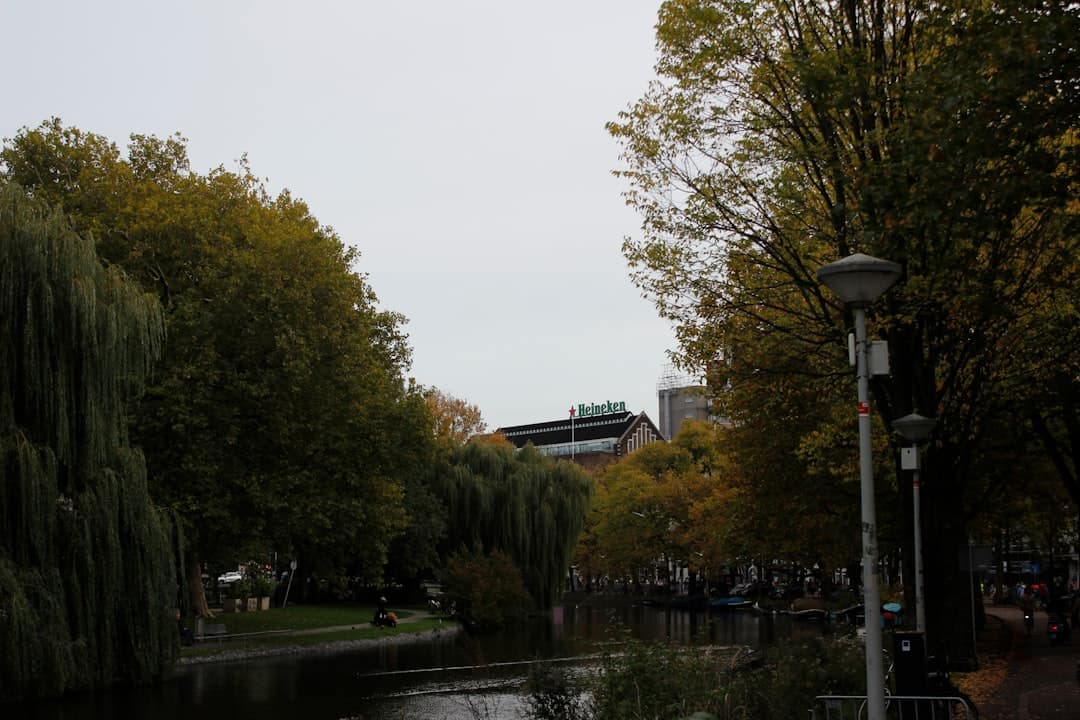
The Heineken Experience is a self-guided interactive museum built inside the original Heineken brewery on the southern edge of Amsterdam's canal belt. The brewery operated here from 1867 until 1988, when production moved to a larger facility and this building was reimagined as a visitor attraction. It's one of Amsterdam's most-visited paid attractions — not because it's a great beer destination in any craft sense, but because Heineken has put serious money into making it genuinely entertaining, and the building itself has a real story to tell. You move through a series of themed rooms covering the brand's history, the brewing process, marketing heritage (those old Heineken ads are genuinely fun), and a few interactive moments including a simulation that puts you in the perspective of a bottle moving through the bottling line. At the end, you get two included beers — pulled fresh at the in-house bar, which is more enjoyable than it sounds. The experience typically takes 90 minutes to two hours and is reasonably well-paced throughout. This is not a destination for serious beer nerds — you won't find small-batch experiments or deep brewing philosophy here. But it's a slick, professionally produced attraction that works well for groups, for people curious about how industrial brewing actually happens, and for anyone who enjoys a bit of brand mythology. It sits right on the Singelgracht canal near the Rijksmuseum, so it fits naturally into a southern Amsterdam day. Book ahead online — tickets are cheaper than at the door and the popular weekend sessions do sell out.
Hejaz Railway Museum
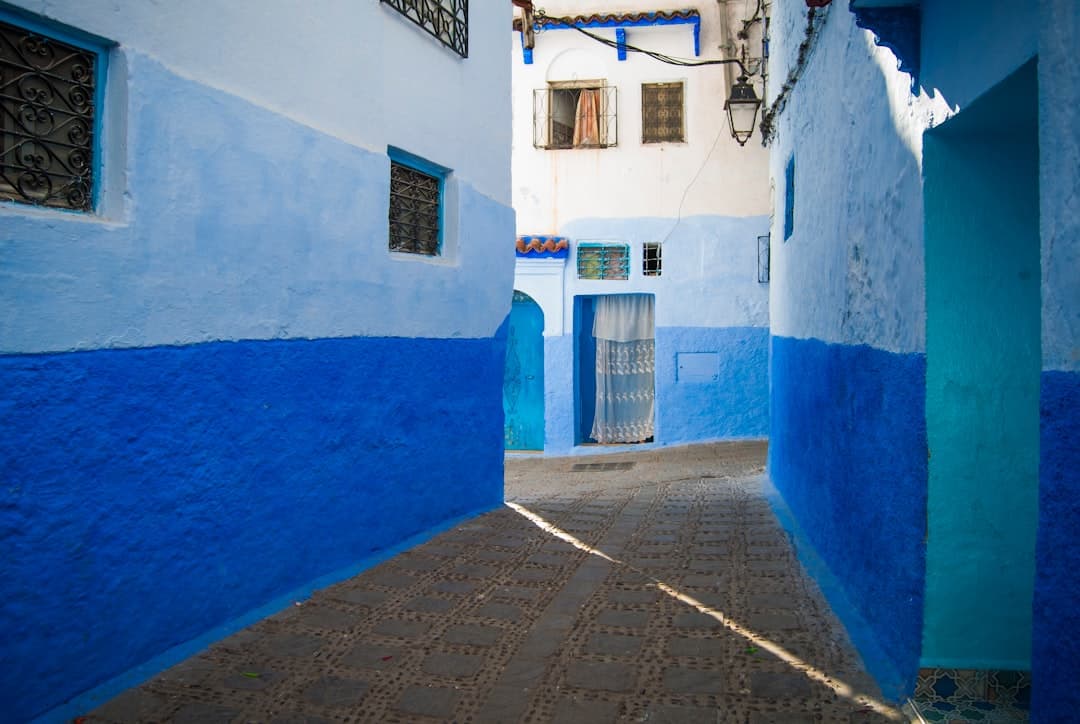
The Hejaz Railway Museum occupies the original Medina station of the Hejaz Railway, a remarkable engineering project completed in 1908 that connected Damascus to Medina — roughly 1,300 kilometres — across some of the most punishing terrain on earth. The railway was conceived by Ottoman Sultan Abdülhamid II partly as a logistical lifeline for Muslim pilgrims making the hajj, and partly as a way to extend Istanbul's political reach into the Arabian Peninsula. It never made it to its intended terminus of Mecca, and within a decade of opening it was being systematically blown up by T.E. Lawrence and Arab insurgents during the First World War. The Medina station survived, and today it stands as one of the best-preserved Ottoman-era structures in the entire Arabian Peninsula. The museum itself is housed inside the original station building and its surrounding grounds. Inside you'll find a collection of vintage steam locomotives, passenger carriages, and maintenance equipment — some of which actually ran on the line during its operational years. Photographs, maps, and artefacts document the railway's construction, its brief glory years, and its violent end. The real draw for many visitors is simply being in the space: the Ottoman architecture, the handsome stonework, and the physical presence of the old engines conjure a version of the region's past that has almost entirely disappeared from public view elsewhere. The museum sits in the Al Suqya district, not far from the historic centre of Medina, but it draws a fraction of the visitors who flood the city for religious purposes. Non-Muslims cannot enter the city's sacred core, but the station area is accessible. Entry fees are modest and the site is rarely crowded, making it a genuinely peaceful stop. Visit in the cooler months if you want to linger on the outdoor sections of the grounds without the brutal summer heat making that miserable.
Helsinki Cathedral
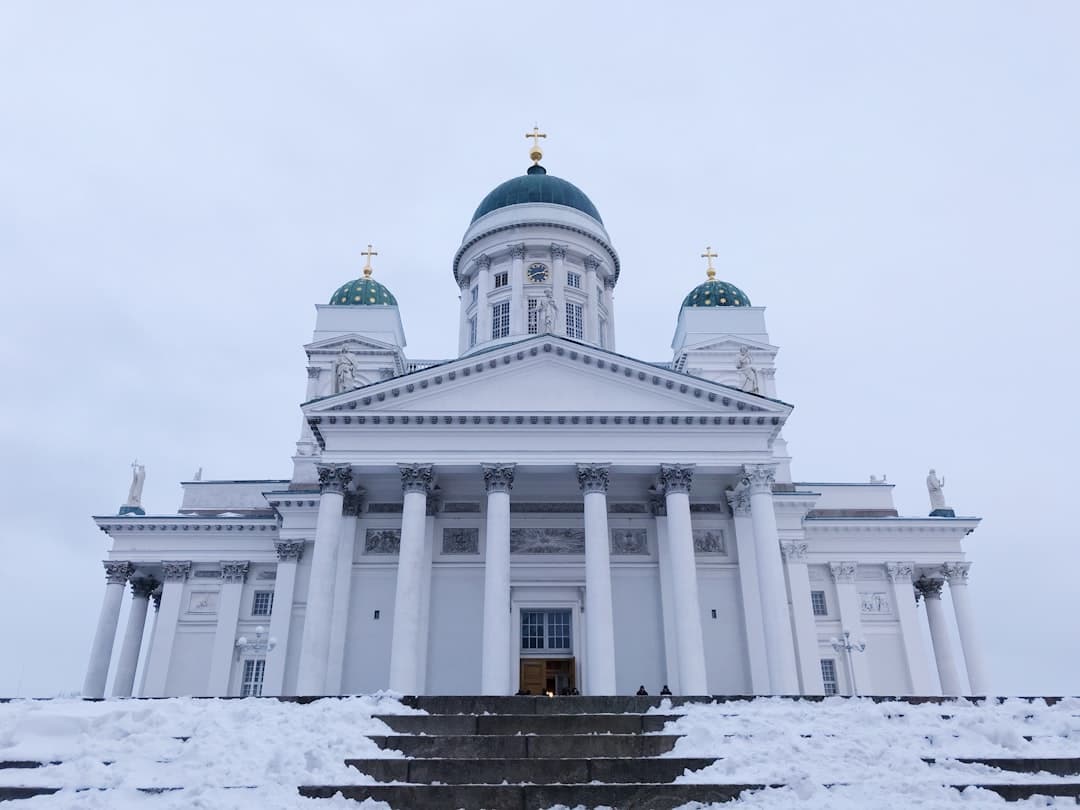
Helsinki Cathedral is the most recognizable building in Finland — a gleaming white neoclassical church that sits atop a broad granite staircase at Senate Square, presiding over the city like a benevolent giant. Designed by Carl Ludwig Engel and completed in 1852, it was built during Finnish history's Russian imperial period, when Helsinki was being remade as the capital of the Grand Duchy of Finland. The cathedral, technically a Lutheran church, was part of a deliberate urban plan to give the young capital architectural gravitas. It worked. The building — with its pale green dome, four smaller domes flanking it, and statues of the apostles lining the roofline — is instantly iconic, the image that appears on virtually every postcard of the city. Inside, the cathedral is characteristically Lutheran in its restraint: whitewashed walls, clean lines, no elaborate frescoes or gold leaf. The interior is quieter and more meditative than you might expect from such an imposing exterior. Visitors can walk the nave, look up at the central dome, and take in the relatively simple but dignified space. In the crypt below, there's a small café and an exhibition space that hosts temporary cultural exhibitions, which gives the visit a bit more texture. The real spectacle, though, is the exterior — particularly standing at the top of the wide granite steps and looking back out over Senate Square, which is flanked by the Government Palace and Helsinki University, an ensemble that feels genuinely grand. Entry to the cathedral is free, which makes it one of Helsinki's most accessible major sights. The square in front doubles as a gathering point for the city — markets, public events, and spontaneous crowds all happen here. In winter, the steps get icy and dramatic. In summer, people sprawl on them in the sun like it's a beach. Come early morning if you want the interior to yourself; by midday it fills with tour groups. The cathedral is an easy ten-minute walk from the Market Square and the waterfront, so it fits naturally into any central Helsinki itinerary.